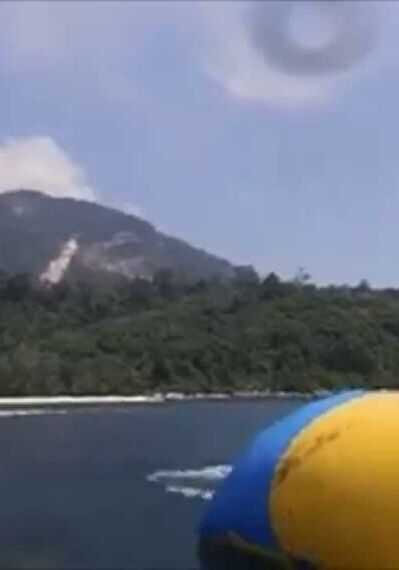

The next dive on our journey takes us to one of the most iconic dive sites in the Similan Islands — Elephant Head Rock. Rising from the middle of the ocean between Similan Islands numbers 7 and 8, the site is named after the cluster of shallower rocks that break the surface, resembling the head of an elephant that is traveling through the water. What you see above water is only the beginning; the real magic lies in the labyrinth of granite boulders beneath the waves.
Our experienced boat crew usually drop the divers close to the side of the large rock as currents here can sometimes be tricky. We always advise divers to be prepared to descend and to not stay on the surface for too long.
Descending Into the Depths
I roll back from the dinghy on the southern side. The rocks tumble steeply into the depths, reaching well past 40 meters, with sandy patches scattered between. Afternoon sunlight dances across the walls, highlighting bright gorgonian sea fans and anemones clinging to the faces of the boulders.
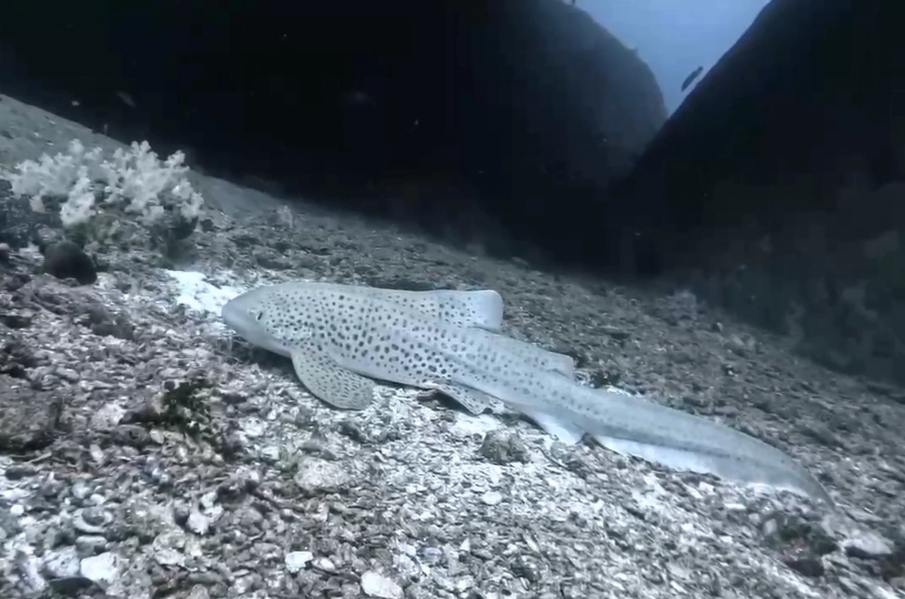
A scan across the sand may reveal resting leopard sharks — known scientifically as zebra sharks (Stegostoma fasciatum). Despite the nickname, they are not true leopard sharks. They are a distinct species, recognised in adulthood by their long, slender bodies and striking spotted pattern. Juvenile zebra sharks are born with a striped pattern that later separates into spots. These stripes mimic the colouration of the poisonous sea krait, deterring predators during their early life. Adults have broad, flat pectoral fins and whip-like tail help them rest gracefully on the seabed, often motionless during the day. These gentle sharks are nocturnal, spending daylight hours sleeping on sandy patches before becoming more active at night. Spotting one at Elephant Head Rock is always a highlight, as they are typically shy and head to the deeper waters of the Similan Islands in the daytime.
Through the Channel
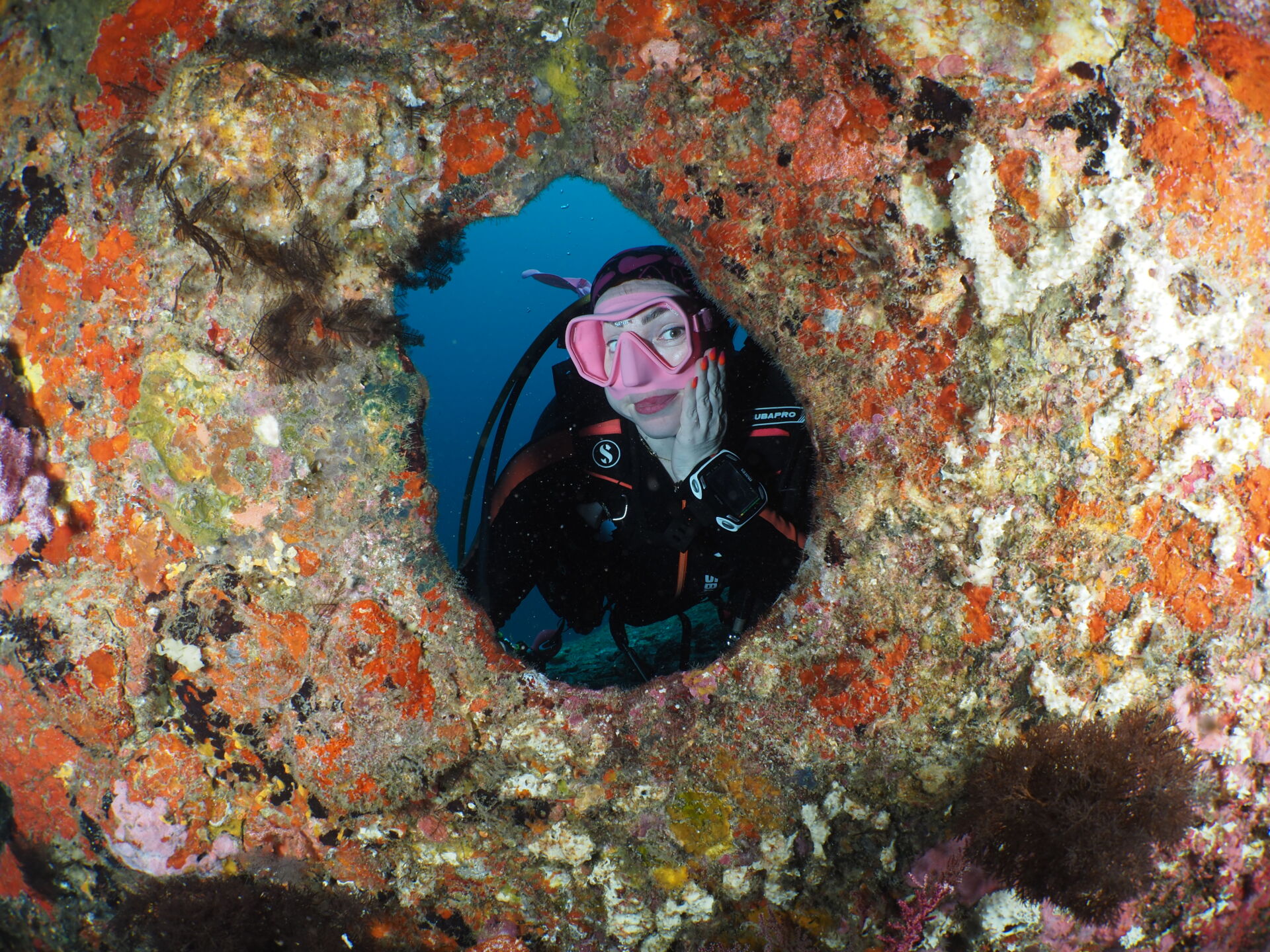
Continuing with the boulders on our left shoulder, a channel appears between the giant formations. It begins rising from the sand at around 26 metres, and about 2 metres wide at the base of the boulders. I dive slowly through it, surrounded by soft corals anchored to the walls on both sides. At the end of the channel on its right, there is a hole in the rock that many divers like to use this “window” as a photo spot, perfect for your new profile picture! Good buoyancy control is essential here, not only for safety but to avoid brushing against delicate sea fans nearby.
Beyond the channel, the bases of the rocks hide treasures of their own. Ribbon eels are known residents, and we carefully search in the sand for small heads poking out of their burrows. They are shy creatures, best admired from a distance before they retreat into the safety of their home.
The Swim-Throughs
Our guide signals toward the entrance of one of Elephant Head Rock’s most famous features — a broad swim-through beginning at around 26 meters. Because of its depth and overhead environment, this section is only suitable for advanced divers. On board MV DiveRACE Class X, we offer RAID Explorer 30 training for divers who want to build confidence and safely enjoy deeper dives like this.
I peer into the entrance, sunbeams piercing through cracks in the granite. The passage splits into two main exits: one just eight meters to the right, and another twenty meters further after the boulders open spectacularly toward the surface. It’s a tight squeeze at certain points, so it’s best to go one-by-one and bring a torch to look through the shadows and crevices within.
It’s remarkable to consider how these granite boulders formed, seemingly placed on top of each other. The Similan Islands were created 65–100 million years ago when magma rose from deep within the Earth and solidified into granite rock. Over time, tectonic uplift fractured the granite into enormous boulders, which were later shaped by wind, waves, and currents. Elephant Head Rock is one of the most striking results of this process, its massive granite blocks stacked and eroded into a labyrinth of arches, swim-throughs, and channels that make it one of the Similan Islands’ most exciting dive sites.
Inside the Pinnacle
Entering the swim-through, I find myself surrounded by schools of blue-striped snapper illuminated by my torchlight. I move slowly, using gentle frog kicks to avoid disturbing the sandy bottom — a simple technique that helps preserve visibility for those following behind. Small sea fans grow along the walls, hiding juvenile reef fish from predators.
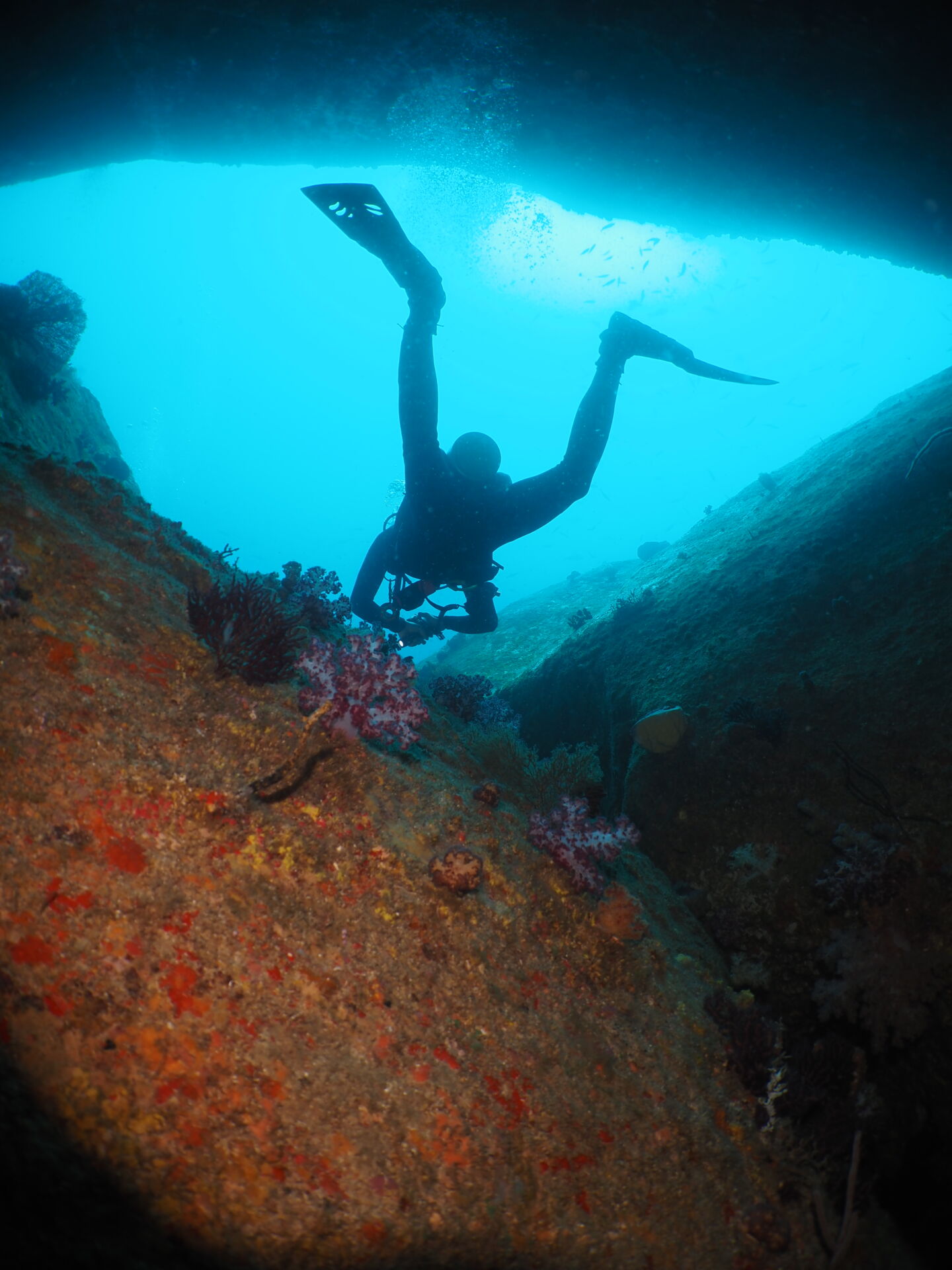
As the tunnel begins to open it reveals a congregation of sweetlips, wrasse, and snappers seeking shelter from the currents. I look up towards the surface, where I can see the huge boulders extending above the waves. We usually dive here at slack tide, when currents are at their lowest. During full or new moons, tidal changes can create stronger flows, making Elephant Head Rock a more challenging dive.
Today conditions are calm, and I’m gently carried toward the larger exit fringed with large gorgonian sea fans — a stunning sight against the deep blue beyond. Looming near the exits and between the boulders, you may encounter great barracuda hovering effortlessly with a quiet confidence. These predators can grow over a meter in length, with a powerful torpedo-shaped body built for bursts of speed. Their sharp teeth and silver scales give them a striking, almost intimidating appearance, but they are generally solitary hunters and rarely aggressive towards divers.
Northern Formations
Rejoining the group, I continue left shoulder around to the north side of the dive site. The terrain shifts into a field of sandy rubble as the rock formation curves to the north.
Divers can cross this sandy area to reach the northern pinnacles when conditions allow. Here, sightings of white tip reef sharks and turtles are common, while small groups of oriental sweetlips often shelter under the rocks. This area has also delivered encounters with manta rays and even whale sharks, likely because of the site’s open-ocean location that attracts passing pelagics.
I remember from previous years that this area was home to many Kuhl’s maskrays. Their black-and-white barbs stand out as they lay half-buried. Sadly, their numbers have decreased in recent years, possibly due to illegal fishing pressures when the national park was closed during the pandemic.
Action in the Shallows
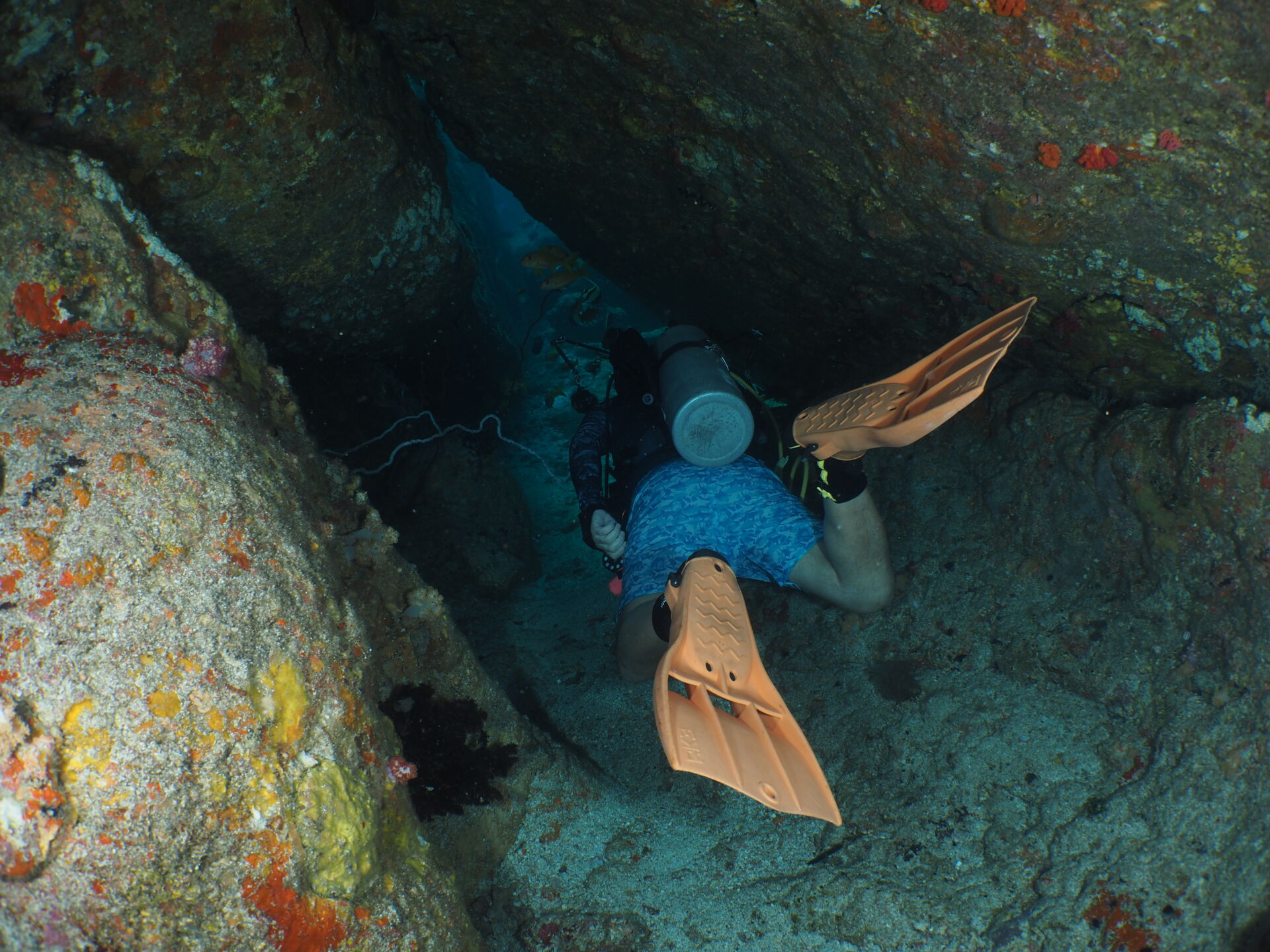
Ascending toward the shallows, I weave through towering boulders that form playful mini swim-throughs. This part of the dive is not just a test of buoyancy, but also of awareness of how the current flows around Elephant Head Rock. Because of the boulders’ position, the water often splits in different directions, sometimes creating a washing machine effect on divers. The key is to stay calm, maintain control of buoyancy, and use the rocks for shelter if needed. It’s also advised to watch and follow the route of your dive guide, as they know the easiest way to manoeuvre with the currents.
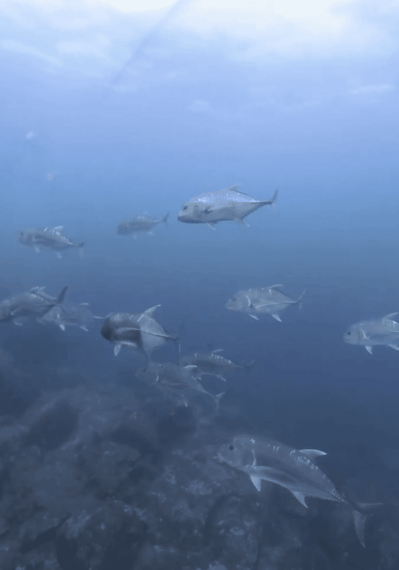
The shallow rocks are alive with color and movement. Schools of fusiliers dart in flashes of silver, while moorish idols, bannerfish, and butterflyfish gracefully weave between corals. Above, the rocky pinnacles break the surface, creating dramatic silhouettes as we begin to ascend. Huge schools of trevallies are often seen near the surface, cruising against the current as they hunt, and with some luck, even a dogtooth tuna may pass by in search of prey.
Our guide inflates the surface marker buoy, signaling the dinghy crew. We move away from the boulders, avoiding the swell near the rocks, and drift into the blue. Curious batfish circle as we make our final ascent, ending another unforgettable dive in the Similan Islands.
Like what you read? share it with your friends!
Next en route on board MV DiveRACE Class X:
Elephant Head Rock has been a highlight of the Similan Islands so far: a dive of dramatic swim-throughs, curious marine life, and timeless granite formations. Our day doesn’t end here. As the sun dips lower, we prepare for a sunset and night dive further north in Similan Islands National Park.
Want to read more? Take a look at our latest posts!
- Can Corals Adapt to Climate Change Fast Enough?
- How Liveaboard Diving Changes the Way You Dive the Similan Islands
- Ghost Pipefish in the Similan Islands: Where and How to Find Them
- How You Can Support Coral Restoration (Even if You Don’t Dive)
- Dive Computers Explained: What Divers Really Need to Know
Related Articles
-

Mergui Archipelago with DiveRACE
The Mergui Archipelago, located in southern Myanmar, is one of Southeast Asia’s…
-
Eat. Sleep. Dive. INFLATABLE FUN!
Diving isn’t the only way to enjoy the waters around Thailand. On…
-
Giant Trevallies at Koh Tachai Pinnacle
Koh Tachai Pinnacle is a top dive site in Thailand, famous for…