
What makes a liveaboard dive operation safe? While buoyancy, gas management, and underwater awareness are essential, much of a diver’s safety is determined before they even enter the water. Vessel design, experienced crew, workboat operations, dive planning, and clear communication all work together to create a safe and enjoyable liveaboard experience.
At DiveRACE, every aspect of our operation is designed around diver safety and guest experience while exploring Thailand’s Similan and Surin Islands.
Workboats
Workboats are often overlooked, yet they are one of the most important safety systems onboard. They are not just transport to the dive site. They are responsible for how you enter the water, how you are picked up, and how smoothly everything runs in between.
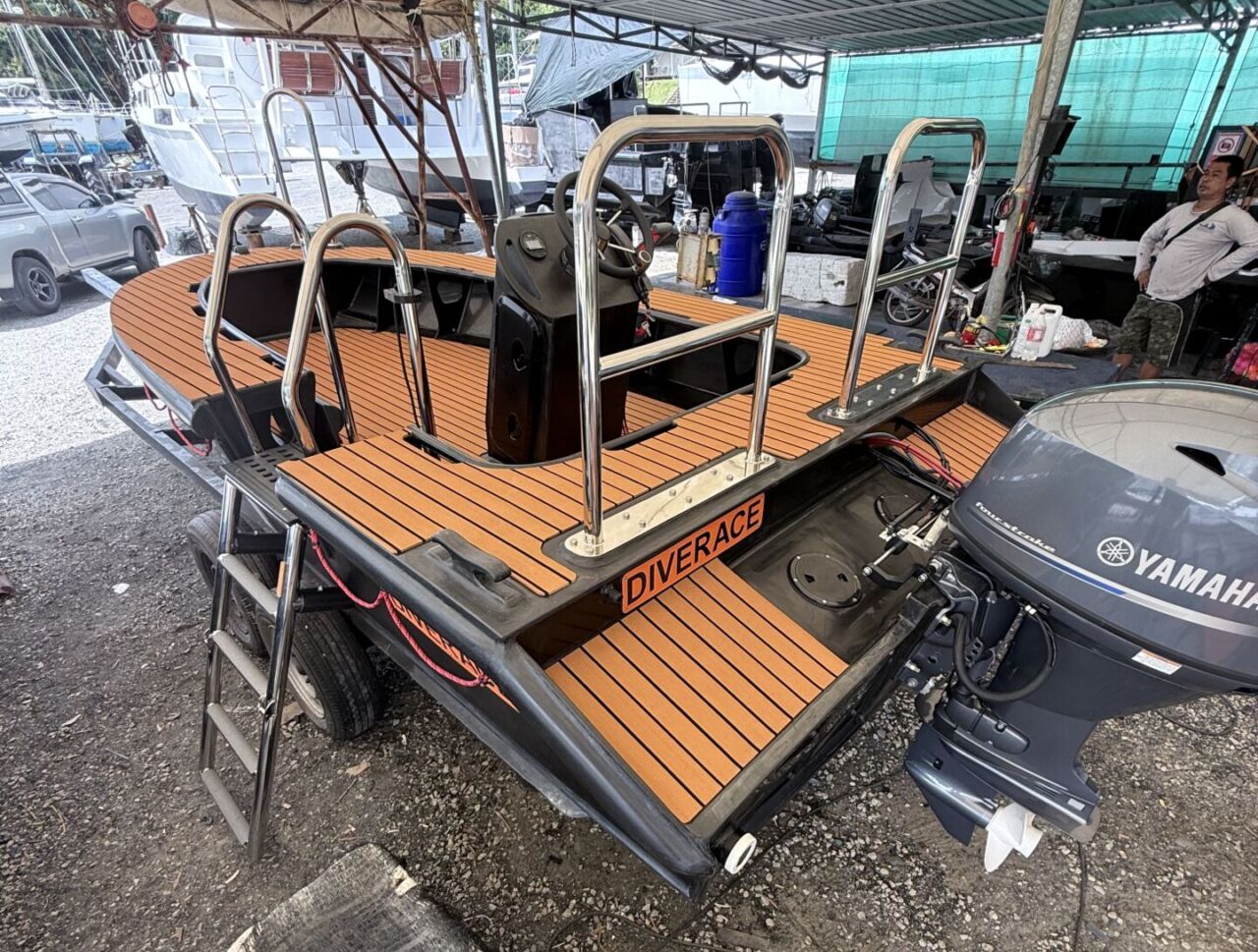
At DiveRACE, we designed and built two custom workboats for use alongside MV DiveRACE Class X.
Purpose-built workboats offer better control, stability, and positioning in current. This matters more than most divers realise. In moving water, precise handling allows the driver to place divers exactly where they need to be, without drift or confusion.
Entry and exit design also plays a role. Side doors create a more controlled entry point, especially in current. At the same time, deeper and more stable ladders make exits easier after long dives, when fatigue starts to set in.
Good workboats reduce stress across the entire dive. They make entries predictable, pickups efficient, and surface time far more comfortable.
Diver Flow
What is diver flow? Diver flow refers to how divers move from briefing, to gearing up, to entering the water, completing the dive, and returning safely to the vessel. Good diver flow reduces stress, prevents congestion, and improves overall safety.
It starts on deck. Clear space, logical equipment setup, and staggered preparation all help avoid congestion. When divers are not competing for space or rushing to gear up, small mistakes are less likely. Entry timing is equally important. Groups should enter with enough spacing to avoid overlap underwater. In current, this becomes even more critical, as poor timing can quickly separate divers.
During the dive, surface teams track bubbles and drift patterns. After the dive, pickups should feel smooth and expected, not reactive. Guides deploy SMB’s early so the workboat team can follow and pick up divers on surfacing. When diver flow is well managed, everything feels quieter and more controlled, even in busy conditions.
Entries & Exits
Most issues on dive trips happen at the surface, not underwater. Entries and exits are simple in theory, but they are where coordination matters most.
Different entry styles serve different conditions. Giant strides from liveaboards are stable and controlled, but direct liveaboard drops are no longer allowed in the Similan National Park. Backrolls are the primary method of entry from our workboats. In stronger current, negative entries may be used to keep groups together from the start.
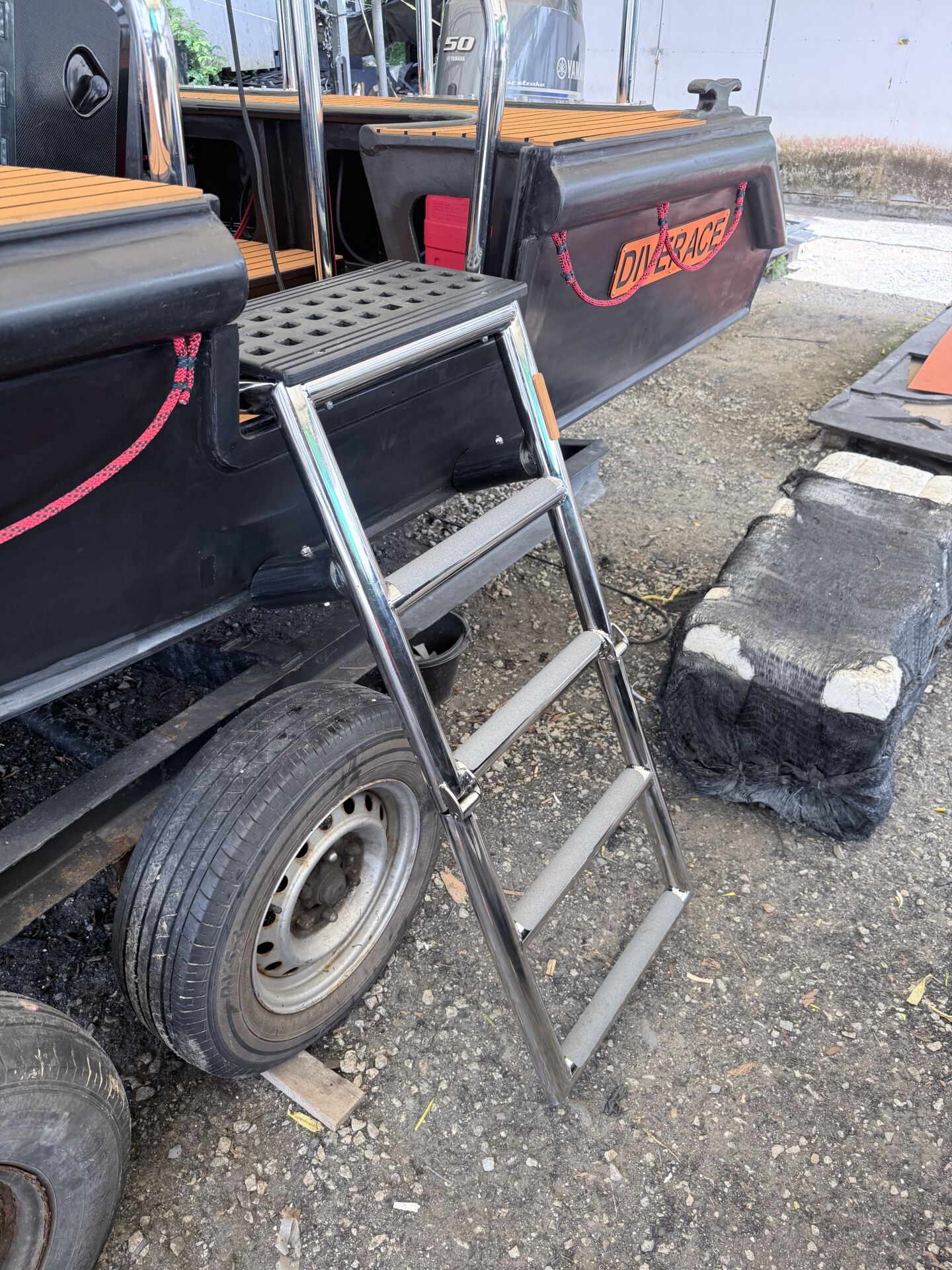
Exits are often more demanding than entries. After a dive, divers are heavier, more fatigued, and sometimes dealing with swell. This is where ladder design becomes critical. At DiveRACE, we designed ladders for our workboats that extend deeper into the water with wide steps and secure rails, allowing for easier entry, even with full equipment.
Crew support also plays a role. Assistance should be available, but not rushed or chaotic. A steady, predictable exit process reduces stress and helps avoid small injuries or slips.
Surface Systems
While you are underwater, a lot is happening above you. Strong surface systems ensure that every diver is tracked and accounted for at all times.
This includes visual tracking, SMB monitoring, and clear communication between crew members. Workboat drivers, deck crew, and the captain all play a part in maintaining awareness of diver positions.
In drift diving, coordination becomes even more important. Boats must anticipate where divers will surface, not just react when they appear. This requires experience, communication, and constant attention.
When these systems are working well, divers feel supported without even noticing it. The surface team becomes an invisible safety net.
Crew Roles
A well-run operation depends on clear roles and responsibilities. Every crew member has a specific function, and that structure becomes essential under pressure. Dive guides focus on the underwater experience and group management.
Workboat drivers handle positioning, entries, and pickups. The captain oversees navigation and overall safety, while deck crew support equipment and logistics. Communication between all crew members is of utmost importance to ensure smooth operations. This separation allows each person to focus on their task without confusion. It also means that in an unexpected situation, responses are immediate and coordinated.
Experienced crews do more than react. They anticipate problems before they develop, which is often what keeps situations from escalating in the first place.
Emergency Preparedness
Emergency systems are always present, but they should not dominate the experience. The goal is preparation, not alarm.
Oxygen units, first aid kits, and evacuation plans are standard on well-run liveaboards. Lost diver procedures and communication protocols are also clearly defined. However, these systems are only effective if the crew is trained and confident in using them.
Good operations rely on prevention first. Clear briefings, controlled entries, and strong surface tracking reduce the likelihood of incidents. If something does happen, the response is calm and structured, not rushed or improvised.
Vessel Design
Liveaboards that are built for diving function very differently from those adapted for it. Design influences how divers move, how equipment is handled, and how safely operations run over multiple dives each day.

Deck layout is one of the most noticeable factors. Adequate space between tanks, clear walkways, and logical storage all reduce clutter and hazards. When divers can move freely, there is less chance of slips, trips, or equipment damage.
Entry and exit points should be accessible and uncongested. If too many divers are forced through a small area, stress and mistakes increase. Stability also matters, especially during kitting up and surface intervals.
Over time, these details have a cumulative effect. Good design reduces fatigue, improves comfort, and supports safer diving throughout the trip. Furthermore, MV DiveRACE Class X was purposely designed to offer high stability in the midst of large waves. This improves the comfort level for the guests and greatly reduces sea sickness.
Currents & Boat Handling
Currents are often seen as a challenge, yet they are part of what makes diving in places like the Similan and Surin Islands so rewarding. The key is not avoiding current, but managing it correctly.
Boat positioning is critical. Entries must be timed so that divers descend together and stay within the planned route. During the dive, drift is expected, but it should be predictable. Workboat drivers and surface teams track this movement and adjust accordingly. Strong handling allows for accurate pickups, even in fast-moving water.
When current is managed well, dives feel dynamic but controlled. When it is not, even mild conditions can become disorganised.
Small Details That Matter
Some of the most important safety features are easy to overlook. Small design and operational details often make the biggest difference over time.
Deeper ladders reduce effort during exits. Stable handholds improve balance on deck. Clear tank spacing prevents congestion, while shaded areas help manage heat and fatigue between dives.
Hydration, comfort, and rest all contribute to safety. Divers who are less fatigued make better decisions and move more confidently. These details may seem minor, but they shape the overall experience.
What a Safe Operation Feels Like
A well-run liveaboard does not feel tense or restrictive. Instead, it feels calm, predictable, and efficient. Briefings are clear and easy to follow. Entries happen without rushing. Pickups feel expected rather than reactive. The crew communicates quietly and confidently, without confusion.
As a diver, you are not thinking about safety systems in detail. You simply feel that everything is under control. That sense of ease is often the clearest sign of a strong operation.
Because in the end, good safety is not just about procedures. It is about how seamlessly everything works together, both above and below the surface.
Related Articles
-

The Vanishing Wrecks of the South China Sea
Wrecks have a special pull on divers. They’re time capsules, artificial reefs,…
-
MV DiveRACE Class X
INTRODUCTION We are excited to present our latest liveaboard project – MV…
-
Thank You Class E.
Dear Friends, We want to express our heartfelt thanks to everyone for…