
What sharks can you see in the Similan Islands? The Similan and Surin Islands are home to several shark species, including blacktip reef sharks, whitetip reef sharks, leopard (zebra) sharks, grey reef sharks, whale sharks, tawny nurse sharks, and bamboo sharks. While sightings are never guaranteed, these protected reefs remain one of the best places in Thailand to encounter sharks in their natural environment.
In the Similan Islands, shark encounters are not constant or guaranteed. However, when they do happen, they are meaningful, natural, and tied closely to the health of the reef.
This is not a destination where sharks are fed or artificially aggregated. Instead, sightings reflect real ecosystem balance. Every encounter feels earned. And often, the more you understand the environment, the more likely you are to notice them.
Why Sharks Matter in the Similan Islands
Sharks sit near the top of the food chain, playing a critical role in maintaining balance across the reef. They regulate fish populations and influence behaviour across multiple species. This helps prevent overgrazing and supports coral resilience. In turn, healthy reefs support more life at every level.
When sharks are present, it signals a functioning ecosystem. But their absence can indicate pressure from fishing or habitat decline.
In the Similan and Surin National Parks, protections have helped maintain some balance. While populations are reduced from historical levels, sightings still occur relatively frequently at specific dive sites.
Shark Species You May Encounter
Blacktip Reef Sharks (Carcharhinus melanopterus)
Blacktip reef sharks are the most commonly seen sharks in the Similan Islands. They are sleek and fast with a classic reef shark shape. Adults are typically 1.2 to 1.6 metres long, although larger individuals can reach around 1.8 metres. Despite this, their slim build makes them appear smaller underwater.

Their most recognisable feature is the black marking on the tips of their dorsal and tail fins. Their bodies are grey to bronze, often with a pale underside.
They are typically found passing reef areas and pinnacles across the Similan islands, specifically Koh Tachai Island, which is a known nursery for juvenile black tips. On the south-eastern point of the island, these young sharks congregate in the shallows and have even learned to follow divers during night dives to hunt under the torch light.
Behaviourally, they are cautious and quick to move away. However, in calm conditions, they may circle at a distance or pass along the reef edge.
Early morning dives often provide the best chance of seeing them. Low diver traffic and softer light create a quieter environment.
Whitetip Reef Sharks (Triaenodon obesus)
Whitetip reef sharks are closely associated with reef structure. They are easily identified by the white tips on their dorsal and tail fins. They usually grow to around 1.4 to 1.7 metres, although some individuals can exceed 2 metres.
Their bodies are slender, with a softer and more flexible appearance than many reef sharks. This allows them to move easily through tight reef spaces.
One of their most unique traits is their ability to rest on the seabed. Unlike most shark species, they do not need to swim constantly to breathe. Most sharks rely on ram ventilation, meaning water must flow over their gills as they move forward. However, whitetip reef sharks can actively pump water across their gills while stationary. This process is known as buccal pumping.
Because of this, they are often seen lying still under ledges, inside caves, tucked beneath coral overhangs or even just resting on the sea bed during the day.
In the Similan Islands, they are most commonly found in deeper sandy areas and sheltered reef sections. A small group of whitetip reef sharks is often found at Deep Six. They are also seen at Elephant Head Rock, particularly after the channel, as well as Island Number 9 dive sites such as North Point and Christmas Point.
In addition, they are regularly encountered at Koh Bon in the bay where coral bommies break up sandy patches. Here, they often rest on the sand or tuck themselves beneath structure. Occasional sightings also occur at Koh Tachai, especially in areas with mixed sand and reef where they can shelter during the day.
At night, their behaviour changes completely. They become active hunters, weaving through the reef in search of fish and crustaceans.
Leopard Sharks / Zebra Sharks (Stegostoma tigrinum)
Leopard sharks, or zebra sharks, are easily recognised by their long bodies and distinctive patterns. Adults can reach 2 to 2.5 metres in length, with an extended tail making up nearly half their body. Juveniles are smaller and display bold dark stripes, which fade into spots as they mature.
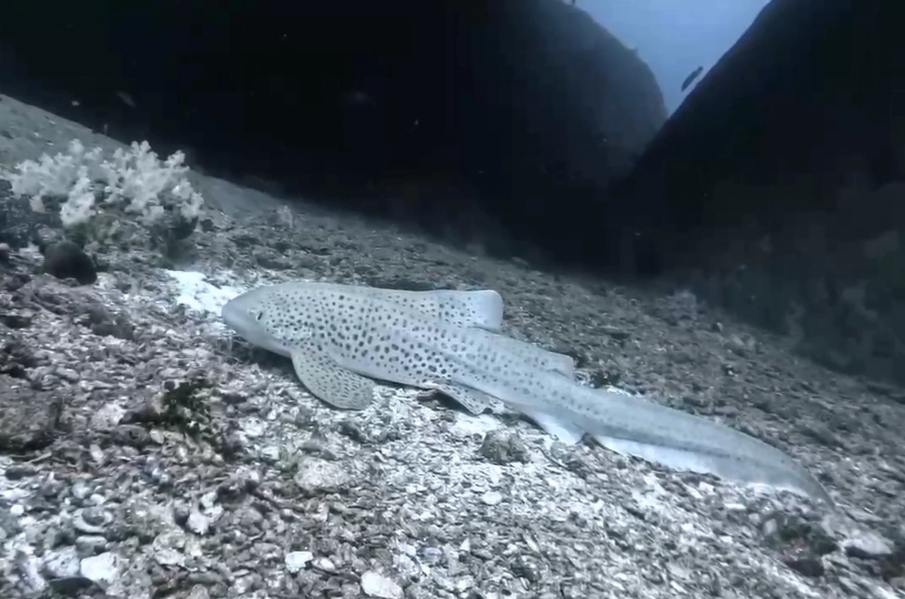
Leopard sharks are another one of the few species that use buccal pumping to breathe. Their bodies are low and streamlined, with a slightly flattened head. Combined with their patterning, this helps them blend into sandy seabeds. They are most often seen resting on sand or near reef edges, usually remaining still for long periods.
Leopard sharks were once more regularly seen around the Similan Islands, but sightings today are less frequent. This decline is likely linked to wider pressures such as fishing activity, including the historical impact of the shark fin trade.
In the Similan Islands, they are commonly encountered at Hideaway Bay and Tuna Wreck, where sandy areas provide ideal resting habitat. They are also seen around Elephant Head Rock, often near the deeper sandy sections between granite structures.
At Koh Bon, sightings typically occur on sandy patches close to the reef, particularly in calmer areas where they can remain undisturbed.
Grey Reef Sharks (Carcharhinus amblyrhynchos)
Grey reef sharks are less common but highly sought-after sightings in the Similan Islands. They typically grow to around 1.5 to 2 metres, with a strong, streamlined body built for life in current. Their shape appears more powerful than reef-dwelling species.
Their colouring is grey with a lighter underside, often with darker edging on the fins. They move with a steady, confident swimming style, and are usually associated with deeper reefs and current-exposed sites, where food supply is more consistent.
In the Similan Islands, they are sometimes seen around Three Trees and Christmas Point on Island Number 9, particularly where deeper water meets reef structure. They are also occasionally encountered at Koh Bon, especially along deeper ledges and drop-offs, where current brings in pelagic activity.
At Koh Tachai Pinnacle, sightings are possible in stronger current conditions, often appearing briefly in the blue before moving on. Encounters are typically short and at a distance. Their presence is often subtle, requiring good awareness and positioning.
Because they are more pelagic in behaviour, they are less tied to specific reef features and more influenced by current and conditions.
Whale Sharks (Rhincodon typus)
Whale sharks are the largest fish in the ocean. Despite their size, they are completely harmless filter feeders. They can grow up to 10 to 12 metres, although individuals seen by divers in the Similan Islands are usually smaller, typically around 4 to 8 metres.
They are instantly recognisable by their broad, flat heads and distinctive pattern of white spots and lines across a dark body. Each pattern is unique, much like a fingerprint, and is used by researchers for identification. These markings also help break up their outline from above, offering a level of camouflage in open water.
In this region, sightings are never guaranteed, but they are most commonly associated with Richelieu Rock, Koh Tachai, and Koh Bon. These sites often have strong currents and higher plankton concentrations.
They are also occasionally seen passing through the Similan Islands, including areas like Christmas Point and West of Eden.
Their presence is strongly influenced by current, conditions, and plankton availability. When food is concentrated, they may remain in an area for longer periods. They feed by filtering plankton and small fish from the water, often swimming with their mouths open through dense patches of food.
Encounters often happen unexpectedly. A large shape appears from the blue, moving slowly and steadily. They are often brief, but they are among the most memorable experiences in the Similan and Surin National Parks.
Nurse Sharks (Nebrius ferrugineus)
Nurse sharks, often referred to as tawny nurse sharks in this region, are bottom-dwelling sharks with a calm and slow-moving nature. They can grow to around 2.5 to 3.2 metres in length, making them one of the larger reef-associated sharks you may encounter.
Their colour ranges from sandy brown to yellow-brown, which helps them blend into the seabed. Their skin appears smooth, and their barbels near the mouth are used to detect prey hidden in sand. Like whitetip reef sharks, they use buccal pumping, allowing them to rest motionless on the seabed while breathing.
They are most often seen lying still under ledges, inside caves, or on sandy patches near reef structure. During the day, they are typically inactive. At night, they become more active, foraging along the reef for small fish, crustaceans, and molluscs.
In the Similan and Surin Islands, sightings are occasional but not common, usually in more sheltered areas or deeper reef sections. They are non-aggressive and generally indifferent to divers.
Bamboo Sharks (Chiloscyllium spp.)
Bamboo sharks are small, bottom-dwelling sharks commonly found resting on sandy or rubble areas. Most species in this region grow to around 60 cm to 1 metre in length, making them one of the smallest sharks you are likely to encounter.
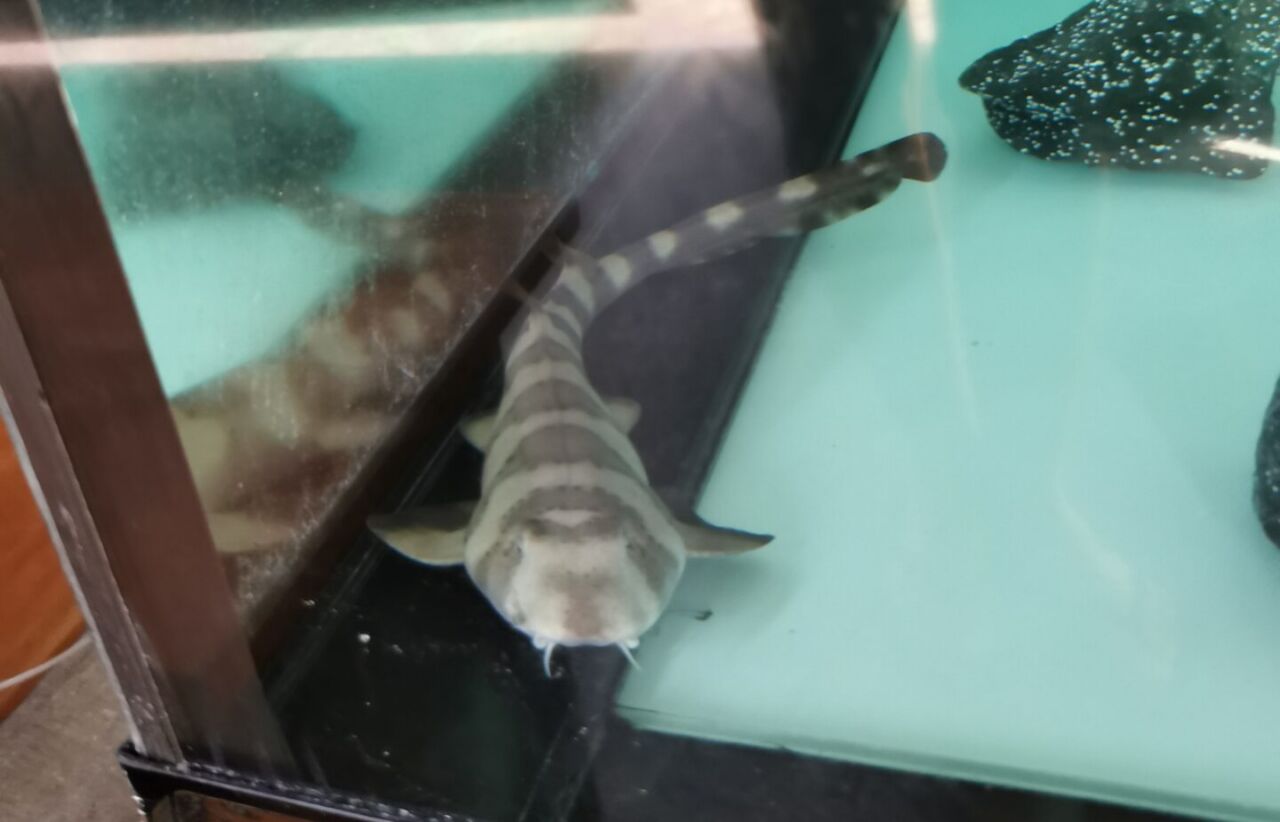
They have long, slender bodies with rounded fins and a relatively small head. Their movement is slow and almost eel-like along the seabed. Their colouring varies by species, but they are typically light brown or beige with darker bands or spots, which provide effective camouflage against sand and reef.
Like nurse sharks, they are capable of buccal pumping, allowing them to remain still for extended periods. They are most often seen on night dives, where they become more active and move across the seabed in search of small prey. During the day, they tend to remain hidden under rocks, within crevices, or partially buried in sand.
In the Similan Islands, sightings are occasional and usually limited to specific sites, particularly in sheltered bays or areas with sandy substrate.
Locally, there are also conservation and restoration efforts focused on bamboo sharks. In the Khao Lak area, a nursery programme at the JW Marriott hotel raises bamboo sharks from egg cases before releasing them back into the ocean. These initiatives aim to support local populations and raise awareness around shark conservation.
They are completely harmless and often go unnoticed due to their small size and excellent camouflage.
Tiger and Bull Sharks — Rare Visitors
Tiger and bull sharks are not commonly seen in the Similan and Surin Islands, and they are not part of the typical dive experience. However, they do occasionally pass through the region, usually in deeper water and away from main reef sites. These sightings are rare and unpredictable, often influenced by conditions, current, and wider pelagic movement.
Their presence reflects the connection between these reefs and the open ocean, even if encounters are few and far between.
When and Where Sightings Happen
Shark encounters in the Similan Islands are shaped by a combination of timing, conditions, and positioning in the water. While there is never a guarantee, certain patterns consistently improve your chances.
Early morning dives often provide the most favourable conditions, as the reef is quieter, light is softer, and predator activity can be higher before the day fully builds. At the same time, sites exposed to current tend to be more productive. Moving water brings nutrients, which attract baitfish, and in turn draw in larger predators. This chain reaction is what creates those brief but memorable moments in the blue.
However, these same conditions require awareness and control. Stronger currents demand good buoyancy, stable trim, and confident movement in the water. Without this, it becomes difficult to hold position and observe effectively. It is also important to understand that many sightings are subtle.
A shark passing along the reef edge, or briefly appearing in open water, can be easily missed if attention is elsewhere. Because of this, successful encounters are often less about luck and more about awareness, patience, and the ability to read the environment. Not every dive will include sharks, and that unpredictability is part of what makes each encounter meaningful. Keep low and move slowly. Stop to watch the shark, rather than to chase it.
Conservation and Changing Oceans
Shark populations around the world have declined significantly, largely due to overfishing, bycatch, and ongoing pressure on marine ecosystems. In Thailand, the protection of areas like the Similan and Surin National Parks has helped preserve sections of reef where marine life can still function relatively naturally. These protections play an important role, but they are not absolute.

External pressures, including illegal fishing and broader environmental change, continue to affect these ecosystems over time.
At the same time, coral reefs themselves are under increasing stress from rising sea temperatures, bleaching events, and storm damage. Because sharks rely on healthy food chains, any disruption to reef systems can indirectly impact their presence. Despite these challenges, there are still strong reasons for optimism. Marine protection, improved awareness, and responsible tourism all contribute to long-term recovery.
Divers are part of this process. By maintaining good in-water behaviour, respecting marine life, and supporting operators that prioritise sustainability, they help reduce pressure on already vulnerable environments.
At DiveRACE, we support these efforts through our coral restoration project in Phuket, focused on rebuilding reef structure and strengthening marine ecosystems over time. Learn more about our project here.
Why Every Encounter Matters
A shark sighting in the Similan Islands is more than just a highlight of a dive. It reflects the condition of the wider ecosystem and the balance that still exists beneath the surface. These animals do not gather artificially, and they are not drawn in by feeding. When you see one, it is because the conditions, the environment, and the food chain all support its presence in that moment.
Most encounters are brief. A silhouette appears in the distance, a movement along the reef edge, or a quiet pass through the blue. Yet, these moments stay with you.
They are a reminder that the ocean is still functioning as it should in certain places, even if only in fragments. Over time, you begin to realise that seeing sharks is not about chasing an experience, but about understanding the environment well enough for it to reveal itself.
Experience It for Yourself
The Similan and Surin Islands offer some of the most dynamic diving in Thailand, but shark encounters are only one part of a much larger picture. From current-swept pinnacles to calm sandy bays, each dive site presents a different environment, and each dive unfolds differently depending on conditions.
Join us onboard MV DiveRACE Class X and see it for yourself. Book your trip here.
Related Articles
-

The Vanishing Wrecks of the South China Sea
Wrecks have a special pull on divers. They’re time capsules, artificial reefs,…
-
MV DiveRACE Class X
INTRODUCTION We are excited to present our latest liveaboard project – MV…
-
Thank You Class E.
Dear Friends, We want to express our heartfelt thanks to everyone for…