
Assessing the Reef After the Phuket Oil Spill and Rising Sea Temperatures
Over the past year, our coral restoration site in Phuket continued to grow steadily. Coral fragments fused together, fish activity increased, and sections of the reef started looking alive again.
But restoration projects do not exist in isolation. Reefs are constantly shaped by the conditions around them, and nature does not always move in our favour.
On the 21st of May, we returned to the site for our first assessment since the recent cargo ship incident near Phuket. The sinking resulted in an oil spill that affected nearby areas around the island. Reports and images from surrounding beaches showed visible traces of oil pollution along parts of the coastline. Naturally, this raised concerns about the wider marine environment and nearby reef systems.
At the same time, sea temperatures across the Andaman Sea over the past month (April 2026) have remained unusually high. This increases the risk of coral bleaching throughout the region, including at our restoration site.
We want to explain what these events can mean for coral ecosystems, what we looked for underwater, and why long-term monitoring matters so much in reef restoration projects.
The Oil Spill and Its Possible Effects
The sinking of the cargo vessel caused concern across Phuket’s marine community. Oil pollution can spread quickly depending on currents, tides, and changing weather conditions. Even smaller spills can affect sensitive coastal ecosystems.
Before our assessment dive took place, nearby beaches had already reported signs of oil contamination. While reefs below the surface are not always impacted in the same way as shorelines, coral ecosystems remain vulnerable to changes in water quality.
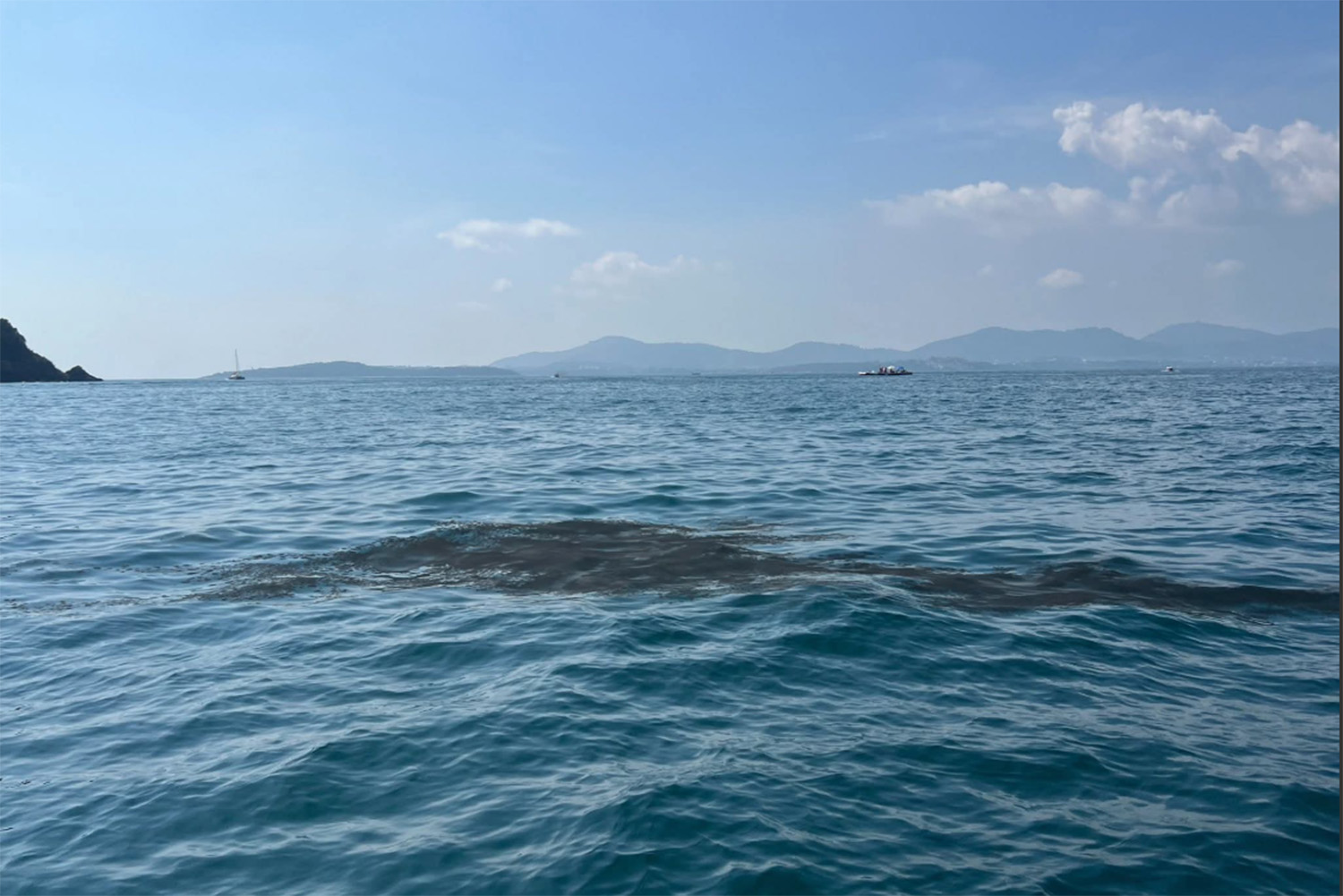
https://www.bangkokpost.com/thailand/general/3205673/oil-spill-reaches-small-island-off-phuket. © Bangkok Post PCL. All rights reserved.
Oil can reduce light penetration and coat marine organisms underwater. It can also introduce toxic compounds into the surrounding environment. Fish, coral larvae, and smaller reef invertebrates can all be affected. In some cases, oil exposure may increase coral stress levels, especially when combined with elevated sea temperatures.
For restoration sites like ours, this creates additional uncertainty. Newly attached coral fragments are often more vulnerable while establishing themselves on the structures.
At the same time, reefs can also be surprisingly resilient. Water movement, current strength, and exposure levels all influence how severe the impact becomes.
Our site was originally chosen because of its constant current flow, which helps deliver nutrients and maintain healthy water movement across the reef. We hoped that the same flow may also have helped reduce prolonged exposure to pollutants in the area.
What We Found
During the assessment dive at our 6m and 10m restoration sites, we were relieved to find no visible signs of damage directly linked to the recent oil spill.
Water conditions around the site appeared normal, with no visible oil residue or contamination present during the dive. Marine life activity also remained encouraging across the restoration area.
This was an important result for the project, especially after oil was reported along several nearby beaches following the cargo ship incident near Phuket. Naturally, there had been concern about how the spill may have affected nearby reef systems and restoration sites.
Fortunately, the constant current flow around our site may have helped reduce prolonged exposure to pollutants in the area. Strong water movement can sometimes help disperse contamination more quickly, although conditions can vary significantly between locations.
Rising Sea Temperatures and Bleaching Risk
Alongside the oil spill concerns, the Andaman Sea is also experiencing a period of elevated water temperatures.
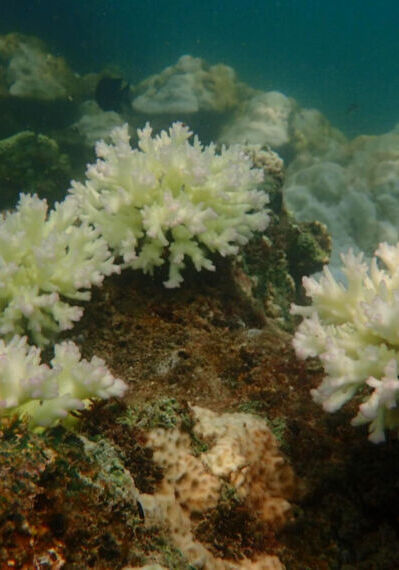
When temperatures remain too high for extended periods, corals become stressed. They may then expel the symbiotic algae living within their tissue. This process is known as coral bleaching.
Bleached corals are not always dead, but they are weakened significantly. If stressful conditions continue for too long, survival rates can drop quickly.
During the assessment dive, we monitored for several warning signs across the site, including:
- Pale or whitening coral tissue
- Algae growth on stressed fragments
- Differences between coral species and frame locations
What We Found
During the assessment dive, water temperatures were around 30°C, above normal seasonal temperatures for the Andaman Sea. In recent weeks, Thailand’s Department of Marine and Coastal Resources (DMCR) also recorded even higher temperatures in parts of the region.
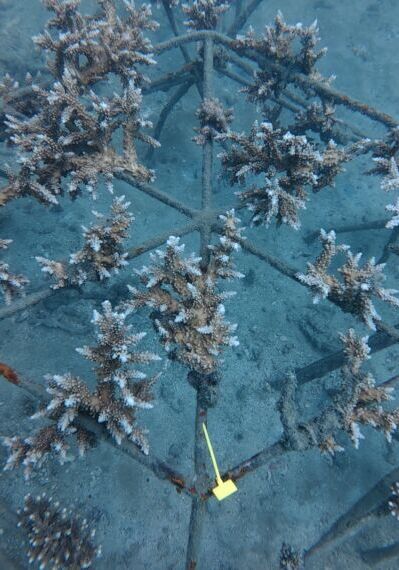
Unfortunately, around 5% of coral fragments showed signs of bleaching or stress and another 10% of the coral fragments died. However, the overall condition of the site remained more positive than we initially expected. Most coral fragments still appeared healthy and continued growing well despite the elevated temperatures.
Bleached corals are not always dead. Because recovery is still possible if temperatures stabilise, visibly bleached fragments were left in place for continued monitoring. Corals that had already died were removed during maintenance at the site.
Interestingly, parts of the surrounding natural reef appeared more heavily affected than sections of the restoration area itself. Large bommies and nearby corals showed significant patches of bleaching or algae cover.
Current flow across the site may be helping reduce temperature stress by improving water movement and nutrient delivery. Differences in depth, light exposure, and coral species may also play a role in how different areas respond during bleaching events.
Although bleaching is always concerning, the site still showed encouraging signs overall, with healthy coral growth and strong fish activity continuing across much of the restoration area.
Overall Progress at Our Coral Restoration Sites
We are pleased to report a noticeable increase in marine life across both our 6m and 10m restoration sites. A wide variety of reef species — including damselfish, butterflyfish, pufferfish, and many others — have been regularly observed around the Super Stars. These fish not only use the corals as shelter, but also contribute to the health of the reef ecosystem by feeding on and cleaning algae from the coral structures. The growing biodiversity at the sites is a strong indicator that our efforts to restore marine life to the surrounding reef are proving successful.
During our monitoring activities, we also identified isolated areas of coral loss within parts of the Super Star network. This may have been caused by coral predators such as the Crown-of-Thorns starfish (COTs). To protect the coral fragments and improve survival rates, our team actively removes these threats whenever they are detected. In the long term, we hope to encourage a more balanced ecosystem by supporting the presence of natural COTs predators, including Triton’s Trumpet, Titan Triggerfish, and Starry Pufferfish.
In addition, signs of fishing activity were found within the restoration zones. Discarded fishing lines had become entangled in both the coral fragments and restoration structures, causing some corals to break loose before they were able to fully attach and grow securely. This highlights the importance of continued reef protection and responsible marine practices around restoration areas.
Looking ahead, we remain committed to expanding the project and increasing the impact of our restoration efforts. To date, our network of 155 Super Stars has supported the planting of more than 3,700 coral fragments. By the end of 2026, we aim to install an additional 80 Super Stars, further strengthening the resilience and biodiversity of the reef ecosystem.
Restoration Is a Long-Term Process
One of the biggest misconceptions about coral restoration is that the difficult part ends once fragments are attached to the reef. In reality, that is only the beginning.
Restoration sites require constant monitoring, maintenance, and adaptation. Conditions underwater can change rapidly due to storms, temperature spikes, pollution events, algae growth, or predator outbreaks. This is exactly why long-term monitoring matters.
Every challenge provides valuable information about reef resilience. It helps us understand which coral species adapt best, which frame locations remain strongest, and how restored reefs respond to environmental stress over time. Even setbacks remain part of the process.
Moving Forward
Recent conditions have been challenging. However, the project still continues to move in a positive direction overall. Most coral fragments remain healthy, fish activity is still strong, and many areas of the site continue to grow well.
Bleaching events are a reminder that reef restoration takes time. The ocean is constantly changing, and ongoing monitoring remains an important part of protecting these ecosystems.
We will continue maintaining the site closely while tracking how the reef responds over the coming months. With stable conditions, many stressed corals still have the potential to recover.
Want to follow the project as it develops? Follow us on Facebook and Instagram for future updates, behind-the-scenes footage, and restoration progress from Phuket.
You can also learn more about our coral restoration project here. Every bit of support helps us continue growing the reef.
Related Articles
-

Climate Change & Corals: How Extreme Weather and Warming Seas Shape Our Reefs
In recent years, Southeast Asia has experienced increasingly unpredictable and severe weather…
-
Corals in Thailand: How You Can Help with DiveRACE
When people talk about scuba diving in Thailand, they almost always mention…
-
Acropora Corals in Thailand: The Science Behind Our Restoration Work
Why We Use Acropora Corals in Our Thailand Restoration Project If you’ve…