
From above the surface, the Similan Islands look untouched. White beaches, turquoise water, and dense tropical forest create a picture of paradise. Beneath the surface, the reefs are equally impressive. Granite boulders, coral gardens, and strong currents attract an extraordinary range of marine life.
It is no surprise that the Similan Islands are considered one of Thailand’s most famous diving destinations.
However, popularity always brings an important question. Does tourism help protect these ecosystems, or does it place them under pressure? The answer is more complex than it first appears.
A Protected Marine National Park
The Similan Islands are not simply a group of dive sites. They are part of Mu Ko Similan National Park, one of Thailand’s most important marine protected areas. The national park was established in 1982 to protect the region’s unique ecosystems. The islands lie around 70 kilometres off the coast of Khao Lak in the Andaman Sea.
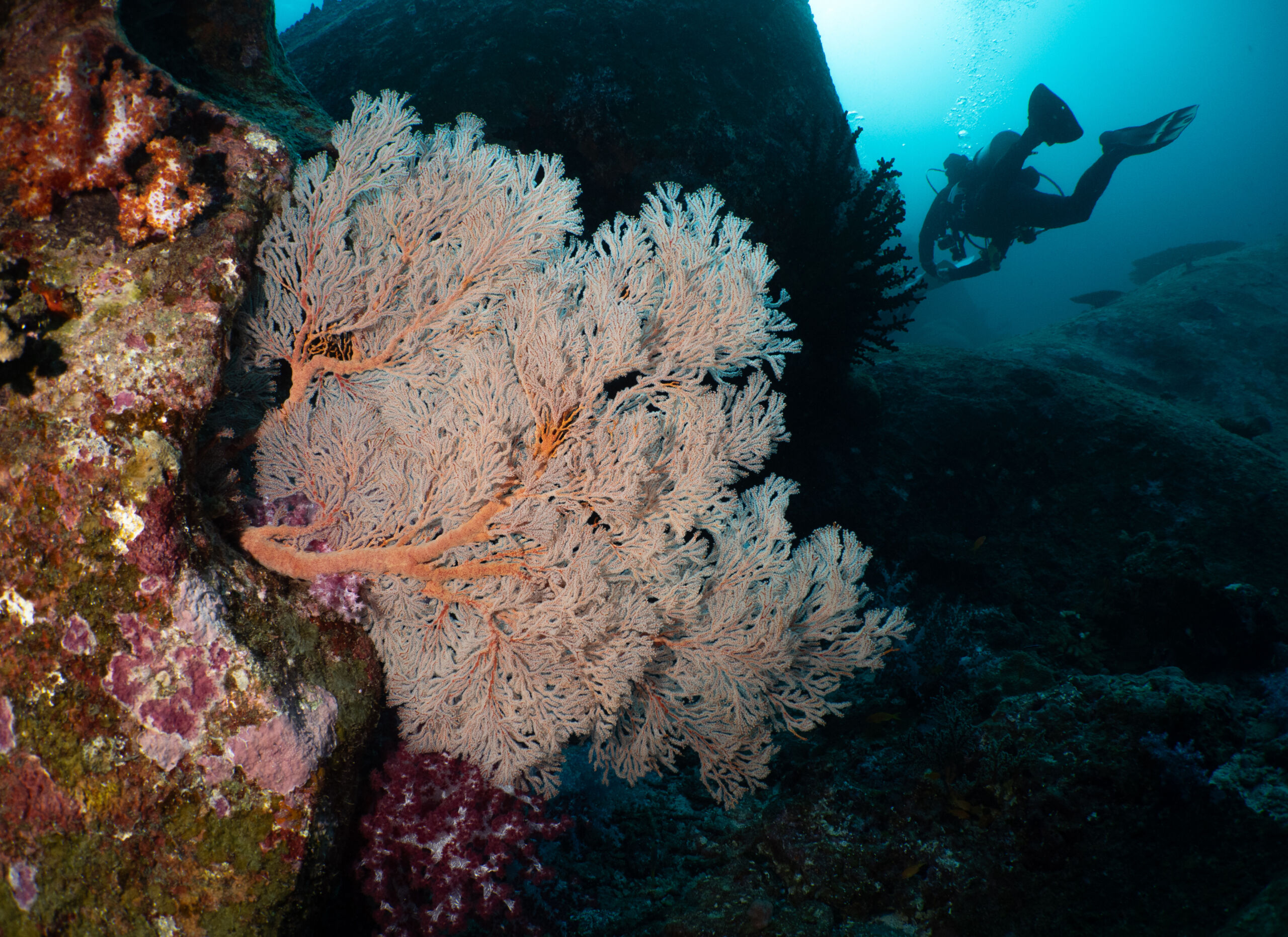
The park includes eleven islands in total: nine Similan Islands, as well as nearby islands Koh Bon and Koh Tachai, along with extensive coral reef systems and offshore dive sites. These waters support hard and soft coral communities, reef fish, turtles, and large pelagic species. Because of this protection, the Similan Islands have remained far healthier than many coastal reef systems.
Tourism exists here largely because the environment is still intact.
Why the Similan Islands Attract Divers from Around the World
The Similan Islands are famous for several reasons. First, the water clarity is often exceptional. Visibility frequently reaches 20–30 metres, especially during the dry season. The underwater landscape is also unique. Massive granite boulders form swim-throughs, arches, and dramatic reef structures. Sites such as Elephant Head Rock, West of Eden, and Deep Six have become iconic among divers.

In addition, the surrounding waters attract larger marine species. Divers regularly encounter turtles, trevally, barracuda, and reef sharks. At nearby sites such as Koh Bon and Koh Tachai, lucky divers may even encounter manta rays or whale sharks.
Because of these conditions, the Similan Islands have become one of Southeast Asia’s most sought-after dive destinations. However, the very popularity that attracts visitors can also create challenges.
When Tourism Creates Environmental Pressure
Marine tourism brings economic benefits and global attention to fragile environments. Yet it also introduces significant pressure when visitor numbers become too high. Some areas of the Similan Islands experience heavy tourism during the high season.
Large numbers of dive boats and speedboats visit the same sites each day. Careless anchoring can damage coral reefs when mooring lines are not used.
At busy dive sites, inexperienced divers sometimes struggled with buoyancy control. Even small fin kicks or accidental contact can damage fragile coral structures.
Boat traffic also introduces additional concerns. Fuel spills, waste management, and noise can all affect marine ecosystems.
While these impacts may seem small individually, their cumulative effect can be significant over time. For this reason, marine park management plays a critical role in protecting the Similan Islands.
Marine Park Management and Protection Measures
Thailand’s Department of National Parks (DNP) manages the Similan Islands to balance tourism with conservation.
One of the most important measures is the annual seasonal closure. Each year the national park closes from mid-May to mid-October during the monsoon season. This closure allows coral reefs and marine ecosystems time to recover without tourism pressure.
Mooring buoy systems have also been installed at many dive sites. These systems prevent boats from dropping anchors directly onto coral reefs.
In addition, visitor limits and stricter regulations have been introduced in recent years. Park authorities now monitor boat numbers and tourist access more carefully. These measures help ensure that tourism remains sustainable over the long term.
Some individual dive sites have also been closed for extended periods. Areas such as East of Eden around Island 7, and Anita’s Reef on the north side of Islands 5 and 6, have been closed to diving for several years. In addition, Islands 1, 2, and 3 have been closed to visitors since 2018, with the area designated as a turtle conservation zone. These closures are intended to reduce pressure on sensitive habitats. However, the long-term results of these restrictions underwater are still largely unknown.
Rules That Protect the Environment
The Similan National Park has introduced several rules designed to reduce environmental impact.
Single-use plastics are prohibited throughout the park, including plastic bags, foam food containers, and disposable packaging. Visitors are encouraged to bring reusable bottles and containers instead.
Fishing, collecting shells, and removing natural materials from the park are also strictly forbidden. These rules help protect both marine life and the fragile island ecosystems.
In addition, divers and snorkellers must follow responsible wildlife practices. Touching coral, standing on coral, feeding fish, or disturbing marine animals is not permitted.
Underwater photography is also regulated within the national park. In general, divers are expected to hold an Advanced Open Water certification or higher to carry underwater cameras. The rule aims to reduce reef damage, as cameras can distract divers and affect buoyancy control.
Sunscreen regulations have been introduced to protect coral reefs. Products containing chemicals known to harm coral ecosystems are prohibited, and park authorities can issue significant fines to visitors who bring these sunscreens into the park. As a result, many visitors choose reef-safe sunscreen or protective clothing instead. Learn more about the sunscreen ban here.
While these regulations may seem strict, they play an important role in protecting the Similan Islands for the future.
Koh Tachai: A Case Study in Marine Park Protection
One of the clearest examples of marine park protection in the region is Koh Tachai. Located north of the main Similan Islands, Koh Tachai was once a very popular destination for day trips. Speedboats brought hundreds of tourists to the island’s beach each day during the high season. Visitors came to snorkel, relax on the beach, and explore walking trails across the island.
However, the intensity of tourism began placing significant pressure on the environment. Coral reefs suffered damage, and wildlife habitats were increasingly disturbed.
In October 2016, Thailand’s Department of National Parks made the decision to close Koh Tachai Island to tourism indefinitely. The closure was introduced to allow the ecosystem to recover after years of heavy visitor pressure. Importantly, the closure applies only to the island itself. Diving is still permitted at Koh Tachai Pinnacle, one of the region’s most famous dive sites.
Since the closure, many divers and guides have noticed encouraging changes. Coral growth has improved in some areas, and large marine life sightings appear more frequent. Grey reef sharks and other pelagic species are now regularly seen around the pinnacle.
There have been recent discussions about reopening the island. However, authorities have confirmed that Koh Tachai will remain closed for environmental protection.
The decision highlights an important lesson. Sometimes the most effective way to protect an ecosystem is simply to reduce human pressure.
The Role of Responsible Dive Tourism
While tourism can create pressure, it can also support conservation when managed responsibly. Professional dive operators play an important role in protecting marine environments.
Good dive briefings encourage divers to maintain proper buoyancy and avoid contact with the reef. Guides also help control diver behaviour around marine life.
Small dive groups reduce congestion at popular sites. Careful boat operations also prevent damage to coral reefs.
Education is another powerful tool. Many divers develop a deeper appreciation for marine ecosystems after seeing them firsthand.
At DiveRACE, these values guide our operations, with a strong emphasis on diver education, responsible practices, and protecting the marine environments we explore. When people witness the beauty of coral reefs, they are often more motivated to protect them.
How Divers Can Reduce Their Impact
Individual divers also have the power to reduce environmental impact.
Maintaining good buoyancy control is one of the most important skills. Proper buoyancy prevents accidental contact with coral and marine life. Read about our article on buoyancy control here.
Divers should also maintain good fin awareness, especially in strong currents or tight spaces. Touching coral or marine animals should always be avoided. Even brief contact can damage delicate organisms.
Finally, divers should follow the guidance of their dive professionals and respect marine park regulations.
Small actions from many divers can make a meaningful difference.
Tourism as a Force for Conservation
Despite its challenges, tourism can also become a powerful force for conservation. Marine tourism generates revenue that helps support national park protection and management.
Dive operators often assist authorities by reporting illegal fishing or environmental damage. In addition, tourism raises global awareness about marine ecosystems. Many divers become strong advocates for ocean conservation after visiting places like the Similan Islands.
When tourism is managed carefully, it can help protect the very environments that attract visitors.
Protecting the Future of the Similan Islands
The Similan Islands remain one of the most remarkable marine environments in Thailand. Their reefs support extraordinary biodiversity and offer some of the region’s best diving experiences.
However, their future depends on careful management and responsible tourism. Measures such as seasonal closures, visitor limits, and site protection help maintain the delicate balance between access and conservation.
The ocean will always attract people to places like the Similan Islands. The challenge is ensuring that these ecosystems remain healthy for the generations of divers who will explore them in the future.
Related Articles
-

The Vanishing Wrecks of the South China Sea
Wrecks have a special pull on divers. They’re time capsules, artificial reefs,…
-
MV DiveRACE Class X
INTRODUCTION We are excited to present our latest liveaboard project – MV…
-
Thank You Class E.
Dear Friends, We want to express our heartfelt thanks to everyone for…