
If you’re heading to Thailand’s beautiful marine parks, including the Similan and Surin Islands, there’s an important law you should know about before you dive in.
In August 2021, the Department of National Parks, Wildlife and Plant Conservation (DNP) officially banned the use and import of certain chemical sunscreens within all national parks. Violators face a fine of up to 100,000 THB (about USD 2,700) under Section 20 of the National Park Act B.E. 2562 (2019).
The rule isn’t new, but it’s recently resurfaced across Thai and international media as park officials have begun actively reminding tourists ahead of the 2025-26 high season. For our team and guests at DiveRACE, who spend their days exploring these reefs on board MV DiveRACE Class X, Thailand’s sunscreen ban is more than a headline — it’s a reminder that protecting the ocean begins long before we back-roll off the dinghy.
But what exactly is in these sunscreens, and why, and where, do they matter so much to the ocean?
What’s Banned and Why
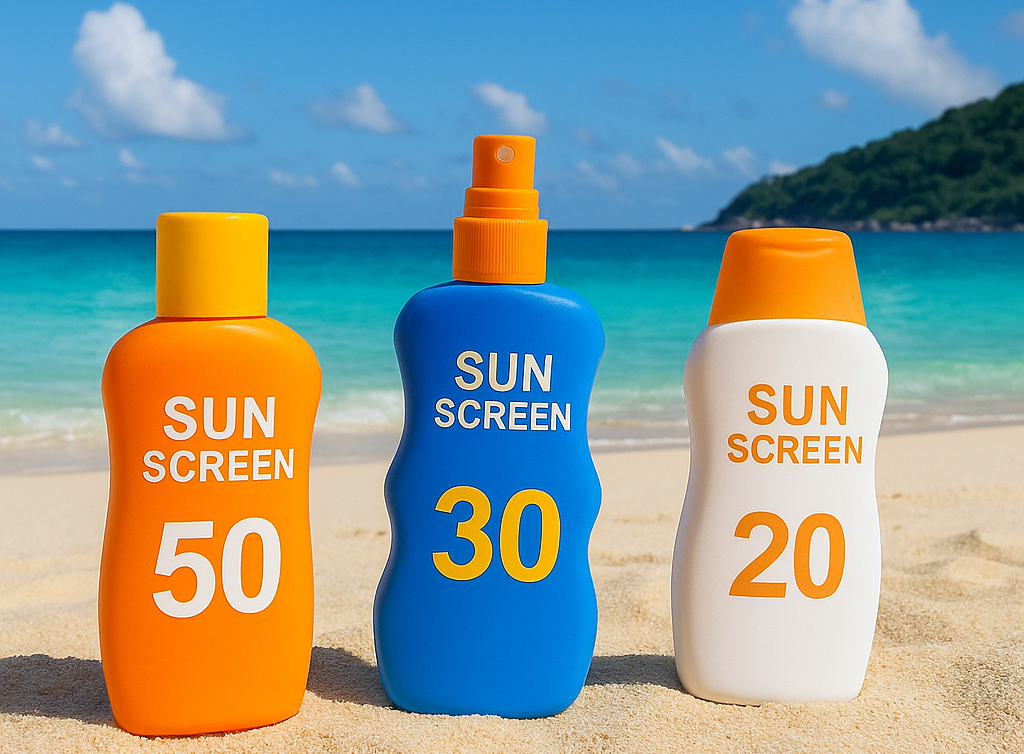
The regulation prohibits sunscreens containing four harmful chemicals known to damage marine ecosystems:
Oxybenzone (benzophenone-3)
Octinoxate (ethylhexyl methoxycinnamate)
Octocrylene
4-Methylbenzylidene camphor (4-MBC)
These compounds, common in commercial sunscreens, are highly effective UV filters. But they can also disrupt coral development and reproduction, even at very low concentrations.
As part of our DiveRACE Foundation coral project in Phuket, we’ve seen firsthand how delicate new coral fragments are when settling — even small chemical changes in the water can influence their growth and survival.
The Science Behind Sunscreen Damage
When swimmers enter the ocean, or even shower after applying sunscreen, these compounds wash off into the water. In marine environments, they can:
Disrupt coral reproduction and larval development
Cause coral bleaching by inducing oxidative stress
Damage coral DNA, leading to deformities and reduced survival rates
A study by Downs et al. found that oxybenzone can deform and kill coral larvae at concentrations as low as 62 parts per trillion (1. Downs, C.A. et al. 2016). That’s equivalent to one drop in six Olympic-sized swimming pools.
Other research has shown similar effects in fish, sea urchins, and algae, which form the foundation of coral reef food webs (2. Danovaro et al., 2008; 3. Tashiro & Kameda, 2013).
How Big Is the Problem in Thailand?
Here’s where it gets interesting. The impact of sunscreen pollution isn’t the same everywhere. Local conditions — like ocean currents, water movement, and coastal geography — determine how quickly these chemicals spread or accumulate.
In high-traffic bays and calm areas:
In enclosed snorkeling zones — shallow lagoons or small bays like Donald Duck Bay in the Similan Islands — chemical residues can accumulate. With minimal water replacement and mass tourism, concentrations can rise to levels that stress coral larvae and plankton.
A study from Mitchelmore et al. found that popular tourist beaches can reach microgram-per-liter levels of oxybenzone — high enough to affect sensitive coral species (4. Mitchelmore, C.L. et al. (2021).
In open or current-swept sites:
In contrast, open-water areas such as Richelieu Rock, Koh Bon and Koh Tachai are flushed by strong Andaman currents. These currents dilute pollutants quickly, reducing the overall concentration to nanograms per liter. This is hundreds of times lower than harmful thresholds (5. He et al., 2019).
So while sunscreen pollution isn’t the primary cause of reef decline in Thailand, it still adds extra local stress to already fragile ecosystems facing warming seas and bleaching events.
Maya Bay: The Wake-Up Call
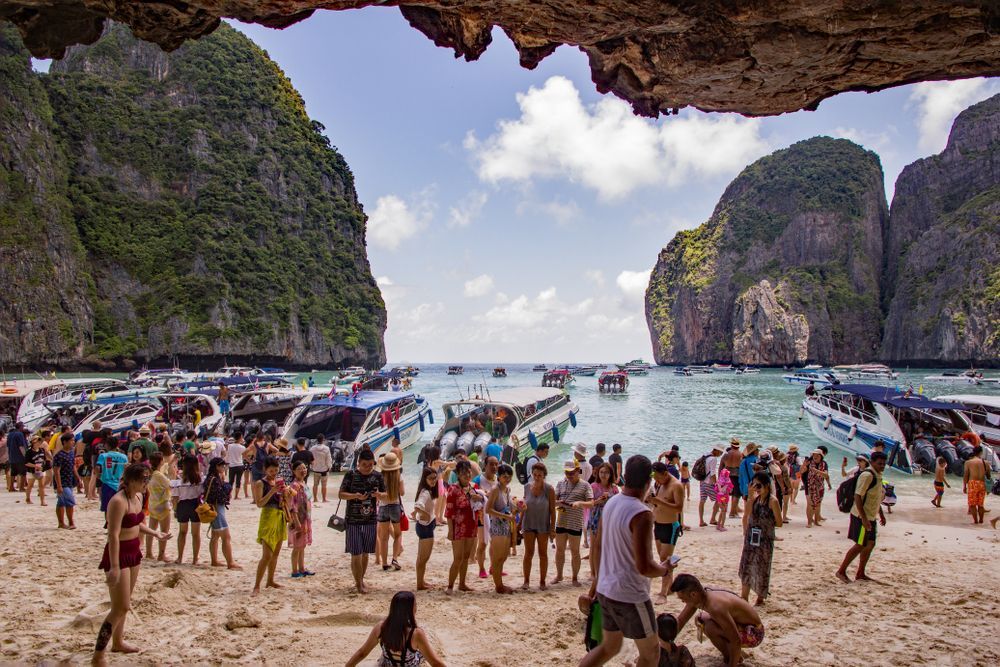
Before its temporary closure in 2018, Maya Bay in Krabi, famous from The Beach, was one of Thailand’s most heavily visited sites, receiving over 5,000 tourists daily.
When researchers from Chulalongkorn University and the Department of Marine and Coastal Resources (DMCR) sampled the water, they found oxybenzone concentrations up to 1.3 µg/L — levels known to cause coral stress and larval deformities (6. Chulalongkorn University & DMCR 2018: 4. Mitchelmore et al., 2021).
The data was alarming: even after the bay was closed to tourism, sunscreen chemicals persisted in sediments for months. These findings helped raise national discussion and directly influenced the 2021 ban.
At DiveRACE, we see Maya Bay as a powerful example of how local pressure can push a reef past its tipping point — and how restoration, patience, and regulation can help to bring it back.
Putting It in Perspective
Ocean warming remains the greatest global threat to coral reefs (7. Hughes et al., 2017). Still, sunscreen pollution is one of the few stressors we can personally prevent. Each small choice — a reef-safe sunscreen, a rash guard, or a mindful shower — adds up to cleaner, healthier seas.
What You Can Do
Regardless of the impact in relation to location and mass of visitors, sunscreen containing the aforementioned ingredients are banned in National Parks in Thailand.
1. Choose reef-safe sunscreen
Look for products that are oxybenzone- and octinoxate-free, using non-nano zinc oxide or titanium dioxide instead. These physical blockers reflect sunlight rather than absorb it, and are less harmful to marine life.
Here is one of our favourite local reef-safe sunscreen manufacturers: Passun
2. Wear protective clothing
Opt for rash guards, wetsuits, or UV shirts. Not only do they protect your skin better than sunscreen, they drastically cut down the chemicals entering the sea.
Scubapro, Mares and Waterproof offer great rash guard options.
3. Help spread awareness
Many visitors still don’t realize the ban exists. If you’re diving, snorkeling, or working in tourism, help share the message: reef protection starts on the surface.
4. Follow and support coral restoration
Join us in protecting Thailand’s reefs by following the DiveRACE Foundation’s coral restoration journey in Phuket. You can also take part in our hands-on restoration projects — find out more information here.
A Shared Responsibility
Thailand’s coral reefs, from the Similan Islands in the Andaman Sea to the Gulf of Thailand, are among the most biodiverse in the world. The sunscreen ban is more than a regulation; it’s a symbol of Thailand’s growing commitment to sustainable tourism and ocean stewardship.
Every diver, snorkeler, and traveler plays a part. So next time you pack your bag, remember: your sunscreen choice travels far beyond your skin.
Book your next adventure aboard MV DiveRACE Class X here and be part of the community helping to protect Thailand’s coral reefs, one dive at a time.
References
1. Downs, C.A. et al. (2016). Toxic effects of oxybenzone on coral larvae. Arch. Environ. Contam. Toxicol., 70(2), 265–288.
2. Danovaro, R. et al. (2008). Sunscreens cause coral bleaching via viral infection. Environ. Health Perspect., 116(4), 441–447.
3. Tashiro, Y. & Kameda, Y. (2013). UV filters in Japanese coastal waters. Environ. Sci. Technol., 47(10), 5316–5322.
4. Mitchelmore, C.L. et al. (2021). UV-filters and contaminants in coral reef areas. Sci. Total Environ., 752, 141889.
5. He, T. et al. (2019). UV filters in marine environments and coral reef risk. Mar. Pollut. Bull., 141, 493–500.
6. Chulalongkorn University & DMCR (2018). Oxybenzone contamination at Maya Bay, Krabi. Internal DMCR Report.
7. Hughes, T.P. et al. (2017). Global warming and mass coral bleaching. Nature, 543, 373–377.
Related Articles
-

The Vanishing Wrecks of the South China Sea
Wrecks have a special pull on divers. They’re time capsules, artificial reefs,…
-
MV DiveRACE Class X
INTRODUCTION We are excited to present our latest liveaboard project – MV…
-
Thank You Class E.
Dear Friends, We want to express our heartfelt thanks to everyone for…