
Most divers have heard that some sunscreens can harm coral reefs. But what actually happens after those chemicals enter the water?
For years, scientists knew certain sunscreen ingredients were associated with coral damage. More recent research has revealed something even more fascinating. In some cases, the sunscreen isn’t the direct problem. Instead, corals and their relatives can accidentally turn these chemicals into something even more toxic.
Understanding this science doesn’t mean we should stop wearing sunscreen. Instead, it helps us make informed choices that protect both our skin and the reefs we love exploring.

Corals Are Living Animals
Before understanding the science, it’s important to understand the coral itself.
Corals are animals made up of thousands of tiny polyps. Inside each polyp live microscopic algae called zooxanthellae. These algae use sunlight to produce energy through photosynthesis, supplying up to 90% of the coral’s energy requirements.
In return, the coral provides shelter and nutrients. This partnership is one of the most important relationships on Earth’s reefs. When it breaks down, corals bleach.
Because corals constantly exchange water with their surroundings, any dissolved chemicals, including sunscreen ingredients, can come into direct contact with their tissues.
Which Sunscreen Ingredients Are Scientists Studying?
Research has focused on several chemical UV filters commonly found in sunscreens, including:
- Oxybenzone (Benzophenone-3)
- Octinoxate
- Octocrylene
- Homosalate
- 4-Methylbenzylidene Camphor (4-MBC)
Of these, oxybenzone has received the greatest scientific attention.
Earlier research by Downs et al. (1. 2016) found that oxybenzone could damage coral DNA, deform developing coral larvae and reduce successful settlement onto reefs. However, researchers still didn’t fully understand why these effects occurred.
That changed in 2022.
The Discovery That Changed Our Understanding
A study published in Science by Wijgerde et al. (2. 2022) investigated sea anemones, close relatives of reef-building corals. The researchers discovered that oxybenzone itself wasn’t what killed the animals.
Instead, when sea anemones were exposed to both sunlight and oxybenzone, they tried to remove the chemical using their natural detoxification system. This process works by attaching a sugar molecule to the oxybenzone, making it more water-soluble and easier for the animal to excrete.
Normally, this is how animals safely remove unwanted chemicals. However, in this case, the process created a new compound. When exposed to sunlight, this new compound became toxic and damaged the cells of the sea anemone.
In other words, the animal’s own defence system unintentionally transformed oxybenzone into something much more harmful.
Why Sunlight Makes the Damage Worse
Sunlight is a key part of this process.
Without exposure to light, the detoxified compound is far less harmful. However, once sunlight reaches it, the compound becomes phototoxic, meaning it damages living cells.
Researchers found that this leads to oxidative stress, where highly reactive molecules known as reactive oxygen species (ROS) begin damaging proteins, cell membranes and DNA.
If enough damage builds up, the coral can no longer repair its cells effectively. Growth slows, tissues become damaged and survival decreases.
This discovery helped explain how oxybenzone affects corals, rather than simply showing that it does.
The Role of Zooxanthellae
The same study also revealed another fascinating discovery. Many corals and sea anemones live in partnership with microscopic algae called zooxanthellae. These algae are best known for producing energy through photosynthesis, but they also appeared to provide some protection against sunscreen toxicity.
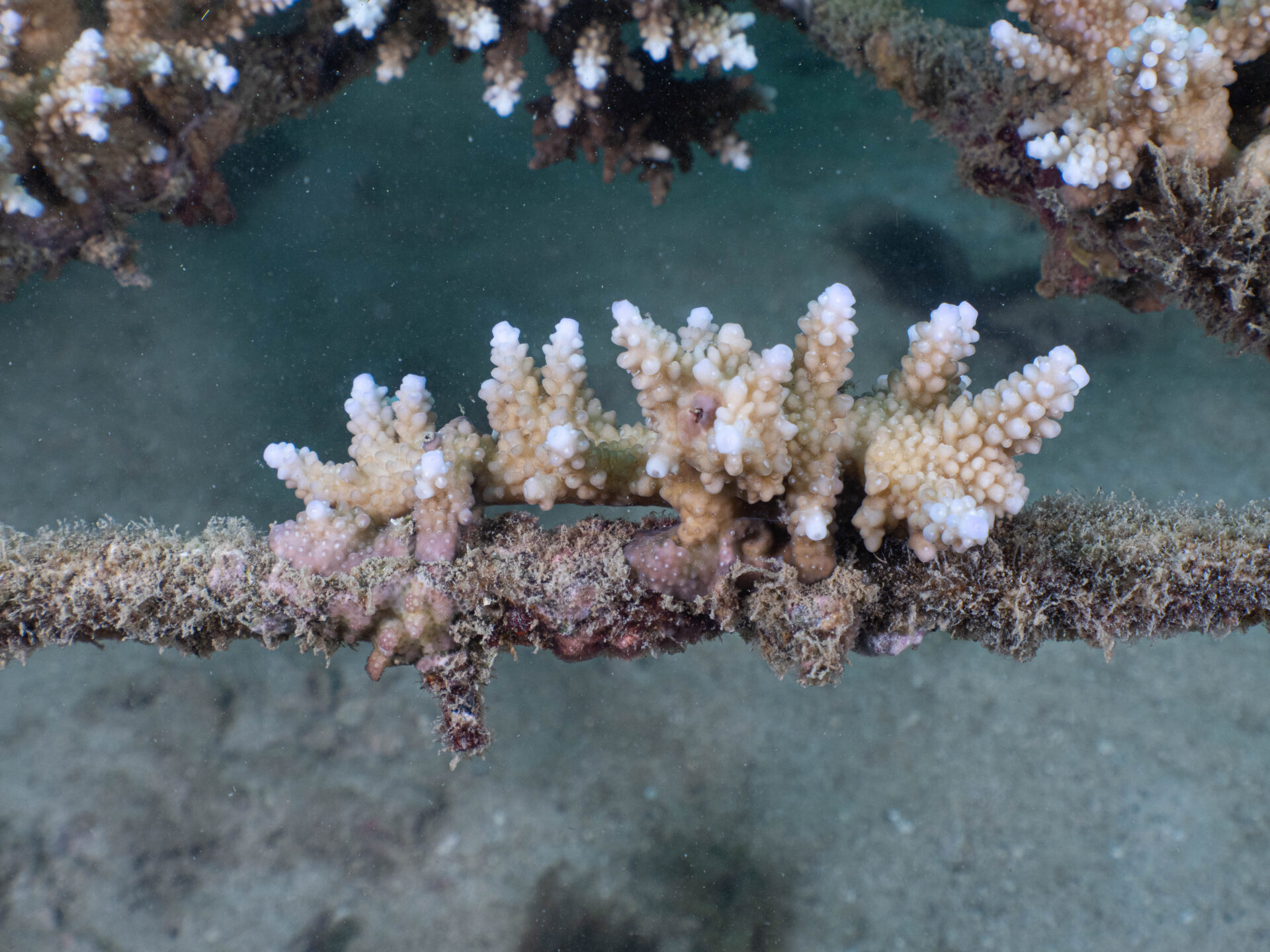
Sea anemones without their symbiotic algae died much sooner than those containing healthy algae. Researchers believe the algae may help by absorbing or neutralising some of the toxic compounds before they can damage the host’s cells.
This finding also suggests that bleached corals, which have lost much of their zooxanthellae, could be more vulnerable to chemical stress from sunscreen ingredients such as oxybenzone.
Why Coral Larvae Are Especially Vulnerable
Adult corals aren’t the only concern. Coral larvae appear to be even more sensitive to chemical pollution. During the earliest stages of life, larvae must settle onto the reef before developing into new coral colonies.
Research by Downs et al. (1. 2016) found that exposure to oxybenzone reduced larval survival, caused developmental abnormalities and lowered settlement success.
This matters because healthy reefs depend on a constant supply of new corals. If fewer larvae survive, reefs recover more slowly after bleaching events, storms or outbreaks of crown-of-thorns starfish.
Is Sunscreen Causing Coral Bleaching?
Not by itself.
Marine heatwaves caused by climate change remain the primary cause of mass coral bleaching worldwide (3. NOAA).
However, sunscreen pollution is considered a local stressor. On heavily visited reefs, thousands of swimmers and snorkellers can introduce sunscreen chemicals into relatively small areas every day.

Scientists believe these chemicals add another source of stress to corals already coping with warming oceans, poor water quality and disease. Rather than replacing climate change as a concern, sunscreen pollution reduces the resilience of reefs already under pressure.
Reducing local stressors gives corals a better chance of surviving global ones.
What Does This Mean for Divers?
The science doesn’t suggest we should stop protecting our skin. Instead, it encourages more environmentally conscious choices.
Divers can reduce their impact by:
- Choosing sunscreens without oxybenzone, octinoxate or octocrylene where possible. We recommend the local Thai brand Passun for use in the Similan Islands.
- Wearing UV-protective clothing such as rash guards or dive skins.
- Applying sunscreen well before entering the water.
- Avoiding direct contact with coral.
- Supporting conservation initiatives and responsible dive operators.
If you’re diving in Thailand’s Similan Islands, it’s worth knowing that sunscreens containing certain harmful ingredients are prohibited within the Mu Ko Similan National Park. Visitors caught using banned sunscreens can face substantial fines, making it worth checking the ingredients before your trip. If you’d like to learn more about the regulations and the reasons behind them, read our blog on Thailand’s sunscreen ban in the Similan Islands.
It’s also important to remember that “reef-safe” is not a regulated scientific term. Reading the ingredient list remains the most reliable way to understand what’s in your sunscreen.
Supporting Reef Recovery with DiveRACE
At DiveRACE, we’re actively helping restore damaged coral reefs in Phuket. Working alongside Thailand’s Department of Marine and Coastal Resources (DMCR), we’ve transplanted over 3,700 coral fragments onto 155 specially designed reef structures that we call ‘Super Stars’, creating new habitat while supporting the long-term recovery of degraded reef areas.
Monitoring has shown encouraging coral growth and increasing fish biodiversity. At the same time, we’ve also witnessed how marine heatwaves and bleaching continue to affect nearby natural reefs. Projects like ours cannot stop climate change. However, they can improve reef resilience by restoring damaged habitats while encouraging divers to reduce avoidable local stressors, including chemical pollution. Learn more about our restoration project here.
Every choice matters.
Whether it’s selecting a more environmentally conscious sunscreen, improving your buoyancy or supporting restoration projects, small actions can help protect coral reefs for generations to come.
References
- Downs, C.A. et al. (2016). Toxicopathological effects of the sunscreen UV filter oxybenzone on coral planulae and cultured primary cells. Archives of Environmental Contamination and Toxicology.
- Wijgerde, T. et al. (2022). Sunlight transforms oxybenzone into phototoxic compounds in reef cnidarians. Science.
- NOAA Coral Reef Conservation Program (2024). What is Coral Bleaching?
Related Articles
-

The Vanishing Wrecks of the South China Sea
Wrecks have a special pull on divers. They’re time capsules, artificial reefs,…
-
MV DiveRACE Class X
INTRODUCTION We are excited to present our latest liveaboard project – MV…
-
Thank You Class E.
Dear Friends, We want to express our heartfelt thanks to everyone for…