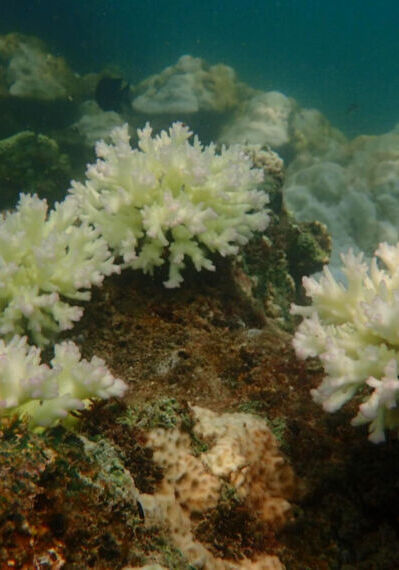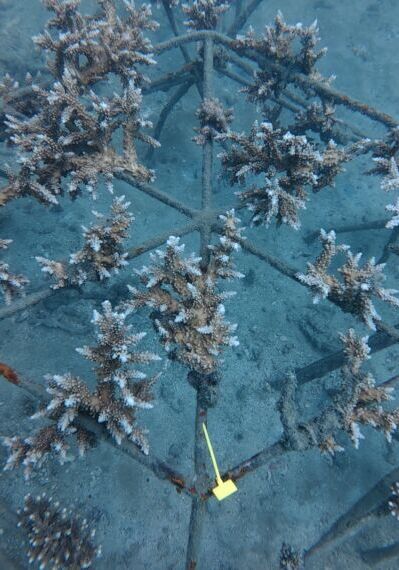

Coral restoration can produce impressive results. Fragments grow, fish populations increase, and damaged areas slowly begin to recover. However, restoration is not simply a matter of planting corals and walking away.
Coral reefs face constant pressure from both local and global threats. Some challenges develop gradually over time. Others can appear almost overnight.
At the DiveRACE Foundation restoration site in Phuket, we regularly monitor these threats and adapt our approach when needed.
Here are some of the biggest challenges we face while restoring coral reefs.
Why Is Coral Reef Restoration So Challenging?
Coral reefs are living ecosystems. They are constantly influenced by environmental conditions, marine life, and human activity.
As a result, restoration projects face many of the same threats as natural reefs. Even healthy corals can struggle when temperatures rise, water quality declines, or predators become more abundant.
This is why coral restoration requires ongoing monitoring and maintenance rather than a one-time intervention.
How Does Coral Bleaching Affect Coral Restoration?
Coral bleaching is one of the biggest threats facing reefs worldwide. Corals live in partnership with microscopic algae called zooxanthellae. These algae provide much of the coral’s energy and give corals their colour. When sea temperatures become too high, corals become stressed and expel these algae. This process is known as coral bleaching.
Bleached corals are not necessarily dead. However, they have less energy available and become more vulnerable to disease and mortality.
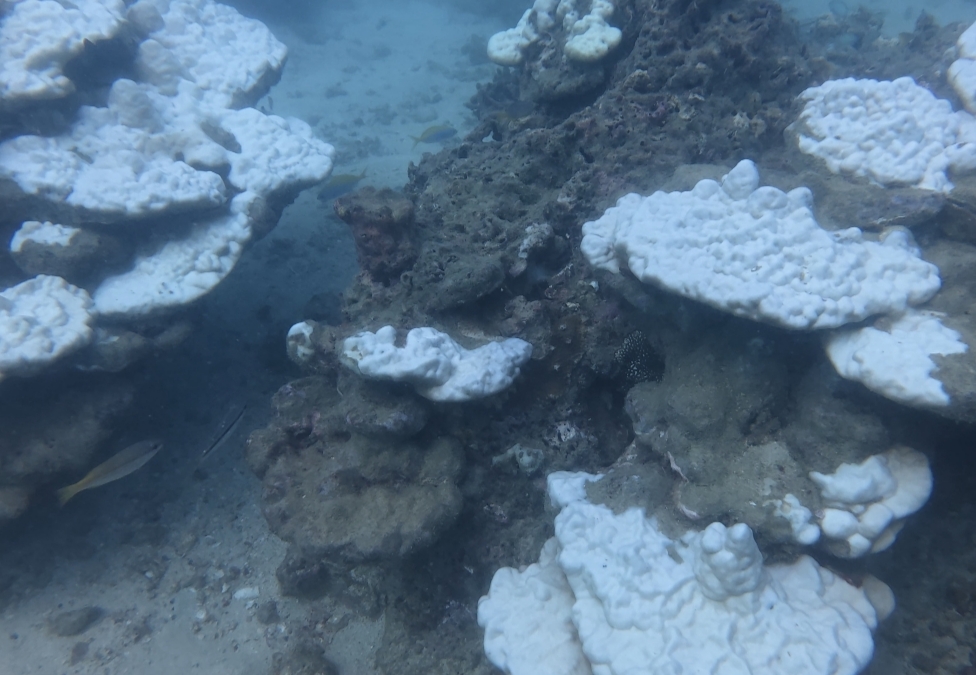
At our most recent survey in May 2026, we observed bleaching affecting approximately 15–20% of corals at our restoration site. Dead fragments were removed where necessary. However, bleached corals were left in place because many can recover if conditions improve.
Bleaching is becoming more common throughout the region. Thailand has experienced multiple bleaching events in recent years as sea temperatures have periodically exceeded seasonal averages. According to NOAA, Scientists warn that reefs in Southeast Asia, including Thailand, remain vulnerable to further bleaching during periods of elevated sea temperatures.
Scientists expect coral bleaching to remain a major challenge throughout Southeast Asia as ocean temperatures continue to rise.
Are More Coral Bleaching Events Expected in Thailand?
Yes.
Marine scientists expect bleaching events to continue occurring in Thailand if periods of unusually warm water persist. Monitoring continues to assess ocean temperature patterns across the Pacific, including the potential development of future El Niño conditions. El Niño events can increase sea temperatures in many reef regions and have been linked to major coral bleaching events around the world.
If prolonged periods of unusually warm water occur in Thailand, further bleaching could affect reefs along the Andaman coast. Even small increases in sea temperature can push corals beyond their thermal tolerance threshold, increasing stress and the likelihood of bleaching.
Unfortunately, local restoration projects cannot prevent global climate events such as El Niño. However, they can help improve reef resilience by maintaining healthy coral populations, supporting biodiversity, and reducing local pressures on recovering reefs.
The Andaman Sea reached temperatures of around 30°C during our latest survey. Similar temperatures have previously triggered bleaching throughout the region. While individual reefs may recover, repeated bleaching events reduce resilience and make long-term recovery more difficult.
This means restoration projects must increasingly focus on monitoring, maintenance, and supporting reef resilience.
Oil Spills, Pollution Events and Fishing
Not every threat develops slowly. Some arrive unexpectedly.
Earlier this year, a cargo ship incident near Phuket resulted in an oil spill that raised concerns throughout the region. When incidents like this occur, the potential impacts can be significant. Oil can reduce water quality, affect marine life, and place additional stress on already vulnerable reefs.
Following the spill, we returned to our restoration site to assess conditions. Fortunately, we found no visible signs of oil-related damage on the restored corals, but we did find discarded fishing line and hooks that we removed from the corals.
Coral restoration sites do not exist in isolation. They remain connected to everything happening in the surrounding marine environment.
Why Are Crown-of-Thorns Starfish a Problem?
The crown-of-thorns starfish is a natural part of Indo-Pacific reef ecosystems. However, population outbreaks can become a serious threat.
These starfish feed directly on live coral tissue. Large numbers can consume significant areas of reef within a short period. According to the Great Barrier Reef Marine Park Authority, crown-of-thorns starfish outbreaks are one of the leading causes of coral loss on many Indo-Pacific reefs (1. GBRMPA, 2024).
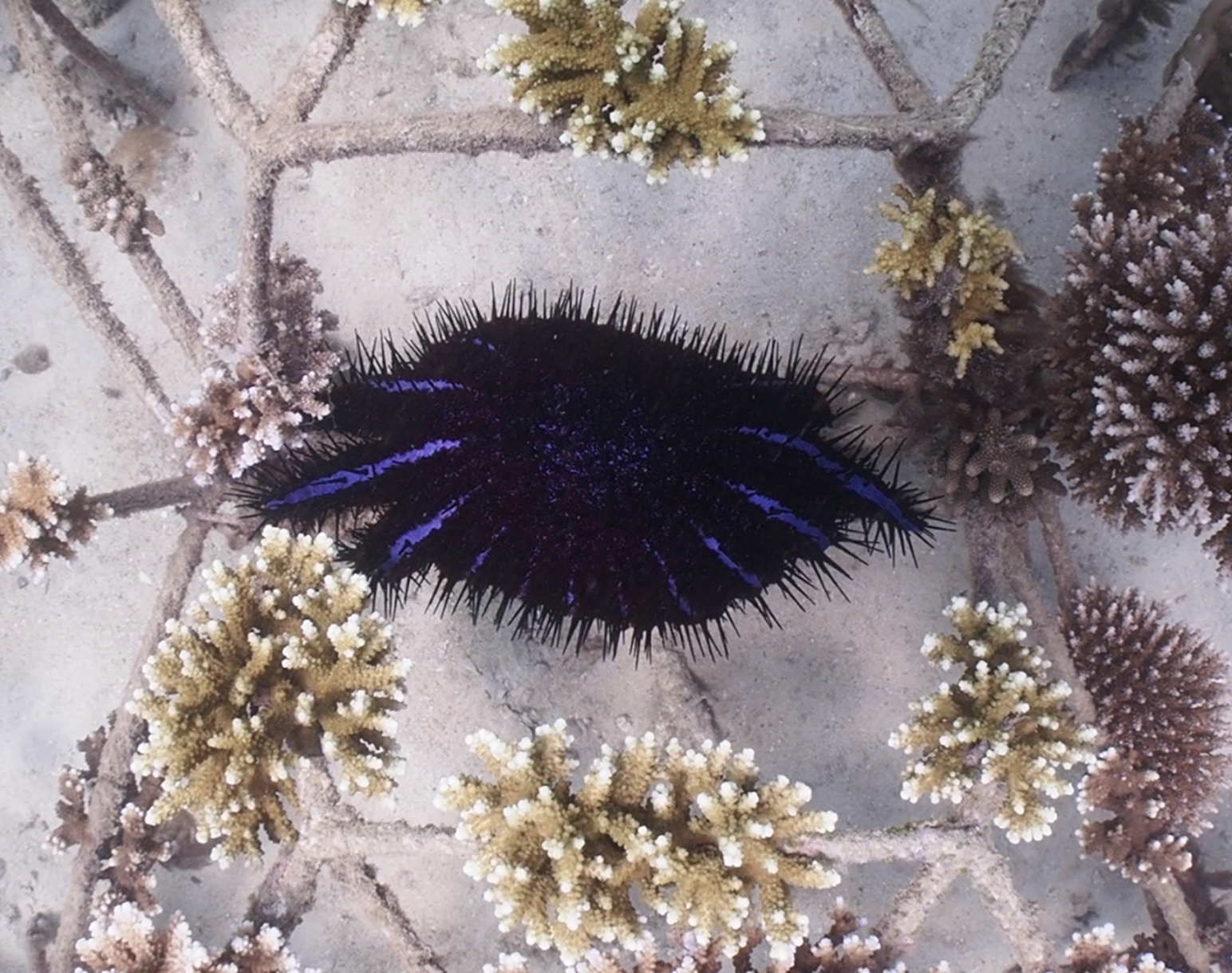
Recently, we have needed to remove more crown-of-thorns starfish from areas around our restoration site. This helps reduce pressure on recovering corals and protects years of restoration work. Managing outbreaks remains an important part of reef conservation throughout the region.
Natural predators also play an critical role in controlling crown-of-thorns starfish populations. Several species found in Thai waters are known to prey on crown-of-thorns at different life stages. These include the giant triton snail (Charonia tritonis), pufferfish, triggerfish, wrasse species, and some shrimp and crab species. While predators alone cannot prevent outbreaks, healthy reef ecosystems with diverse marine life may help limit population growth.
This highlights another important benefit of coral restoration. As reefs recover, they provide habitat for a wider range of marine species. Over time, increasing biodiversity can help strengthen natural ecological processes, including predator-prey relationships.
Why Is Algae a Challenge for Coral Restoration?
Corals and algae compete for the same space. When algae become dominant, young corals often struggle to survive.
Algae can block sunlight, reduce available settlement space, and slow coral growth. This is why maintenance is such an important part of restoration. Our team regularly removes excess algae from restoration structures and surrounding areas.
Without this maintenance, algae can quickly overwhelm newly established corals. The challenge often becomes greater after disturbances such as bleaching events. Damaged reefs frequently experience increased algae growth because fewer healthy corals remain to compete for space.
Recent research has revealed another challenge facing damaged reefs. Following severe bleaching events, some coral skeletons become hollowed out while algae continue growing across the surface. At first glance, these areas may still appear reef-like. However, the underlying structure is weakened and provides fewer benefits for marine life.
Scientists studying reefs in French Polynesia found that these hollowed coral skeletons can leave reefs trapped in a degraded state, where algae dominate and natural recovery becomes much more difficult (2. Pulitzer Center, 2025). This highlights the importance of early intervention. By maintaining coral cover and controlling algae growth, restoration projects may help prevent reefs from becoming locked in this cycle of decline.
Why Fish Matter More Than Many People Realise
Healthy fish populations help maintain healthy reefs. Many reef fish feed on algae throughout the day. These species help prevent algae from outcompeting corals. Parrotfish, surgeonfish, and rabbitfish are particularly important because they act as natural grazers.
Research has shown that herbivorous fish play a critical role in supporting coral recovery by controlling algae growth (3. ICRI, 2024).
As our restoration site has developed, we have observed increasing fish activity around the reef stars. This is encouraging. More fish means greater natural grazing pressure. In turn, this helps create better conditions for coral growth and recovery. Healthy coral reefs support fish populations, and healthy fish populations support coral reefs. The relationship works both ways.
Can Coral Reefs Recover Despite These Challenges?
Yes.
Coral reefs can recover despite bleaching, predators, algae growth, and other environmental pressures.
However, recovery takes time. Restoration projects cannot eliminate global threats such as climate change, but they can improve local reef resilience and accelerate recovery in damaged areas.
At our Phuket restoration site, we have already seen coral fragments grow, fuse together, and attract increasing numbers of fish. These are positive signs! Every surviving coral contributes to reef recovery. Every fish returning to the area helps strengthen the ecosystem. And every survey provides valuable information for future conservation efforts.
The challenges facing coral reefs are significant. Nevertheless, restoration remains an important tool for helping reefs recover and adapt in a changing ocean.
Learn more about our coral restoration project and how you can get involved here, and support us by following us on Instagram and Facebook.
References:
- Great Barrier Reef Marine Park Authority (2024). Crown-of-Thorns Starfish Management and Coral Reef Impacts.
- Pulitzer Center (2025). Scientists’ Discovery of Hollowed Coral Skeletons After a 2019 Bleaching Event Reveals a Reef That Isn’t Coming Back.
- International Coral Reef Initiative (2024). Coral Reef Restoration and the Role of Herbivorous Fish in Reef Recovery.
Related Articles
-

Climate Change & Corals: How Extreme Weather and Warming Seas Shape Our Reefs
In recent years, Southeast Asia has experienced increasingly unpredictable and severe weather…
-
Corals in Thailand: How You Can Help with DiveRACE
When people talk about scuba diving in Thailand, they almost always mention…
-
Acropora Corals in Thailand: The Science Behind Our Restoration Work
Why We Use Acropora Corals in Our Thailand Restoration Project If you’ve…