

The Similan Islands is a popular dive location on the west-coast of Thailand, known for it’s unique topography, crystal-clear waters, and extraordinary marine biodiversity. Yet one of the most compelling aspects of diving here lies not only in the diversity of species, but in the relationships that connect them. These relationships — known as symbiosis — underpin the health, resilience, and complexity of reef ecosystems.
MV DiveRACE Class X runs frequent liveaboard trips to the Similan Islands throughout the diving season from the 15th of October to the 15th of May, offering divers the chance to witness these remarkable interactions firsthand. You can learn more or book your next trip here.
What is Symbiosis?
Symbiosis refers to the close and long-term interaction between different species living in the same environment. It takes several forms: mutualism benefits both partners; commensalism benefits one without affecting the other; and parasitism benefits one while harming its host. In coral reef ecosystems, symbiosis shapes behaviors, influences survival, and creates the complexity that divers admire.
Creatures form alliances, sometimes to survive, sometimes just for convenience — and sometimes, let’s be honest, in ways that aren’t very pleasant. Together they reveal that the reef is not simply a collection of species, but a network of interdependence. From the well-known clownfish to hidden partnerships inside corals, symbiosis is everywhere if you know where to look.
Let’s dive in: Here are ten of the most remarkable examples of symbiosis that I’ve observed while diving in the Similan Islands:
1. Sea Anemones and Anemonefish
The partnership between anemones and anemonefish is one of the most recognizable symbols of coral reefs worldwide. Anemones protect their fish residents with stinging tentacles that deter predators. The fish, in turn, are immune thanks to a specialized mucus coating. This allows them to dart in and out with confidence while other small reef fish keep their distance.
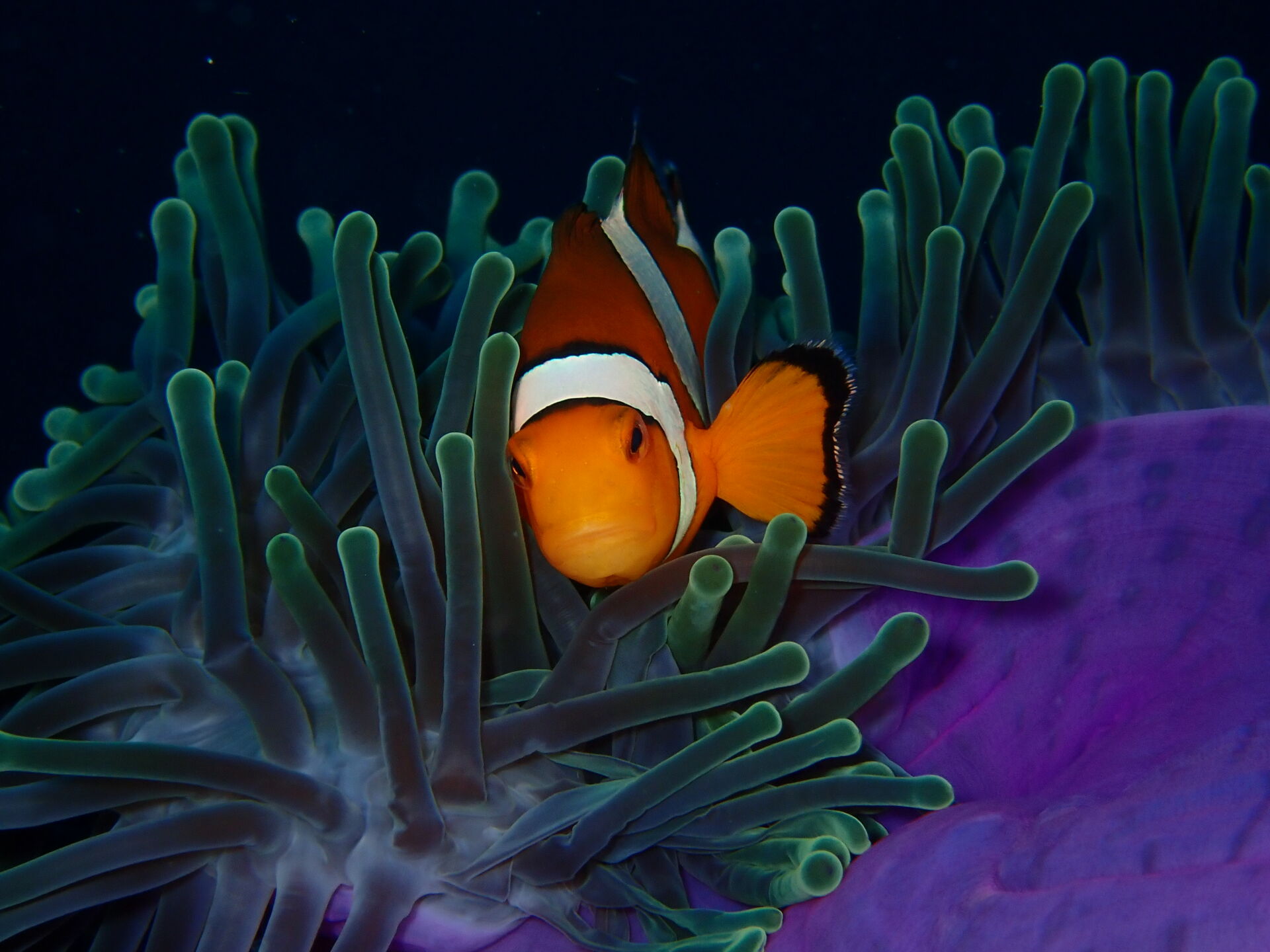
The benefits are not one-sided. In return, the clownfish defend their host aggressively. They chase away butterflyfish, clean parasites, and improve water circulation through constant swimming. Waste produced by the fish even provides the anemone with nutrients. Together, they form a textbook example of mutualism.
As a diver, I never tire of stopping at an anemone patch in the Similans. They are found on most dive sites, particularly at Richelieu Rock where they perch in abundance on the limestone rock. Watching clownfish rush boldly towards my camera, only to retreat safely into the tentacles, is both entertaining and revealing. It reminds me that even small fish play essential roles in reef survival.
2. Gobies and Shrimp
Probably one of my favourites to watch. On sandy flats between reefs, gobies and alpheid shrimps build partnerships based on cooperation. The shrimp digs tirelessly, creating a burrow that both species share. Its eyesight is poor, so it cannot defend itself alone.
The goby serves as its lookout, scanning the surroundings for predators. A flick of its tail is enough to signal danger. At once, both the shrimp and goby retreat together into the burrow. Each brings skills the other lacks, making survival possible in exposed habitats. This partnership is another classic example of mutualism, where both species rely on each other and share equal benefits.
Observing this behavior is fascinating. I love scanning the sandy seabeds in the Similan Islands or Boonsung Wreck for the gobies who watch me with hesitation as I approach. At first, the goby instantly signals the shrimp, and they both dive into their burrow as I hover nearby. But if I remain still, they become more comfortable. I watch as the shrimp carries out endless grains of sand while the goby stands guard. The precision and patience in their teamwork is something we can learn from!
3. Corals and Zooxanthellae
While less visible than fish and shrimp, the relationship between corals and zooxanthellae is the foundation of the reef itself. Zooxanthellae are microscopic algae that live inside coral tissues. Through photosynthesis, they produce sugars that provide corals with up to 90 percent of their energy needs. In return, the algae receive protection and access to essential nutrients within the coral’s tissues. This is mutualism, as both coral and algae depend on each other to survive.
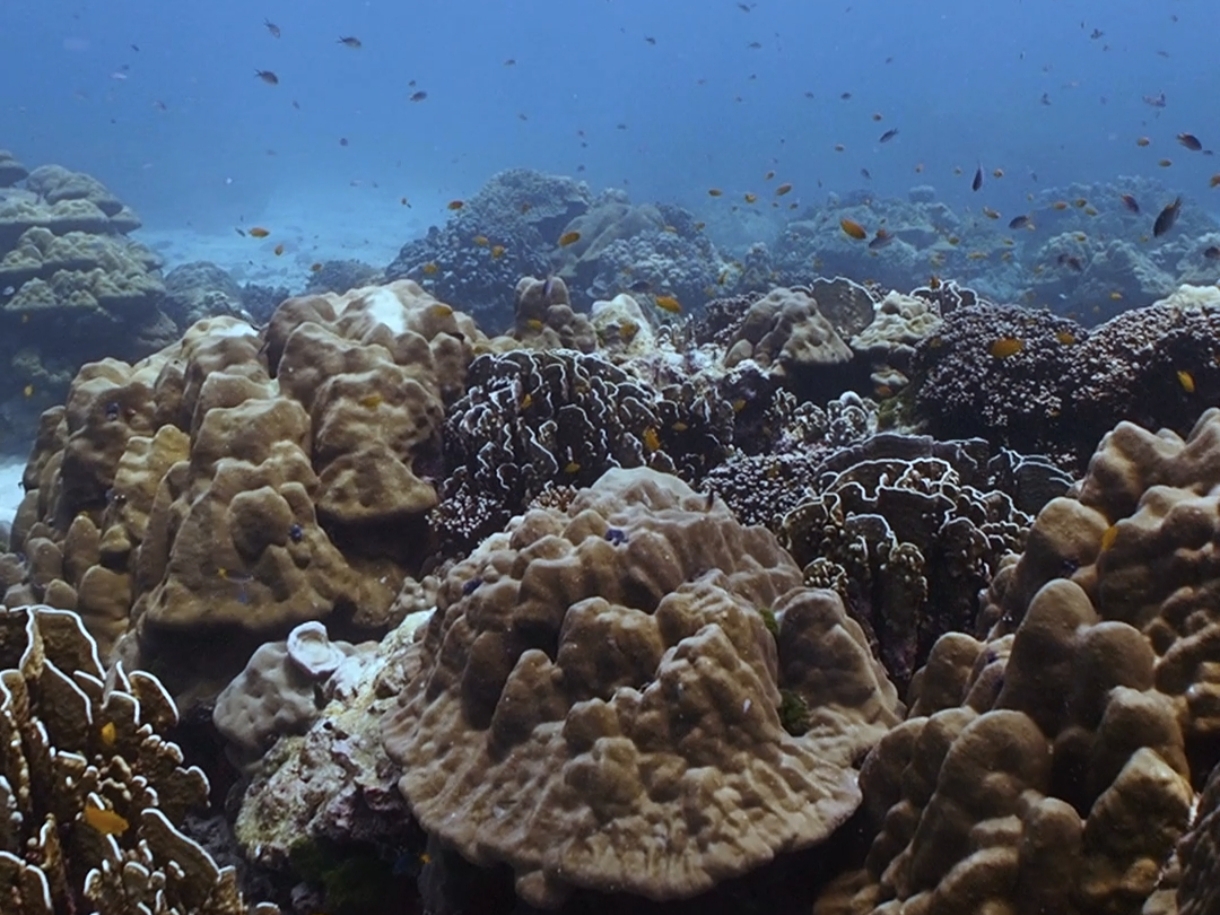
This delicate balance allows reefs to thrive in nutrient-poor tropical waters. However, when corals are stressed by heat, pollution, or sediment, they may expel their algae. This causes coral bleaching, leaving colonies vulnerable and often unable to recover. Much of the Similan Islands has rebounded from past bleaching events, but scars remain on certain reefs. The partnership between corals and zooxanthellae is a reminder that the reef’s resilience depends on stability.
Diving here, I am often struck by the scale of this invisible relationship. The Surin Islands, where we do a few dives on each trip with MV DiveRACE Class X, host extensive hard coral colonies that carpet the reef. Massive coral heads, entire reef walls — all exist because of microscopic algae. It changes the way I look at the reef: as a living partnership on a grand scale.
4. Cleaner Wrasse and Reef Fish
Some of the most entertaining scenes happen at cleaning stations. Small bluestreak cleaner wrasses set up shop on bommies or sections of the reef that extend outwards, and bigger fish arrive like customers at a spa. Wrasses remove parasites off everything from groupers to manta rays, and sometimes even turtles.
Groupers, parrotfish, and even manta rays pause motionless, trusting the wrasse completely. The service is essential to their wellbeing, and the wrasse receives a constant supply of food. These stations are among the most interesting examples of mutualism on coral reefs.
I see this often at West of Eden, Similan Islands number 7. The sight of a tiny wrasse entering the gills of a massive predator demonstrates trust and necessity. It feels like witnessing an unspoken agreement — one that keeps the reef in balance. They have also been known to clean the ears of divers!
5. Remoras and Large Marine Animals
Remoras, or suckerfish, are opportunists. They use suction discs on the top of their heads to attach themselves to larger marine life like mantas, sharks, and turtles. From this position, they gain free transport and access to food scraps and waste from their host animal.
For the host, the benefits are minimal. In some cases, remoras may even cause irritation This makes the relationship closer to commensalism, or even mild parasitism, than mutualism.
I’ve seen mantas and sharks flick and roll in frustration at Koh Bon and Koh Tachai, clearly trying to shake remoras off. Sometimes entire gangs of them tag along, clinging stubbornly. For divers, it’s amusing to watch — a manta gliding effortlessly with an entourage of freeloaders. I have even seen them attach to divers’ legs! It’s a reminder that not every partnership underwater is perfectly balanced.
6. Cleaner Shrimp and Fish
Cleaner shrimp provide a service similar to cleaner wrasse, but instead they operate from sheltered stations within crevices. By waving their long antennae, they signal availability to passing fish. When accepted, they climb confidently onto their client.
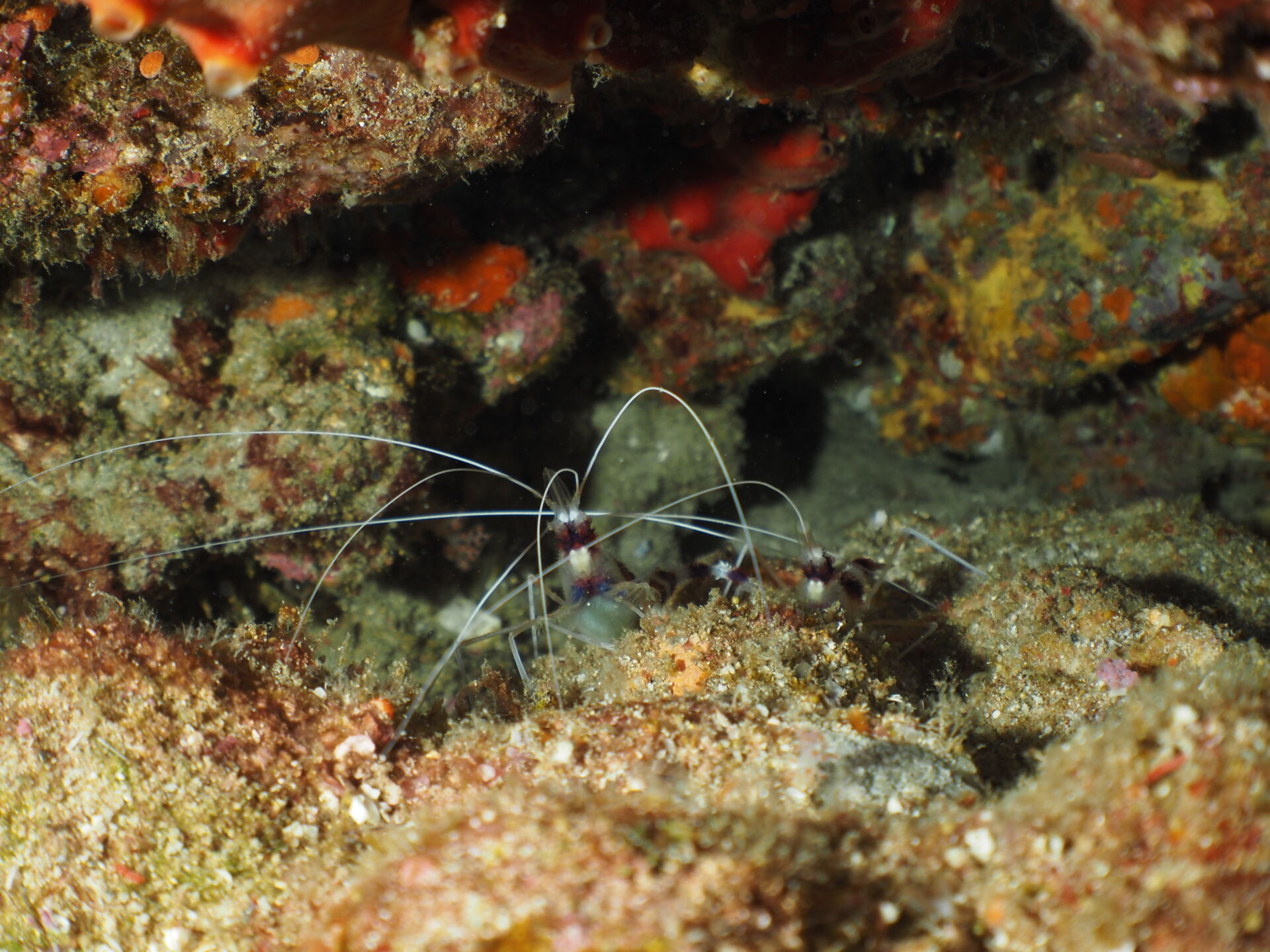
The shrimp remove parasites and debris, often entering gill chambers and mouths. Fish tolerate this delicate work, which demonstrates a remarkable level of trust. In return, the shrimp secure a reliable food source. They are often seen with moray eels, cleaning the lengths of their bodies and even inside their mouths! This is another example of mutualism, as both the shrimp and the fish benefit from the interaction.
Encountering a cleaner shrimp station is mesmerizing. There are many different types of cleaner shrimp, from the durban dancing shrimp to the banded cleaner shrimp. I love searching for their crevices — especially at Richelieu Rock where there are many hiding places — and tentatively holding my hand just above the coral to see if they are interested in cleaning it… hey — it’s a free manicure! Sometimes they are, especially durban dancing shrimps, but other times they can be timid so I leave them to catch their next client. Watching a small shrimp working inside the mouth of a predator, even moray eels, highlights the reef’s delicate balance of cooperation.
7. Porcelain Crabs and Anemones
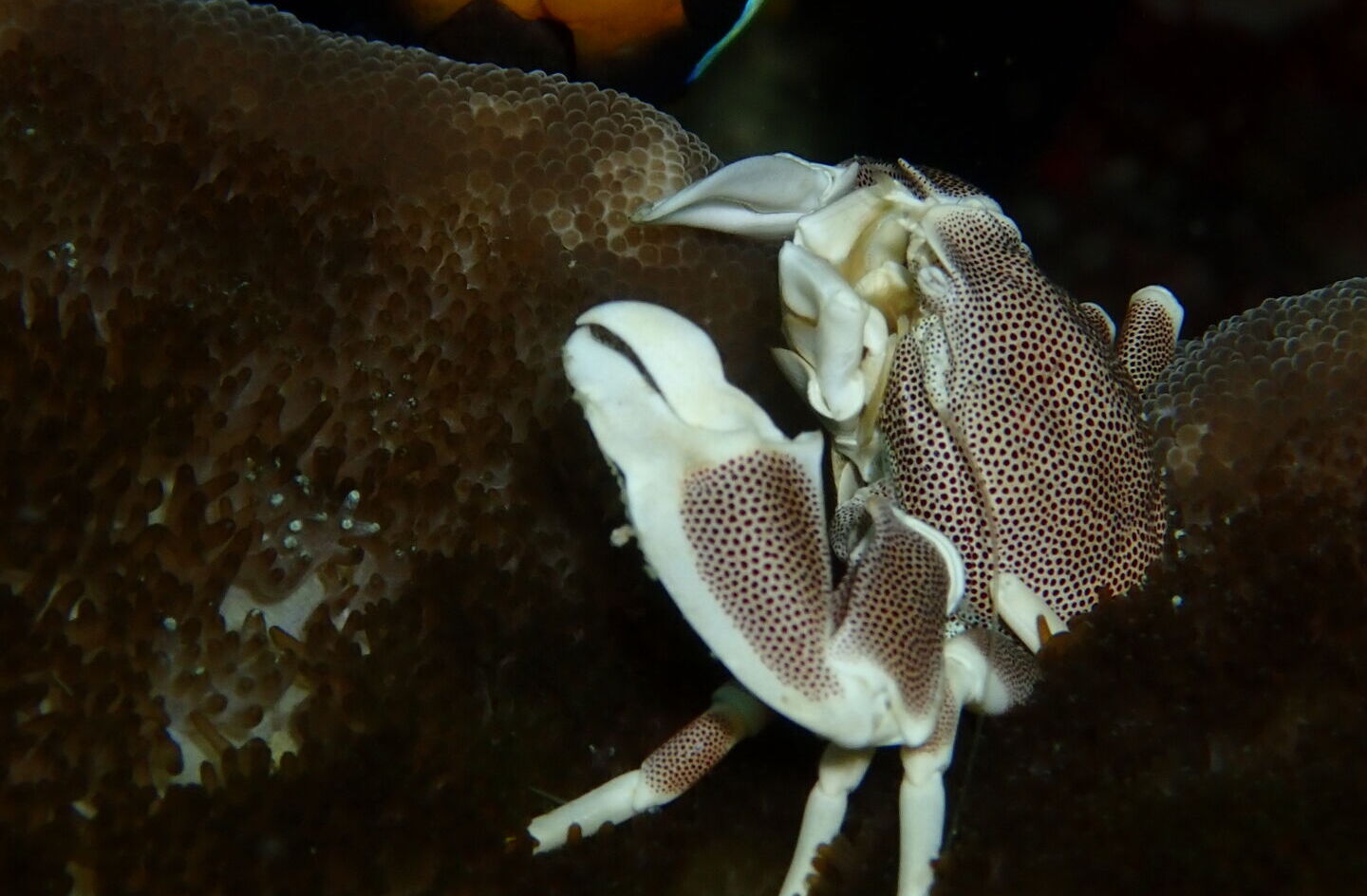
These interesting crabs live among the tentacles of sea anemones. Their flat bodies and fan-like claws allow them to filter plankton while enjoying the anemone’s protection.
The relationship is largely commensal. The anemone is unaffected, while the crab gains shelter from predators. Interestingly, they often coexist alongside anemonefish, forming small, multi-species communities within a single host.
I always enjoy spotting them during dives. At first, they are easy to overlook, blending into the folds of the anemone. They are common at dive sites like Elephant Head Rock and areas around the Surin Islands. Discovering one feels like uncovering a hidden layer of life that many divers miss.
8. Gobies and Corals
Some gobies prefer corals to sandy burrows. They live among branching colonies, finding safety while offering their hosts protection. Gobies deter corallivores such as crown-of-thorns starfish and may graze on algae that would otherwise smother coral tissue.
This mutualism benefits both partners. The coral provides structure and safety, while the goby enhances the coral’s survival. Healthy corals, in turn, support countless other reef organisms.
Seeing coral gobies reminds me how small species contribute to reef resilience. They are common around sandy reefs like Hideaway Bay, between Similan Islands number 5 and 6. Their roles may be hidden, but without them, the reef would be more vulnerable.
9. Parasites and Hosts
Not all symbiotic relationships are beneficial. Parasitism is common on reefs, and the Similans are no exception. Isopod parasites attach to fish, often inside mouths or gills, feeding on blood, mucus and even the host’s food.
These parasites weaken their hosts, providing no benefit in return. Although unsettling, such interactions are part of ecological balance, influencing populations and adaptations over time. They are reminders that survival in the reef is competitive as well as cooperative.
As a diver, encountering parasites is less pleasant, but it provides perspective. I have even seen one inside the mouth of a false clown anemonefish, so it’s worth looking closely when you see an anemone at Richelieu Rock! It’s a reminder that the reef is not only about beauty and harmony. It is also about struggle and imbalance, which makes its resilience even more impressive.
10. Christmas Tree Worms and Corals
Christmas tree worms are tube-dwelling polychaetes that embed themselves in coral skeletons. Their colorful crowns extend to filter plankton, and they retract instantly when disturbed. The worms don’t significantly harm the coral, but they do rely on it for structure. This is commensalism, as the worm benefits while the coral is largely unaffected. Colonies of these worms can transform a single coral head into a striking mosaic of spirals.
I find them captivating. Their sudden retreat at the approach of a diver is a reminder of how responsive even the smallest creatures can be. They are common on the hard coral bommies at Tree Trees, Similan Island number 9. I always slow down when I see them, because they remind me to notice the small things. Sometimes, the tiniest details are what make a dive unforgettable.
Symbiosis in the Similan Islands shows us that the reef is far more than a backdrop for big animals. It is alive with small, hidden partnerships unfolding in anemones, coral branches, sandy burrows, and rocky crevices. These interactions reveal the reef’s complexity and resilience, often in places where a quick glance would miss them entirely. As divers, taking the time to look closer — into cracks, beneath tentacles, and across the tiniest coral heads — reminds us that the most fascinating encounters are often not the largest, but the ones tucked quietly out of sight.
This connection inspires our work with MV DiveRACE Class X and our Coral Restoration Project in Phuket, Thailand. Learn more about our project here. By joining one of our Similan Islands liveaboard trips, you don’t just explore — you help support local conservation efforts that protect the partnerships keeping the reef alive. Book your next trip here.
Related Articles
-
The Vanishing Wrecks of the South China Sea
Wrecks have a special pull on divers. They’re time capsules, artificial reefs,…
-

MV DiveRACE Class X
INTRODUCTION We are excited to present our latest liveaboard project – MV…
-

Thank You Class E.
Dear Friends, We want to express our heartfelt thanks to everyone for…