
Mention currents and scuba diving, and destinations such as Komodo or the Maldives might come to mind. The Similan Islands are a little different.
Currents here are generally mild, and strong-current diving isn’t what the Similan Islands are known for. Many dives take place along sloping reefs, around granite boulders or in areas protected by the islands.
That doesn’t mean we never experience stronger currents. Conditions change with the tides, and some of our more exposed dive sites can occasionally have plenty of water moving through them. Koh Bon, Koh Tachai Pinnacle and Richelieu Rock are probably the places where I’ve experienced this the most.
Even at these sites, strong current isn’t guaranteed. I’ve dived them when there has been strong currents and returned an hour later to find completely different conditions.
That’s probably the most important thing to understand about currents in the Similan Islands. They are part of diving here, but they don’t usually define the diving.
How Strong Are Currents in the Similan Islands?
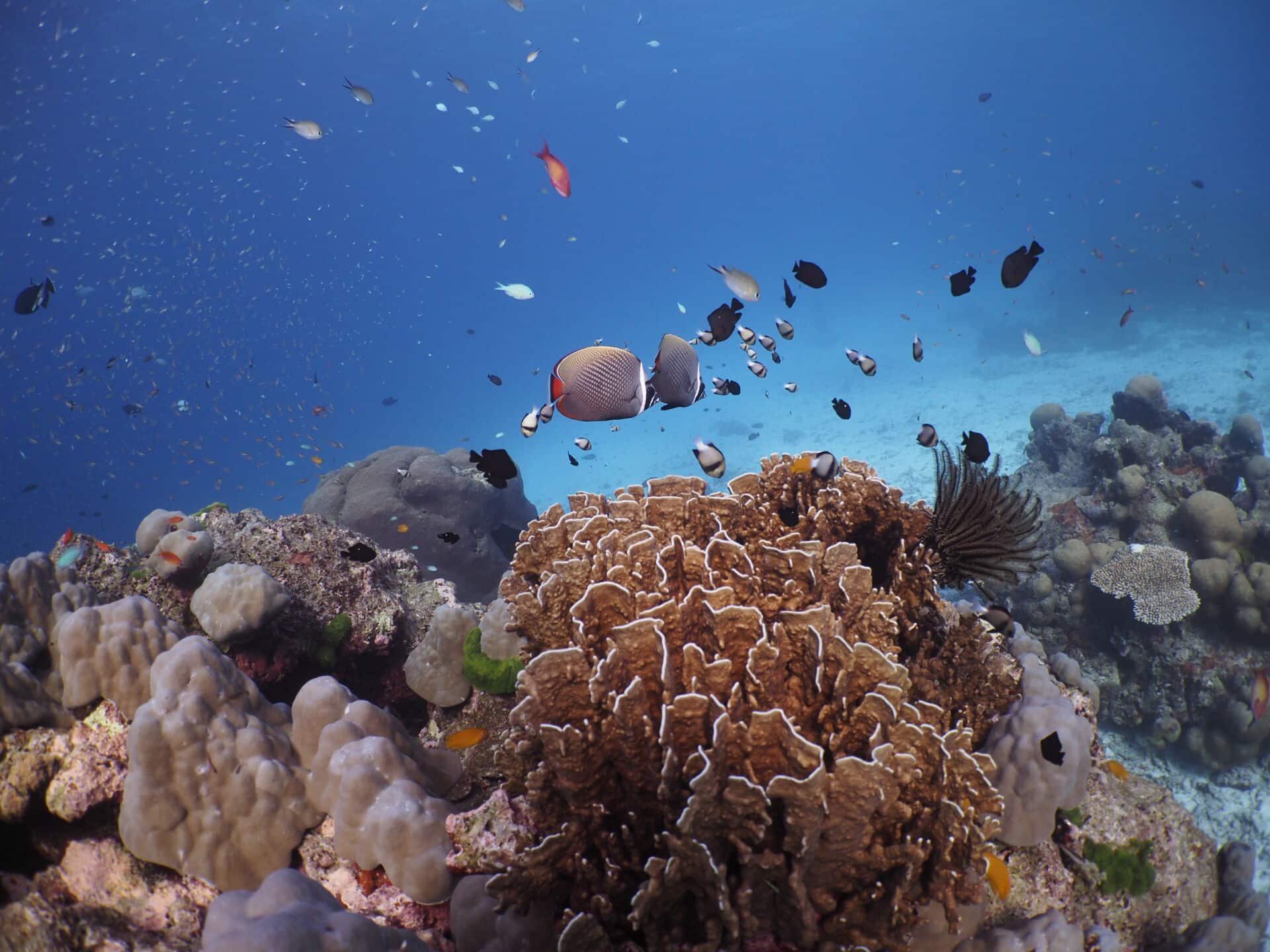
For most divers, currents in the Similan Islands are very manageable. A typical trip on board MV DiveRACE Class X includes a mixture of underwater landscapes. There are gently sloping coral reefs, protected bays, huge granite boulders, ridges and deeper pinnacles.
Many of these sites experience little more than a gentle current. Sometimes that current even does some of the work for us, carrying us slowly along the reef.
There are also plenty of options when conditions become stronger. Our dive team can choose a protected side of an island or change the entry point. We might follow the current instead of swimming against it, or choose one of the area’s sloping reefs. This makes diving here quite different from destinations famous for consistently powerful currents.
You don’t come to the Similan Islands expecting every dive to involve negative entries or racing drift dives. For much of a trip, current may barely be something you think about. However, the ocean isn’t completely predictable. Every now and then, the Similans remind us of that.
Why Do Currents Change?
Currents around the Similan Islands are strongly influenced by the tides and underwater topography. As the tide rises and falls, large amounts of water move around the islands and across the reefs. We generally describe these stages as the flood tide, when the tide is rising, and the ebb tide, when it is falling.
This movement of water can affect both the strength and direction of the current. Before diving, we can check local tide tables to understand where we are in the tidal cycle. This helps us anticipate the possibility of stronger currents and plan the dive accordingly. However, a tide table doesn’t tell us exactly what we’ll experience underwater.
The shape of each dive site makes a big difference. When water meets an island, ridge, channel or submerged pinnacle, it has to move around it. This can cause the current to accelerate in some areas while creating shelter in others.
It also means conditions can vary significantly within a single dive site. Water might be moving quickly across the top of a ridge while the area behind it is calm. Around the Similan Islands, our huge granite boulders can have strong current on one side and very little on the other.
Experienced dive guides use this combination of tide information and local knowledge when planning a dive. Instead of fighting the water, we use the underwater landscape to work with it.
When the Current Does Pick Up
Although currents in the Similan Islands are usually mild, there are days when we get considerably more water movement. In my experience, Koh Bon, Koh Tachai Pinnacle and Richelieu Rock are where I’ve felt it most.
These dives have also taught me that stronger current doesn’t necessarily mean a difficult or disappointing dive. Usually, it’s about understanding the site and knowing where to position yourself, which our dive guides on board MV DiveRACE Class X are very experienced with.
Koh Bon
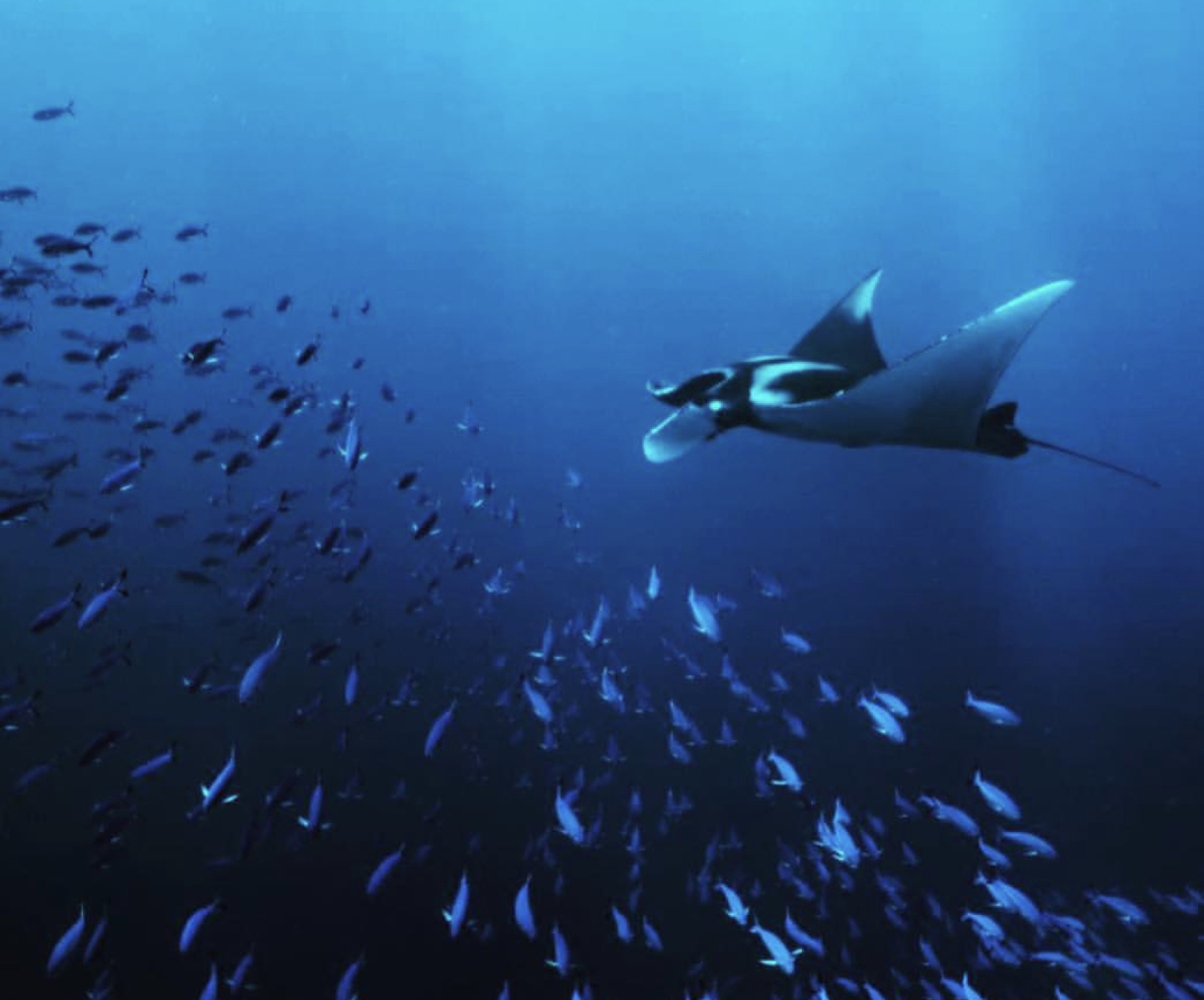
Koh Bon is a perfect example. The ridge extends away from the island into deeper water, and current can sweep across it surprisingly quickly. Cross over the top on a stronger day and you can immediately feel yourself being pushed away from the ridge. When manta rays are around, however, that ridge is often exactly where we want to be.
Rather than swimming out into the current looking for them, we can tuck behind the ridge and use it for shelter. I’ve had dives where we’ve hovered comfortably there while the water moved above us, simply watching the blue and waiting for a manta to appear. Sometimes they circle the ridge and return several times, so there is no reason to waste energy chasing them.
Koh Tachai Pinnacle
Koh Tachai Pinnacle can feel a little different. Because the pinnacle is exposed, we sometimes use the buoy line to descend when the current is stronger. This stops us drifting away before we even reach the site.
Once we’re down among the huge granite boulders, there is usually somewhere to hide. The rocks break up the flow and create protected areas between them. We can move from one sheltered section to another without spending the whole dive swimming against the current.
Occasionally, it really is ripping. I’ve had dives where we simply couldn’t get around the pinnacle and ended up staying on one side. But that’s not necessarily a bad dive. Koh Tachai has so much marine life around the boulders that we don’t need to cover the entire site. Sometimes accepting where the current allows us to go gives us more time to actually look at what’s around us.
Richelieu Rock
The same applies at Richelieu Rock. Current can determine how much of the site we explore, but Richelieu has plenty of corners, ledges and protected areas. Even when we can’t make it all the way around, there is always somewhere to shelter and an incredible amount to find. Most of the time, the current is mild enough to comfortably swim around the entire dive site.
I’ve finished dives there having covered only a fraction of the site and still feeling like there wasn’t enough time. This is also why we do multiple dives at Richelieu Rock during our trips on board MV DiveRACE Class X.
These are some of the more exposed dives we do, but they aren’t representative of every dive in the Similan Islands. On much of a trip, we experience little more than mild current or a gentle drift.
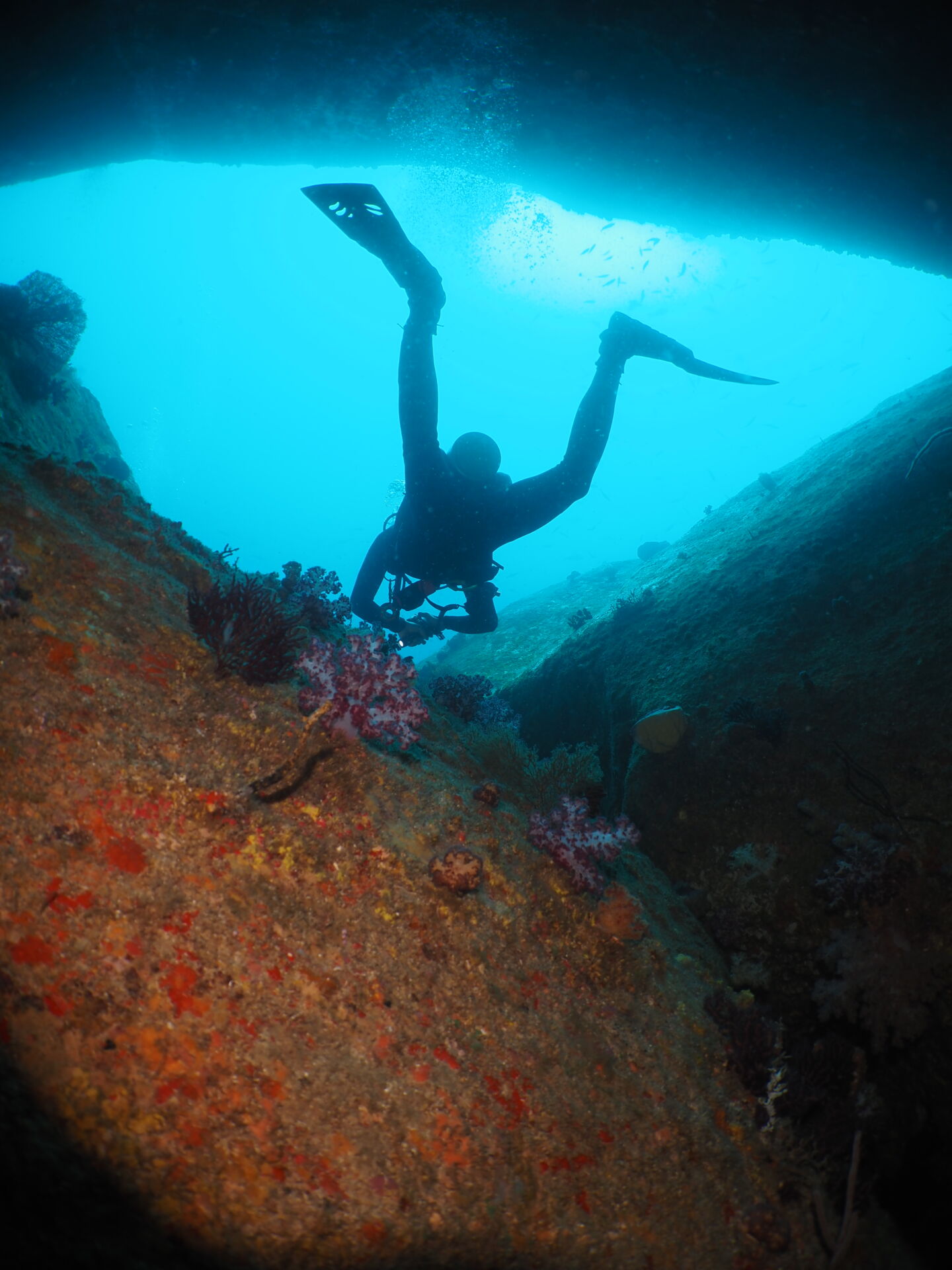
Elephant Head Rock and the ‘Washing Machine’
Elephant Head Rock is another interesting example of how underwater topography affects currents in the Similan Islands. The site is dominated by enormous granite boulders, with swim-throughs, channels and gaps between the rocks. As current reaches these formations, it can split and funnel around the boulders from different directions.
In certain areas, this creates turbulent water that divers sometimes describe as a washing machine effect. You might feel yourself being pushed one way and then another as the water moves around the rocks. It sounds much more dramatic than it usually feels.
The important thing is not to fight every movement. We follow our guide, maintain good buoyancy and use the enormous boulders for protection when needed. Move into a sheltered area behind the rocks and the difference can be immediate.
Elephant Head Rock is a great demonstration of how the shape of a dive site can influence what we feel underwater. The current isn’t simply travelling evenly from one direction. It is interacting with the landscape around us.
What About the Rest of the Similan Islands?
This is where it’s important to put those three sites into perspective. Koh Bon, Koh Tachai and Richelieu Rock are among the more exposed sites we visit. They are useful examples of how we handle stronger current, but they aren’t representative of every dive.
Much of the diving around the Similan Islands is considerably gentler. Long sloping reefs give us plenty of options when the current picks up. There are also protected sides of islands and sites where large granite formations provide natural shelter.
On many dives, we simply follow the reef. If there is a gentle current moving in the same direction, we let it carry us. This can turn the dive into an easy drift, with very little swimming required.
When the ‘Green Monster’ Arrives
Not every change in water movement around the Similan Islands comes from the tides. We also regularly encounter thermoclines, or what we often call the “green monster” here.
A thermocline forms where layers of water with different temperatures meet. Colder water is denser than warmer water, so these water masses can remain separated as they move through the area. Underwater, you can often see the boundary before you swim through it.
Around the Similan Islands, we can encounter this colder water at most dive sites, however it’s particularly noticeable at Elephant Head Rock, Christmas Point, West of Eden, Koh Bon, Koh Tachai and Richelieu Rock.

The water starts to shimmer and distort, almost like heat rising from a road. On some dives, I’ll hover just above the thermocline and put my hand into the colder water to test the temperature before crossing it. It’s always surprising how different it can feel just a few centimetres away.
Then you enter the green monster. Visibility can suddenly drop, the water becomes noticeably colder and the movement around you can change. I’ve experienced thermoclines that seem to push or pull us in a different direction, sometimes making it feel as though the current itself has suddenly changed. In reality, we’re moving between different bodies of water. Temperature differences, tides and local underwater topography can all influence how these water masses move around the islands.
The green colour comes from the different characteristics of the water mass, including the particles and plankton it can carry. Combined with reduced visibility and that sudden temperature drop, the boundary can look surprisingly dramatic as it moves across a dive site.
But there is another reason we pay attention when the green monster arrives…
Pelagic life can sometimes be lurking on the other side. Cooler, nutrient-rich water can support more plankton and attract marine life farther up the food chain. Larger species may follow these productive water masses in search of food. That means a wall of colder, greener water isn’t necessarily something we want to avoid.
I’ve spent plenty of time hovering just above that shimmering boundary, looking into the green and wondering what might come out of it. Sometimes it’s simply colder water. And sometimes, something much bigger is waiting behind it.
How Do We Dive When the Current Gets Stronger?
Our simplest advice is not to waste energy fighting the water. Swimming hard against current increases your breathing rate and gas consumption. It also tires you much faster than normal swimming.
Instead, we use precise drop points, and the reef itself. Large rocks, pinnacles and ridges create areas of calmer water. Moving behind them can make an immediate difference.
If the current is travelling along a reef, we may simply drop at the beginning and go with it. This is the principle behind drift diving. Instead of returning to a fixed point, we follow the reef and ascend somewhere farther along it.
Your dive guide will consider the expected current when planning the entry point and route. If conditions are different underwater, that route can change. There is no reason to force a particular dive plan when the ocean is telling us otherwise.
Finding the Split
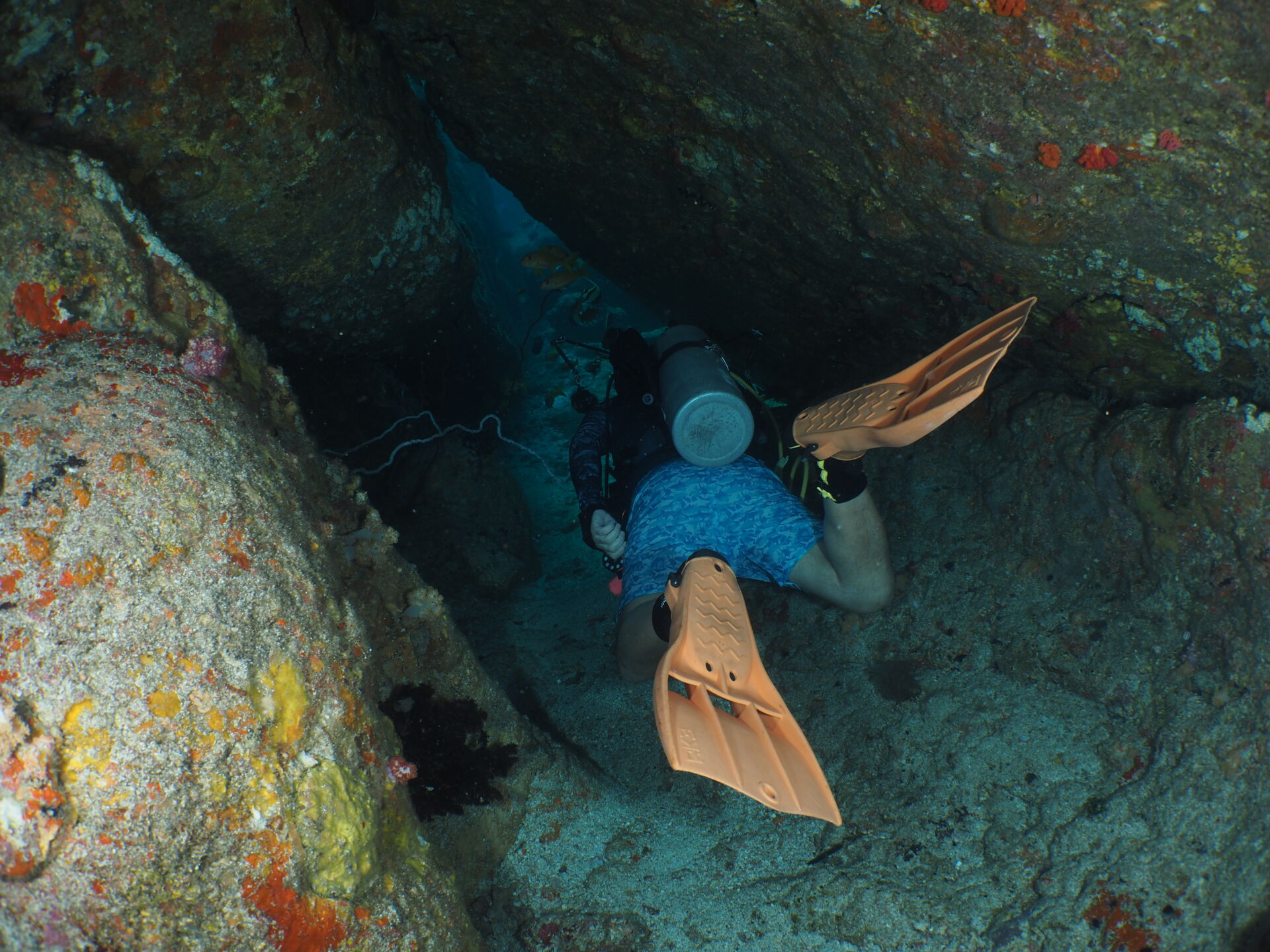
Current can also show us exactly where we want to be. When moving water reaches a pinnacle, ridge or section of reef, it has to move around it. The current hits the structure and splits, flowing above and around either side. Divers often call this area the split, and it can be one of the most interesting parts of a dive site.
Moving water carries plankton and nutrients, which can concentrate marine life around these exposed points. Fish gather to feed and schools often become much denser. Larger predators may also patrol nearby, taking advantage of all that activity.
It sounds like we should be sitting in the strongest part of the current, but that’s where the shape of the reef helps us again. Right against the pinnacle or reef, between the water flowing around either side, there can be a small pocket with surprisingly little current.
We can hover inside that protected area while the water rushes around us. I’ve had dives where we’re sitting comfortably in almost no current, watching schools of fish hold position just a few metres away. Move slightly too far to either side and you immediately feel the water again.
It’s one of my favourite examples of why current isn’t necessarily something to avoid. Sometimes finding exactly where the water is moving brings you to the best part of the dive.
Do You Need Current Diving Experience for the Similan Islands?
You don’t need to be an experienced current diver to enjoy the Similan Islands.
This isn’t a destination where divers should expect powerful current on every dive. Good buoyancy and general comfort underwater certainly help. Staying aware of your buddy and following your dive guide are also important whenever the water is moving.
But there is a huge variety of diving here. One dive might take us slowly over a sloping coral reef with almost no current. Another could be a gentle drift around enormous granite boulders. Then, occasionally, we get a more energetic dive at somewhere like Koh Tachai. Those dives add variety rather than defining the whole trip.
Diving With the Ocean, Not Against It
After diving these sites many times, one thing becomes obvious: conditions are never exactly the same twice. The tide changes, the current changes and marine life moves with it.
Sometimes Koh Tachai lets us explore almost the entire pinnacle. Another day, we might spend most of the dive tucked among the boulders on one side.
At Koh Bon, we might deliberately stay behind the ridge because the current is running across it. If mantas are around, that’s often exactly where we want to be anyway.
At Richelieu Rock, we might only explore one section and still surface wondering how the dive went so quickly.
But these stronger-current dives are only one part of diving in the Similan Islands. Most of the time, currents are mild and manageable. When the water does start moving, good planning and local knowledge make a huge difference. We don’t need to fight the ocean. We simply adapt the dive around it.
Want to experience the Similan Islands for yourself? Join us on board MV DiveRACE Class X and explore the Similan Islands, Koh Bon, Koh Tachai and Richelieu Rock during the 2026–27 season. Book your Similan Islands liveaboard trip here.
Related Articles
-

The Vanishing Wrecks of the South China Sea
Wrecks have a special pull on divers. They’re time capsules, artificial reefs,…
-
MV DiveRACE Class X
INTRODUCTION We are excited to present our latest liveaboard project – MV…
-
Thank You Class E.
Dear Friends, We want to express our heartfelt thanks to everyone for…