

Travelling to Thailand for a dive trip is often straightforward, but diving in the Andaman Sea requires more planning than many expect. The Similan and Surin Islands are remote, and reaching them involves several steps. With the right preparation, the journey becomes smooth, and the focus stays where it should be, on the diving.
Transfers: From Airport to Boat
Most trips begin in Phuket, which serves as the main gateway to the Andaman coast. From here, transfers continue north to Thap Lamu area where liveaboards depart for the Similan Islands. The pier is located around one hour north of Phuket Airport and approximately 20 minutes south of Khao Lak.
While the journey is relatively short, timing matters more than distance. Arriving at least one day before departure is strongly recommended. Flight delays, immigration queues, and traffic can all impact your schedule. A missed transfer is not easily fixed, especially when boats operate on fixed departure times.
DiveRACE arranges transfers from your hotel or airport with fixed timing. We use third party transfer companies that are familiar with Phuket and Khao Lak areas. Do note that as these transfers pick up guests from various locations, the overall time required to reach the pier may be significantly longer as compared to a private transfer. For guests who do stay outside of these areas, we can arrange for transfers for an additional fee.
If you are unsure where to stay before or after your trip, you can explore our Thailand Travel Series here. We share recommended locations, accommodation options, and activities to help you make the most of your time on land.
Weather: Understanding the Seasons
Thailand’s Andaman coast has clear seasonal patterns that directly affect diving conditions. The Similan Islands are typically open from mid-October to mid-May, with the best conditions often found between December and April. During this period, seas are generally calmer, visibility is better, and access to exposed dive sites is more consistent.
Outside of this window, monsoon winds bring rough seas and reduced visibility. During the season, conditions are generally calm, but short-term weather changes can still occur. Wind, current, and surface conditions may influence crossings and dive site selection.
It is important to approach each trip with some flexibility. The ocean does not follow a fixed schedule, and good operators will always prioritise safety and conditions over rigid plans.
During the monsoon season, when access to the Similan and Surin Islands is restricted, DiveRACE operations shift rather than stop. We offer shorter trips to more sheltered southern islands, as well as ongoing work at our coral restoration site. This involves regular monitoring, new structure installations, and dedicated trips to maintain and expand the area while conditions allow. These periods also allow time for vessel maintenance, crew training, and preparing for the upcoming season.
Remote Locations: Limited Access, Greater Responsibility
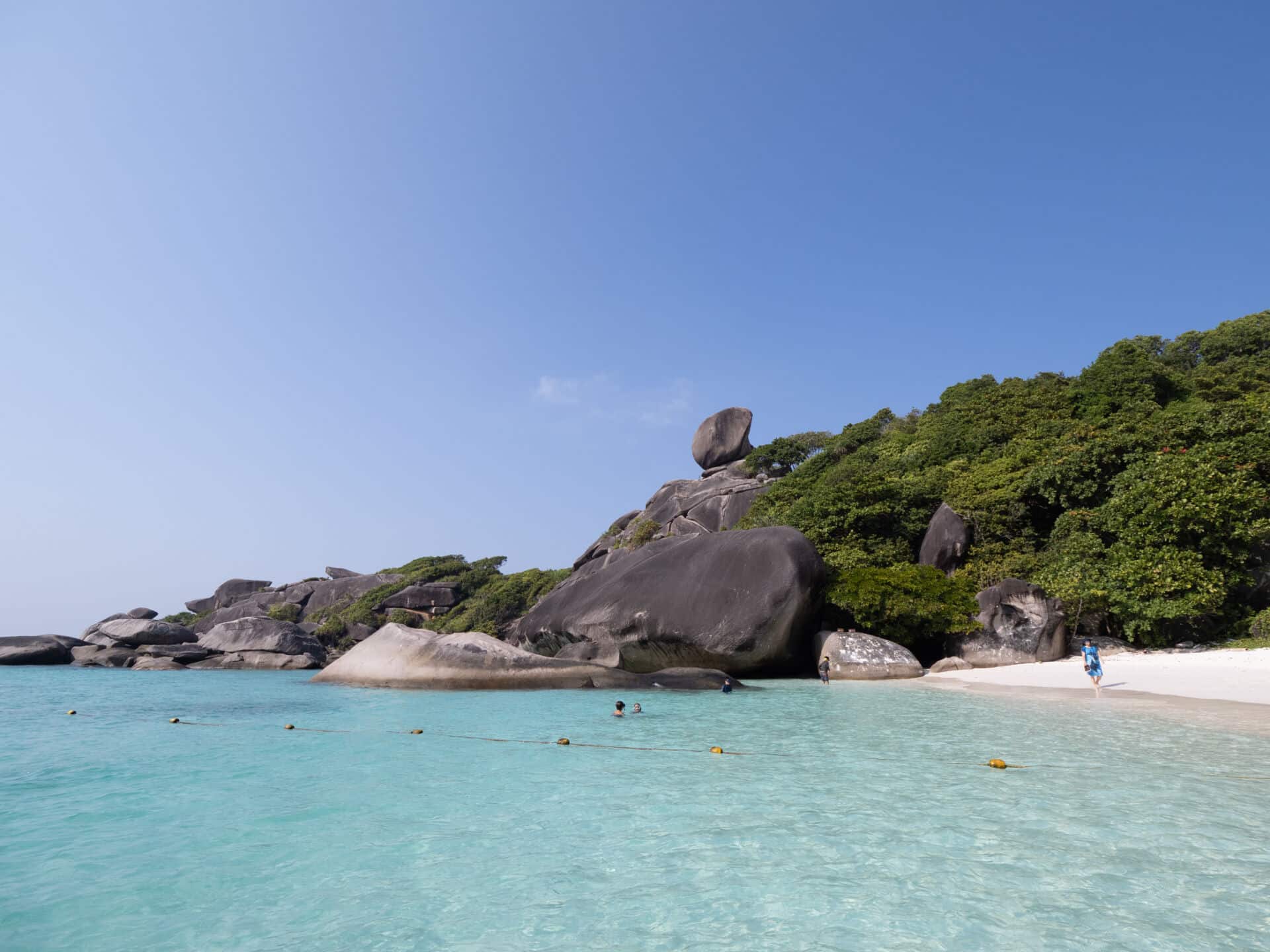
Once you leave the mainland, access to shops and services becomes very limited. The Similan and Surin Islands are protected national parks, with no convenience stores or easy replacements for forgotten items.
Packing carefully is therefore an essential part of dive safety. Personal medications, spare equipment, and basic necessities should always be included. Even small items, like mask straps or reef-safe toiletries, can make a difference over several days.
Seasickness is another factor worth considering. Even experienced divers can feel the effects during crossings. Preparing in advance helps ensure comfort throughout the trip.
Operating in remote environments also means relying on well-prepared vessels. Redundancy across key systems, including engines and power generation, helps ensure reliability offshore. Water makers, support workboats, and onboard systems are designed to allow extended operation away from land, while maintaining safety and efficiency. At the same time, a lower guest capacity to vessel size ratio plays an important role, with spacious communal areas contributing to both comfort and ease of movement during multi-day trips.
Luggage & Packing
Packing for a liveaboard is slightly different from a standard holiday. Soft bags are usually preferred, as they are easier to store in cabins and shared spaces.
On board MV DiveRACE Class X, guests can bring along their hard case luggages. For extra large cases, We will advise guests to remove the items that they need and let our crew keep their luggages separately in our storage room. This would allow guests to have more space in their cabins.
Keeping essential items in your carry-on is a simple but important habit. Masks, dive computers, and personal medications should always travel with you. If checked luggage is delayed, you can still dive comfortably.
Equipment Preparation
Preparing your equipment before travel reduces the risk of issues during your trip. Simple checks, such as inspecting O-rings, testing regulators, and replacing batteries, can prevent avoidable problems.
Bringing a small save-a-dive kit is always worthwhile. Spare mask straps, fin buckles, and basic tools take up little space but can make a significant difference.
If you are renting equipment, confirming sizes and preferences in advance helps ensure a smooth start. Well-prepared divers spend less time troubleshooting and more time in the water.
Health & Fitness
Long-haul travel can be tiring, and it often leads to dehydration. Arriving well rested and properly hydrated improves both comfort and safety once diving begins.
It is best to avoid diving immediately after a long journey if you feel fatigued. Giving your body time to adjust can make a noticeable difference over multiple dive days.
Minor illnesses should also be taken seriously. If you feel unwell, it is always better to pause and reassess rather than push through a dive.
Seasickness & Comfort
Sea conditions can vary, even during the calm season. Taking seasickness medication before departure is far more effective than waiting for symptoms to begin.
Choosing a cabin closer to the centre of the boat can also help reduce motion. Staying hydrated and eating light meals further improves comfort. MV DiveRACE Class X is designed and constructed to offer superb stability and comfort for our guests, especially in rougher weather conditions.
Even if you do not usually experience seasickness, it is worth preparing in advance. A comfortable diver is a more focused and relaxed diver.
Timing: Building in the Right Margins
Timing is one of the most overlooked aspects of travel planning. Liveaboards operate on fixed schedules, and departures will not wait for delayed arrivals. At the same time, return times can vary depending on sea conditions.
Booking flights too close to departure or return adds unnecessary risk. Allowing a buffer day before and after your trip creates flexibility and reduces stress. It also gives your body time to adjust before diving and recover afterwards.
This becomes even more important when considering flying after diving, which is recommended at least 24 hours after your last dive of the liveaboard trip. Adequate surface intervals should always be respected to reduce the risk of decompression sickness.
The Similan Islands National Parks
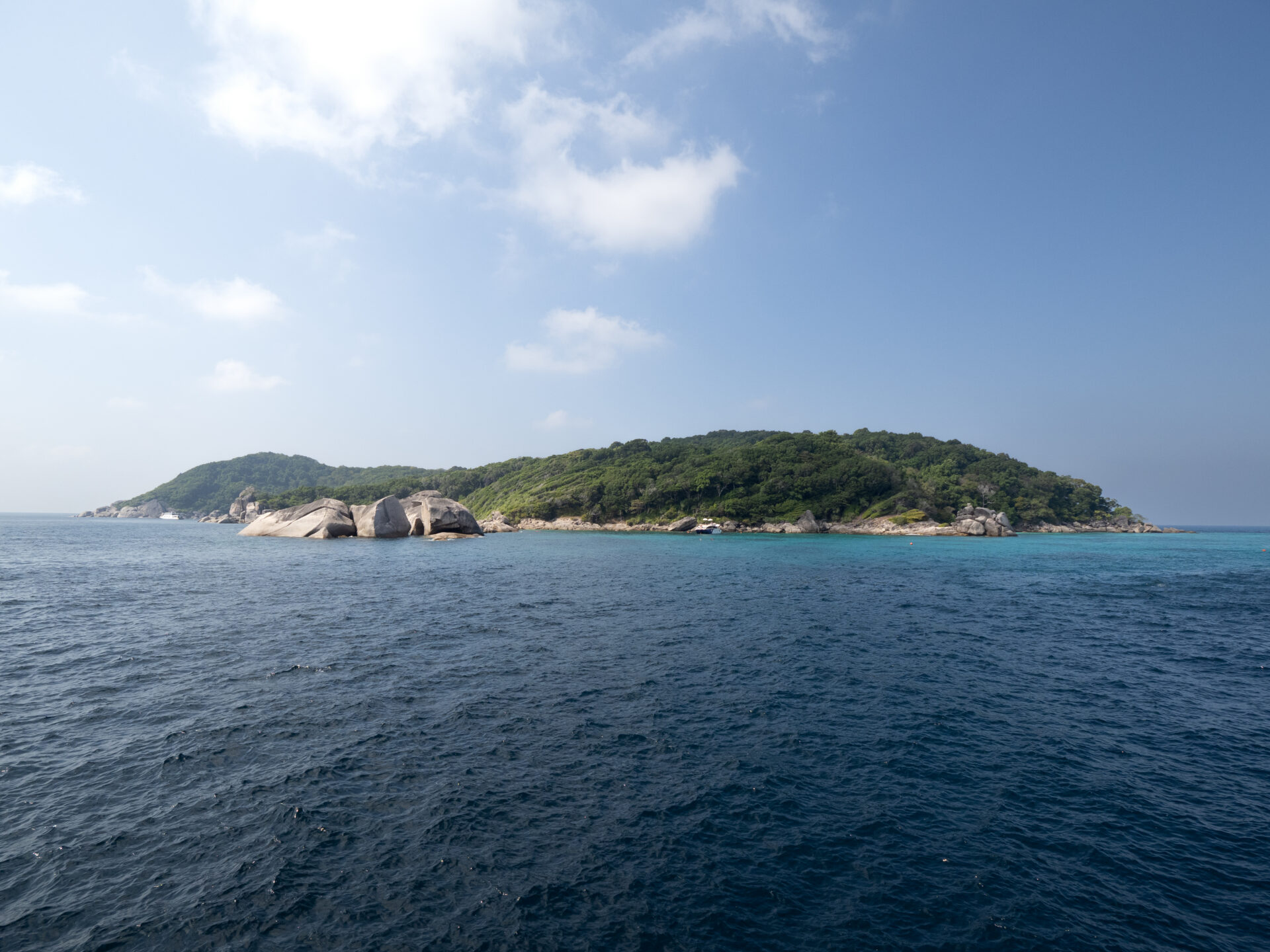
Diving in Thailand’s marine national parks comes with specific regulations and seasonal considerations. Site access, park closures, and environmental conditions all influence itineraries.
Operators plan routes based on safety, experience level, and current conditions. This means that dive sites may change throughout the trip. While it is natural to have expectations, flexibility often leads to better overall experiences. Understanding that plans can adapt helps set the right mindset before arrival.
Marine national park fees are typically not included in liveaboard prices. These fees are set by the Thai government and apparently contribute to the protection of these areas.
They are payable in cash in Thai Baht at the start of your trip. There are no ATMs once you leave the mainland, so it is important to prepare this in advance. Having the correct amount ready avoids unnecessary stress at the start of your trip.
There are also guidelines on reef-safe products, avoiding single-use plastics where possible, and adhering to park rules. Responsible behaviour in and out of the water plays a role in protecting these ecosystems.
Communication: Staying Connected Offshore
Mobile signal becomes limited once you leave the mainland, and internet access is often slow or unavailable. This is part of the experience, but it also requires a small amount of planning.
Informing family or friends of your schedule before departure helps manage expectations. Many liveaboards provide emergency contact details, which can be shared in advance for reassurance.
Being temporarily offline allows you to fully focus on the environment around you, both above and below the surface.
Travel Insurance: Preparing for the Unexpected
Travel insurance is an essential part of any dive trip. Not all policies cover scuba diving or remote evacuation, so it is important to check the details carefully.
Coverage should include diving activities, trip interruptions, and emergency medical support. In remote locations, evacuation logistics can be complex, and having the right policy provides an added layer of security.
For liveaboard trips, it is also worth ensuring your policy includes appropriate cover for multi-day offshore diving. Some providers, such as DiveAssure, offer specific options and riders designed for this type of travel, including extended dive coverage and evacuation support.
You can read more about suitable options on our travel insurance page here, where we outline what to look for before your trip.
While it is something you hope never to use, it is a key part of responsible planning.
Expectations vs Reality: Letting the Ocean Lead
It is natural to arrive with expectations, especially when certain dive sites are well known. However, the ocean changes daily, and no two trips are the same.
Not every dive will bring large marine life, and conditions can vary throughout the week. Often, the most memorable moments come from slowing down and observing what is already there.
Approaching each dive with patience allows you to experience more, rather than focusing only on what you hope to see.
Travel and planning are not separate from dive safety. They form the foundation of a smooth and enjoyable experience. When transfers are well organised, timing is realistic, and expectations are clear, you arrive ready to dive rather than recover from the journey.
With the right preparation, the logistics fade into the background. What remains is exactly what you came for, time in the water, exploring some of Thailand’s most remarkable dive sites.
Related Articles
-
The Vanishing Wrecks of the South China Sea
Wrecks have a special pull on divers. They’re time capsules, artificial reefs,…
-

MV DiveRACE Class X
INTRODUCTION We are excited to present our latest liveaboard project – MV…
-

Thank You Class E.
Dear Friends, We want to express our heartfelt thanks to everyone for…