
Across the global dive industry, safety does not end with skills and equipment. It also depends on how divers interact with the environment around them. In the previous part of the DiveRACE Safety Series, we focused on awareness, planning, and underwater decision-making. Those elements form the base of every safe dive.
However, once underwater, divers are not alone. Every time we dive, we enter complex ecosystems shaped by animal behaviour, fragile coral structures, and changing conditions. When environmental awareness is missing, risks increase quickly. For the diver, for marine life, and for the reef itself.
Many incidents involving marine life or reef damage are not caused by malice. They usually result from curiosity, poor positioning or a lack of understanding. But sometimes, it can be caused by a lack of care.
For DiveRACE, safety includes responsibility. Protecting the environment is inseparable from protecting divers. Most of us are diving to experience this different world full of life, and it makes sense for us to respect it, right?
This part of the DiveRACE Safety Series focuses on marine life behaviour, coral awareness, and no-touch diving practices. Together, these principles create safer, calmer, and more respectful dives.
Marine Life Respect as a Core Safety Principle
Respecting marine life is not just an environmental guideline. It is a fundamental safety rule, for both divers and marine ecosystems. When animals are provoked or pressured, behaviour can change quickly. What appears calm can become defensive in seconds.
Most negative interactions underwater follow the same pattern. A diver approaches too closely, removes an escape route, or interferes physically. Usually, these moments are rarely intentional. They are usually driven by curiosity, poor awareness, or incorrect assumptions.
However, marine animals do not recognise intent. They respond only to perceived threats. For this reason, environmental respect must be treated as part of dive planning. It deserves the same attention as depth, gas, and time.
Misunderstood “Attacks” and Defensive Behaviour
Many reported marine life “attacks” are not attacks at all. They are defensive reactions. Animals react when they feel trapped, touched, or pursued. This includes species that are otherwise shy or tolerant.
Cornering animals removes their natural escape behaviour. When retreat is impossible, defence becomes the only option. Sudden finning, fast approaches, or blocking exits increase stress levels, and stress leads to unpredictable movement.
In these situations, injuries are often accidental. A tail strike, bite, or body collision can occur without warning. Understanding behaviour reduces these risks dramatically and calm observation allows animals to remain calm in return.

So what should divers do in these situations? The safest approach is to slow down, stop finning, and create space immediately. Maintain neutral buoyancy and position slightly lower or to the side, never directly above or blocking an exit route. Avoid direct pursuit, rapid movements, or attempting to “hold position” against an animal’s path. A general rule is simple: if the animal changes direction, posture, or speed because of you, increase the distance. Calm, predictable behaviour reduces stress, restores natural movement, and keeps the interaction safe for both diver and marine life.
Titan triggerfish are a well-known example of defensive behaviour, particularly during nesting season. In certain locations across Thailand and the Indo-Pacific, they become highly territorial while guarding eggs laid in the sand. Their territory is not flat, but cone-shaped, extending upward from the nest toward the surface. Divers who swim directly above the nest may unintentionally enter this vertical zone. When this happens, the triggerfish may charge, bite, and aggressively chase both divers and other fish away. The safest response is to remain calm and swim horizontally out of the area, rather than ascending upward through the centre of the cone.
The Risks of Touching and Curiosity
Touching marine life is often framed as harmless curiosity. In reality, it carries multiple risks. Many species rely on protective coatings or spines. For example, manta rays are often seen as tolerant animals. This leads some divers to move too close or attempt contact.
Mantas are protected by a delicate mucus layer, and touching damages this layer and increases infection risk. Parrotfish provide a less obvious example. Many species create a mucus cocoon while resting at night. This cocoon masks scent and offers protection from predators. When disturbed, the fish must abandon it, and once broken, the cocoon cannot be immediately replaced. This increases vulnerability during a critical rest period.
Touching or provoking animals changes their behaviour. It teaches avoidance, aggression, or stress responses. Over time, this can affect entire dive sites. Animals become harder to observe and more reactive. These interactions often go unnoticed by divers, but for the animals, the impact is immediate. If an animal changes behaviour, the interaction has gone too far.
From a dive safety perspective, touching removes control. Contact can result in stings, cuts, injuries or infections, to both the diver and the animal. It disrupts buoyancy, trim, and situational awareness. Good divers observe with distance, they do not need physical interaction to engage or connect.
Accidental Injuries
Seasonal conditions also influence risk levels. In Thailand, jellyfish numbers can increase when currents shift or surface temperatures rise. Most encounters are mild, but contact can still cause pain and irritation. Divers should avoid swimming blindly through visible clusters of jellyfish and maintain control during entries and exits. If stung by a jellyfish, exit the water calmly and avoid rubbing the area. Rinse with vinegar if available to help neutralise remaining tentacle cells.
For sea urchin injuries, carefully remove shallow spines with clean tweezers, but never dig into the skin to remove deeper fragments. Soaking the area in hot water can help relieve pain. Clean the wound thoroughly and monitor for swelling, redness, or signs of infection. Always inform the dive team so the situation can be properly assessed and managed.
Feeding Marine Life and Altered Behaviour
Feeding marine life creates some of the most serious safety issues and fundamentally changes animal behaviour. Animals begin to associate divers and boats with food, leading to unnatural aggregation, behaviour and competition. Increased competition raises aggression levels. Even normally passive species can become unpredictable. Feeding also disrupts natural feeding patterns, weakening ecosystems over time.
In the Similan Islands, turtle feeding is a well-known concern. Despite regulations in place, some boats continue this practice. Feeding turtles alters migration, health, and behaviour and also places divers and boats directly in feeding zones. This increases the risk of bites, collisions, injuries and stress responses.
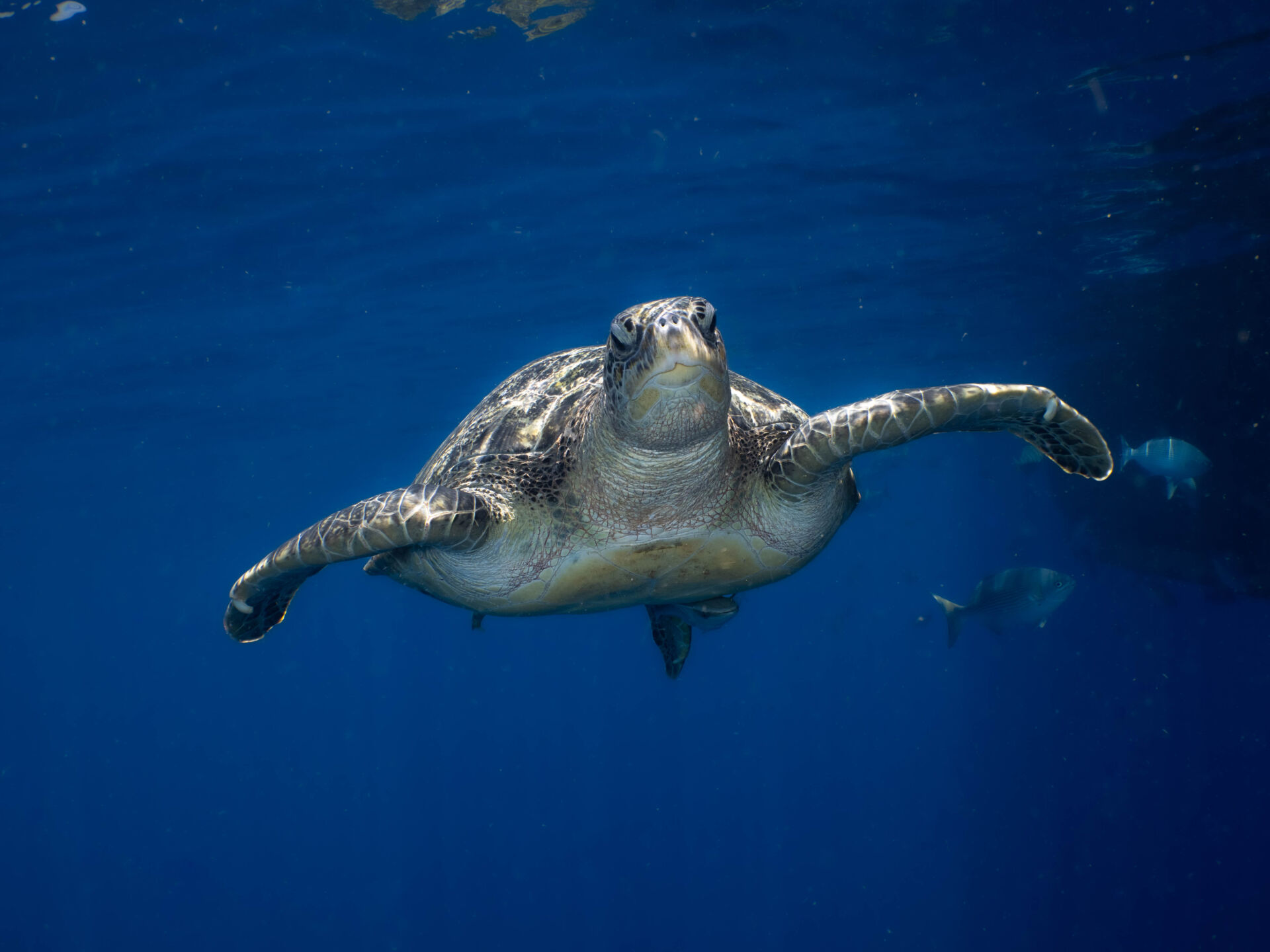
Although turtles may appear friendly when approaching boats, this behaviour is conditioned by repeated feeding. They are not choosing interaction; they are responding to an altered food source. Similar patterns have been observed in places such as Oslob in the Philippines, where whale sharks have become dependent on provided food. Over time, this conditioning disrupts natural migration, feeding cycles, and social behaviour. What may look like a positive wildlife encounter can, in reality, create long-term ecological imbalance and increased risk for both animals and divers.
Organisations such as Andaman Turtle Watch work to monitor and protect turtles in the region. Their efforts highlight the importance of non-interference.
Feeding can also create very direct safety consequences for divers. At East of Eden in the Similan Islands, a resident giant moray eel became conditioned to handouts from divers over time. During one incident, a diver placed a hand too close while the eel was expecting food, and the eel struck, mistaking a thumb for prey. The injury was severe and required surgical reconstruction. While rare, this type of incident illustrates how conditioning alters natural behaviour and increases risk. What begins as a harmless feeding habit can reshape predator response patterns in ways that endanger both divers and marine life.
At DiveRACE, feeding marine life is strictly prohibited. It is unsafe, unsustainable, and irresponsible.
Cameras, Strobes and Artificial Light
Cameras add a significant layer of complexity to a dive, and with that comes increased risk. This risk does not come from the equipment itself, but from how diver behaviour changes once a camera is introduced. Attention often shifts away from buoyancy, positioning, and surroundings, becoming fixed on framing, focus, and subject movement. As awareness narrows, situational control reduces, and small errors begin to accumulate.
Action cameras, particularly GoPros, are frequently pushed too close to marine life. This is often combined with poor trim and unstable buoyancy, even among divers who are otherwise comfortable underwater. When a camera moves closer, the diver’s body usually follows, bringing fins, gauges, and dangling equipment into contact range. What begins as an attempt to capture a moment can quickly result in reef contact or animal disturbance.
Marine animals experience cameras as approaching objects, not neutral tools. Repeated close passes, hovering directly above, or tracking movement increases stress levels. In many cases, animals alter behaviour subtly at first, turning away, tightening posture, or retreating into shelter. When these signals are missed or ignored, stress responses escalate, increasing the likelihood of sudden movement or defensive reactions.
Strobes and video lights introduce additional disturbance. Artificial light does not naturally exist at close range on the reef, particularly in repeated bursts. While some species tolerate brief exposure, others react strongly to sudden brightness. These reactions are not always dramatic, which makes them easy to overlook without careful observation.
Marine Life Disturbances
Seahorses are a clear example of this impact. They rely on camouflage and stillness to survive. Repeated strobe flashes or continuous video lighting can trigger stress responses, including turning away, tightening posture, releasing their grip, or abandoning shelter entirely. For a species that depends on remaining unnoticed, this disruption carries real consequences.
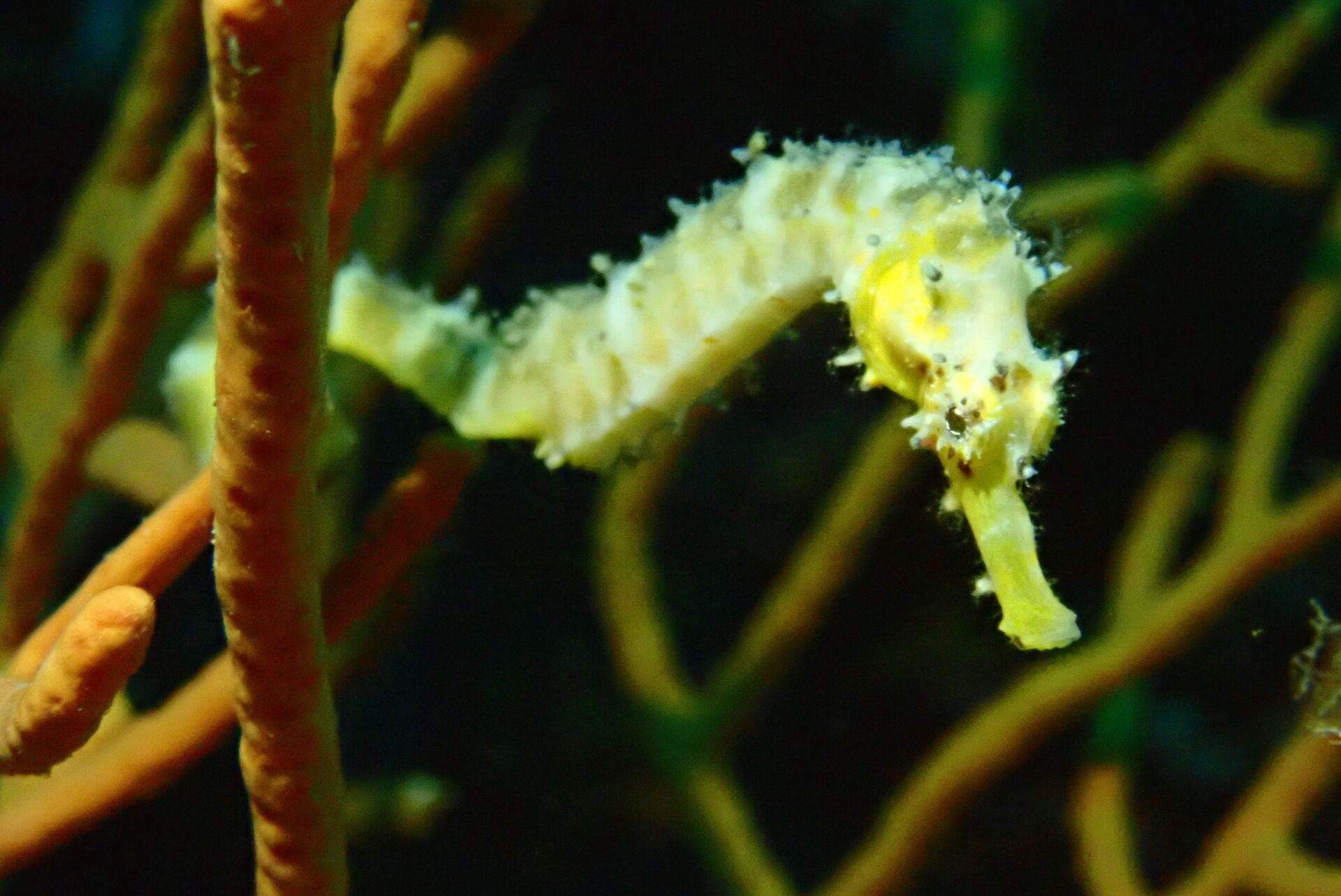
At Richelieu Rock, this behaviour has become increasingly noticeable. Large groupers have learned to follow divers using torches or camera lights, particularly when photographers are focused on ghost pipefish or seahorses. These predators use the artificial light to locate otherwise well-camouflaged prey. Lights should be used sparingly and never directed continuously at vulnerable species.
For these reasons, camera use is increasingly being treated as an advanced activity. In the Similan Islands, National Park authorities have placed growing emphasis on limiting environmental impact at high-traffic sites. This has led to site-specific rules and operator-level restrictions, where cameras are only permitted for divers with sufficient experience, buoyancy control, and trim. Cameras are no longer viewed as casual accessories, but as tools that require skill and discipline. This approach protects both the environment and the divers themselves.
At DiveRACE, camera use is managed with this responsibility in mind. You control the camera; the camera should NOT control you. Strong buoyancy, stable trim, and full environmental awareness are prerequisites. Photography and videography should never override safety or environmental protection. The most compelling images come from patience, distance, and calm, controlled and skilled diving — not proximity or pressure.
Why Touching Is Never “Just Once”
Touching is often justified as minimal or accidental. However, even brief contact of marine life, including coral, can cause damage. For divers, touching creates instability. Hands move, fins follow, and control is lost. This can lead to further contact, entanglement, or panic.
Small mistakes compound quickly underwater. Touching animals also removes boundaries. Once contact begins, animals may react defensively. The safest approach is simple: maintain buoyancy, maintain distance, and observe without chasing or cornering.
No-touch diving protects everyone involved. It is a core safety habit, not an optional ethic.
Coral Reefs as Living, Vulnerable Systems
Coral reefs are often treated as static backdrops, but in reality, they are living systems under constant pressure as the foundation of reef ecosystems. Each coral colony is made up of thousands of tiny animals. They grow slowly and rely on stable conditions to survive. Physical contact damages coral tissue immediately — even light contact can remove protective layers.
Once damaged, corals become vulnerable to disease and algae. Recovery is slow and never guaranteed. For divers, reef safety begins with awareness. Understanding that every surface is alive changes behaviour underwater. Respecting coral is not about restriction. It is about recognising vulnerability.
How Divers Accidentally Damage Reefs
Most reef damage is unintentional. It happens through small, repeated actions, with poor buoyancy and situational awareness being the leading causes. Fins, knees, and dangling equipment make contact first. Strong currents and surge increase the risk. Without anticipation, divers react too late. Task loading makes this worse. Cameras, DSMBs, or poor gas management divide attention.
New divers often struggle with trim and body position, especially in current. Without realising it, fins angle downward and strike fragile coral heads behind them. Wide or uncontrolled kicks can snap branching corals instantly, even when the diver never sees the contact.
Photographers introduce a different risk. In pursuit of stability, some kneel on the reef or brace against rock to hold position while framing a subject. This pressure can crush coral tissue and break delicate structures beneath their equipment. These actions are rarely intentional, yet the physical impact is immediate and often irreversible. The best images are those taken with skill and respect for the marine environment.
Once contact begins, control is often lost. This leads to chain reactions across the reef. Good diving prevents these moments. Positioning, trim, and anticipation reduce risk dramatically.
Don’t be a lazy diver — maintain buoyancy at all times! No-touch diving preserves reef structure, as well as improving diver skill, control and confidence.
Dive With Respect and Purpose
Reef safety and dive safety are not separate considerations. They are directly connected through awareness, control, and decision-making. Divers who respect the reef tend to dive more deliberately. They move slowly, plan ahead, and remain aware of their position and surroundings. These habits reduce incidents underwater, and also help preserve dive sites for future generations.
At DiveRACE, environmental respect is part of our safety philosophy. It shapes how we brief, guide, and train divers at every level. Because safe diving is not only about returning to the boat, it’s about leaving the reef exactly as it was found.
In the next part of the DiveRACE Safety Series, we will step back from the reef and look at travel and dive planning in Thailand. This includes preparation before arrival, understanding local conditions and culture, and how decisions made on land directly affect safety at sea.
For those who missed it, the series begins with DiveRACE Safety Series: Diving Practices & Underwater Awareness, which explores the core skills and habits that support every safe dive. Together, these articles form a connected approach to safety — from planning and awareness, to responsible diving underwater.
Because the safest dives are shaped long before the entry, and remembered long after the exit.
Related Articles
-

The Vanishing Wrecks of the South China Sea
Wrecks have a special pull on divers. They’re time capsules, artificial reefs,…
-
MV DiveRACE Class X
INTRODUCTION We are excited to present our latest liveaboard project – MV…
-
Improve your Buoyancy: A Comprehensive Guide – Part 1
A thorough understanding and practical application of buoyancy is crucial for safe…