
Across the global dive industry, safety continues to be a central topic. Despite ongoing improvements in equipment, training, and standards, incidents still occur when awareness, planning, or decision-making break down underwater. For DiveRACE, this reinforces the importance of talking about safety openly and consistently, with a focus on prevention, good habits, and thoughtful diving practices.
While not all dive operators are consistent, the strongest teams are those that actively review, adapt, and refine their practices over time.
Yet most diving incidents are still linked to human factors. Lapses in awareness, poor training and buoyancy, weak dive and gas planning, and ineffective buddy behaviour remain the most common contributors.
In warm-water destinations like Thailand, comfortable conditions can mask developing problems. When divers stop actively managing the dive, or overlook factors during pre-dive planning, small issues can escalate quickly below the surface.
This first part of the DiveRACE Safety Series focuses on pre-dive and underwater decision-making. It explores the practical skills and habits that keep dives controlled, predictable, and low-risk.
Most diving incidents can be avoided by anticipating problems and acting before they occur.
Preventative thinking reduces risk long before an issue becomes an emergency.
Dive Planning in Thailand Waters
Tropical diving can create a false sense of security. Less equipment is required in warmer waters and conditions can appear easier, so risks are more easily overlooked.
Dive Site Selection
Thailand offers a wide variety of dive environments. Reefs, pinnacles, walls, and wrecks often appear within our liveaboard itineraries on board MV DiveRACE Class X. Each site type demands different planning and awareness.
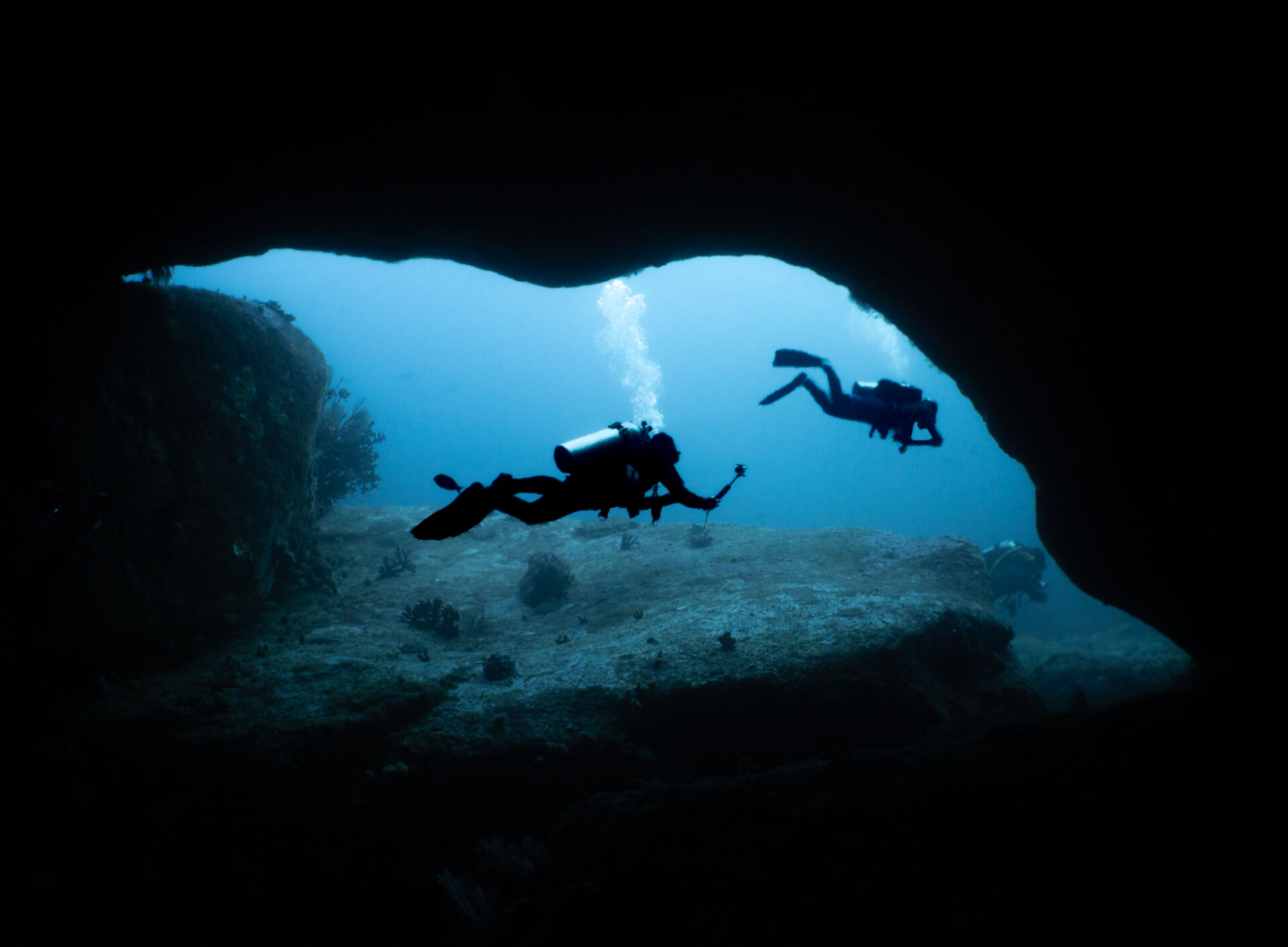
Site selection is one of the most important safety decisions. Conditions in Thailand can change quickly, within a single day or even hour. Currents, surge, visibility, weather and entry points all influence risk. Sites like Richelieu Rock demonstrate this clearly; as an exposed pinnacle in the open ocean, with no shelter from surrounding land, weather and sea conditions change constantly and must be considered. Pinnacles often experience changing current directions and vertical flow, reefs may hide surge or create drift dives, and wrecks can introduce overhead structures and carry their own myriad of hazards.
Just as important is the experience and comfort level of the divers in the group. Certification alone does not reflect recent experience. Confidence, buoyancy control, and stress management must also be considered. Good planning balances the site with the divers, not the other way around.
Our dive operations team on board MV DiveRACE Class X considers all factors when planning dive sites, day-by-day. We also do our best to avoid overcrowding the sites by coordinating our dive timing with other vessels.
Hydration and Fitness
Hydration and physical readiness play a critical role in dive safety. Dehydration is one of the leading contributing factors to decompression sickness. Warm climates, sweating, and repeated saltwater exposure increase fluid loss.
Divers should hydrate consistently throughout the day, beginning before the first dive and continuing between dives. Alcohol and excessive caffeine increase dehydration and should be managed carefully, especially on multi-dive days. Alcohol is dehydrating because it suppresses antidiuretic hormone, increasing fluid loss. Excessive caffeine can have a similar effect. At DiveRACE, electrolytes are provided before each dive to support hydration and replace salts lost through sweating.
Fitness and fatigue must also be considered. Diving while tired increases stress, reduces awareness, and affects decision-making underwater. If a diver feels unwell, exhausted, or physically off, skipping a dive is the correct decision. Resting one dive can prevent problems later in the day. Fatigue also reduces the ability to manage strong currents safely. In demanding conditions, divers should consider whether the risk is worth entering the water. It is also advised to avoid heavy exercise after diving, as it increases strain on the body and may affect off-gassing.
Effective dive planning includes honest self-assessment, and being fit to dive is just as important as being certified to dive. It’s not about pushing limits, but about building safe margins. In tropical waters, good planning and preparation keeps dives relaxed, controlled, and enjoyable.
The Importance of Dive Briefings
Dive briefings translate planning into action. They ensure every diver starts the dive with the same understanding.
A good briefing includes a detailed explanation of the dive site, expected conditions, points of interest and marine life. Limits are clearly defined. Maximum depth and time, direction and turn pressures are explained before entry. This supports safe gas management and no-decompression planning. Entry, exit and emergency procedures should be clear and practical. Knowing what to expect reduces confusion and stress underwater.
At DiveRACE, overall dive site briefings are done by the dive operation manager that highlights the general conditions and what to look out for in the particular dive site. At the same time, each individual group would have its own team briefing by the dive guide to cater for the divers in the group – the position of the guide, the orientation/direction they would be doing, the experience level etc. Divers are always encouraged to speak up if something is unclear or if they feel unsure.
All divers have heard the phrase ‘plan the dive, dive the plan’. Following the agreed plan keeps the group aligned and predictable. And while this is important for things like maximum depth, time, and direction, conditions can change. Equipment issues, fatigue, shifting currents may require adjustments.
This is why communication matters. Divers should signal concerns early and clearly. The plan can only adapt if the team communicates.
Buoyancy Control as a Safety Skill
Buoyancy is a diver’s ability to control position in the water column. It allows you to ascend, descend, and hover without uncontrolled movement. Good buoyancy improves gas consumption, stress levels, and overall control and comfort underwater.
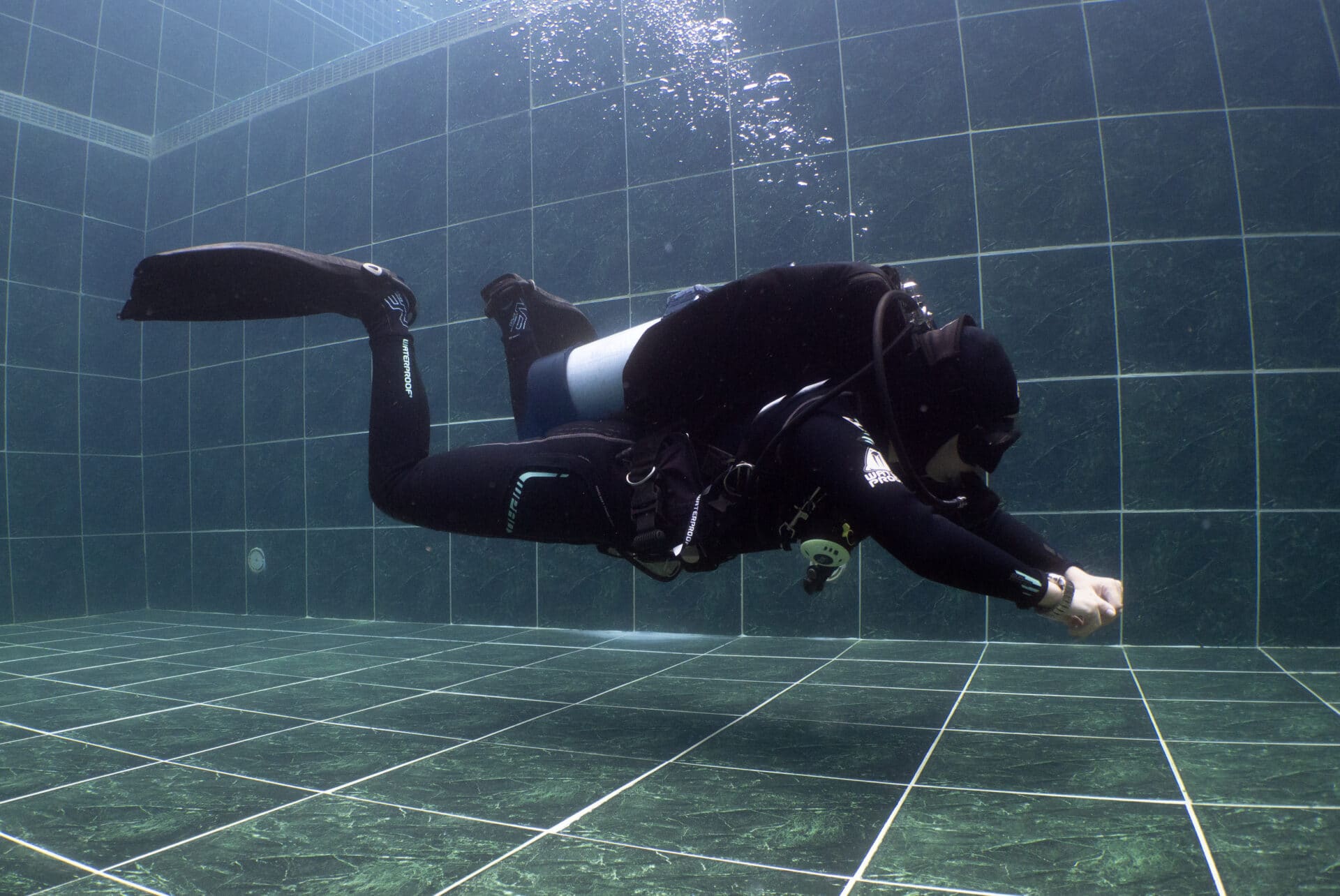
However, buoyancy is more than simply hovering in place. Trim also plays a major role in safety and control underwater. A balanced, horizontal position with fins raised slightly above the knee reduces drag and improves stability. But most importantly, it prevents fin strikes, silting, and accidental coral contact. Poor trim pushes water and sediment. Visibility drops, and the reef suffers unnecessary damage.
Buoyancy must be actively managed throughout the dive: Descents require controlled air addition to the BCD, and ascents demand slow, deliberate release.
Breathing is a huge part of buoyancy control, being one of the most influential points. Using a large lung volume to breathe will alter your buoyancy and air consumption. You can learn more about this in our comprehensive buoyancy series here.
Tank material and size also affect buoyancy. Aluminium tanks become more buoyant as they empty. This change is most noticeable near the end of the dive. At DiveRACE, we use aluminium cylinders with DIN valves (and yoke adapters too). Common sizes include approximately 11.8-litre and 13.1-litre tanks, often referred to as 12-litre and 15-litre. Larger tanks change weighting and trim.
The easiest way for divers to avoid buoyancy-related problems underwater is to anticipate buoyancy shifts rather than react late. Be aware of your breathing, depth and surroundings at all times during a dive.
Gas Management
Gas management is the practice of monitoring, planning, and controlling your breathing gas throughout the dive. It ensures you always have enough air to ascend safely and handle problems. Failing to monitor tank pressure removes options, and running low without warning your buddy or guide increases stress and limits safe exits.
But gas consumption is not constant. SAC rates often appear lower in warm, calm water. In contrast, current-heavy sites increase breathing rates quickly. Task loading, stress, and poor buoyancy also raise gas use.
Divers should check their gas regularly, not only when prompted. A good rule of thumb is to check the SPG every 10 minutes, after depth changes, and whenever conditions change. Frequent checks prevent surprises and allow early communication with your buddy or guide.
Divers often underestimate how fast air disappears at different depths. In addition, it can change depending on physical exception, increased by low physical fitness, stronger currents and group speed. Turn pressures, or ascending pressures, must be planned, not guessed, and reserves should allow for delays and unexpected events. Planning only for ideal conditions leaves no margin.
At DiveRACE, and due to National Park rules, all of our dives are guided. Our experienced guides plan turn pressures pre-dive and adjust during the dive when necessary. This is why it is important to communicate with your guide and buddy, and check each-other’s tank pressure regularly.
Buddy System and Air-Sharing
The buddy system is a core safety principle in recreational diving. It provides support, awareness, and backup when something goes wrong. A good buddy team monitors each-other’s position, depth, gas, and behaviour, and regular communication allows small issues to be addressed early.
When buddies drift too far apart, risk increases. Problems go unnoticed. Response time slows. Stress, disorientation, equipment problems, entanglement, buoyancy loss, and even panic, can be missed. Lack of awareness is a common failure point. Divers who do not check on each other lose the safety margin a buddy provides.
These gaps matter most when something goes wrong. For example, out-of-air emergencies require immediate and calm action. This is where proper buddy positioning and communication matter most.
Honestly speaking, when was the last time you practised the air sharing emergency drill with a buddy? Without practice, the diver may not have the reaction time or proper skills to execute during emergency situations. Make it a habit to practice it once during each dive trip if possible!
Continuing a dive on a buddy’s alternate air source increases risk. Currents can separate divers quickly. Hoses can snag or tangle. Two divers breathing from one supply drain gas faster than planned. This removes redundancy and reduces response time. Even early in the dive, air-sharing adds unnecessary risk. A few extra minutes are never worth losing control.
Good gas management protects you and your buddy. It keeps dives calm, predictable, and within safe limits.
Be a Good Buddy
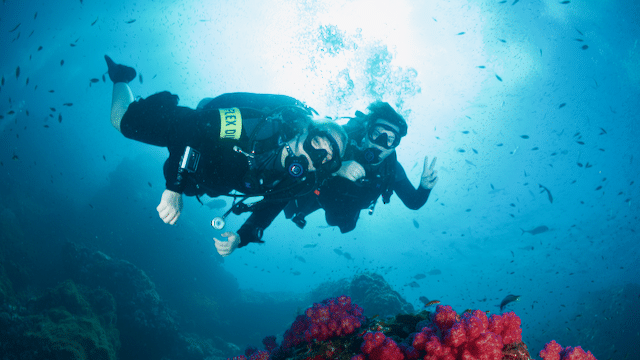
A buddy system only works when both divers actively participate. Simply entering the water together does not create safety. The “same ocean buddy” approach fails because it removes accountability. Without clear roles, problems go unnoticed and response time increases.
Effective buddy teams agree on expectations before the dive. This includes positioning, spacing, and regular visual checks. Communication must be deliberate, not assumed. Hand signals should be confirmed before entry. Divers should agree on gas checks, depth awareness, and turn points. Clear communication reduces hesitation underwater. This pre-dive communication is especially important if you are diving with a buddy you were assigned and/or do not know or have not dived with before.
When buddies drift too far apart, awareness is lost and risks increase. Our recommendation is simple: stay close enough to assist within seconds, maintain frequent visual contact, and reposition early if spacing begins to widen.
Depth and No-Decompression Limits
Depth directly affects risk during a dive. As depth increases, nitrogen absorption rises and available bottom time decreases.
On our itineraries on board MV DiveRACE Class X, dive depths vary across sites in the Similan Islands. Shallow reef dives may remain between 10 and 18 metres. Sites such as West of Eden or Hideaway Bay often allow long bottom times with conservative profiles.
The Granite formations and pinnacles here introduce greater depth. Dives at Elephant Head Rock or Deep Six may reach 25 to 30 metres, depending on conditions and diver experience. Further north, deeper sites are common. Koh Bon Ridge, Koh Tachai Pinnacle and Richelieu Rock often involve planned deeper sections followed by gradual ascents.
No-decompression limits define how long a diver can remain at depth without mandatory decompression stops. Staying within these limits allows a controlled direct ascent in an emergency. On multi-day liveaboard itineraries, nitrogen accumulates. Each successive dive reduces available no-decompression time. This effect is easy to underestimate without active monitoring.
Dive computers track depth and time continuously. They display remaining no-decompression limits in real time. However, they are calculated using models that do not take into account a diver’s personal fitness level, underlying or unknown medical conditions and hydration levels. Divers should plan maximum depths in advance, monitor their computers throughout each dive, and stay conservatively within limits.
Ignoring or pushing no-decompression limits removes safety margins. Ascents become rushed. Stress increases. Decision-making suffers. Diving conservatively within limits keeps profiles predictable. It also allows flexibility if conditions change or delays occur.
The Benefits of Nitrox
Nitrox is often recommended for repetitive diving. Reduced nitrogen content lowers overall nitrogen loading across multiple dives. On a DiveRACE liveaboard schedule, nitrox can extend no-decompression limits and support recovery between dives. This is especially beneficial on deeper or current-affected sites.
However, nitrox introduces oxygen exposure limits. Depth awareness remains critical. Proper understanding and training are essential. For divers interested in using nitrox safely, DiveRACE offers the RAID Nitrox course on board MV DiveRACE Class X. The course focuses on practical planning and real-world application during multi-dive days.
Managing depth and no-decompression limits is not about pushing boundaries. It is about maintaining conservative control across every dive of the itinerary.
Situational Awareness
Situational awareness is the ability to understand what is happening around you during a dive. It allows divers to anticipate change rather than react late.
Awareness begins before entering the water. Surface conditions around the Similan Islands provide early clues. Boat movement, swell, and surface drift often indicate current strength and direction.
Once underwater, conditions rarely remain constant. Currents change with depth and terrain. Down-currents and upwellings often form near walls and pinnacles and strong drifts can develop on sloping reefs. Sites such as Koh Tachai Pinnacle and Richelieu Rock can experience shifting flow during the same dive, and these changes may occur quickly and without warning.

These conditions affect positioning. Staying close to the reef often reduces current exposure and provides reference. In other situations, moving into blue water allows a cleaner ascent. Good situational awareness supports these decisions. Fighting current increases exertion and gas consumption.
As dives progress, awareness must include ascent planning. DSMB deployment becomes a critical safety skill. This is especially important during drift dives or separation. A DSMB allows the DiveRACE surface team to track divers and manage boat traffic. Calm, practiced deployment reduces task loading during ascents.
Situational awareness also includes proximity to the reef. Divers should maintain distance without contact. Poor trim and excessive fin movement stir sediment and damage coral.
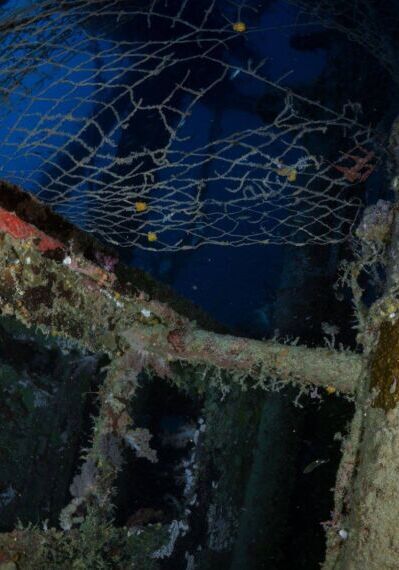
Awareness of other divers is equally important. Fin placement, ascent paths, and group spacing change constantly. Failing to monitor these increases collision and entanglement risk. The environment presents additional hazards. Fishing lines, ropes, and debris can entangle unaware divers. Marine life may react defensively if approached too closely.
Improving awareness requires intention. Regular scanning builds habits. Checking depth, gas, position, and surroundings prevents escalation. Situational awareness connects every safety skill; It keeps dives controlled, adaptable, and calm throughout the DiveRACE itinerary.
Staying Calm and in Control Underwater
A diver’s mental state has a strong influence on safety. A calm, controlled mindset supports every other safety skill. When the mind is steady, good decisions follow.
However, feeling some stress underwater is normal. Changes in conditions, visibility, or overexertion can affect comfort levels, even for experienced divers. When stress increases, breathing often becomes faster and less efficient. Awareness can narrow, making small tasks feel more difficult than usual. And if stress is not managed, it may develop into panic.
Panic is one of the most challenging and dangerous situations a diver can face, as it reduces the ability to think clearly and apply training. The key is early recognition. Slowing breathing, pausing movement, and re-establishing buoyancy can quickly restore control.
Simple actions help reset focus. Checking depth and gas, and reconnecting with a buddy, provides reassurance and structure. Mental control also includes knowing personal limits. Choosing to pause, signal a concern, or end a dive is part of safe diving.
When to Abort a Dive — and Why That’s Not Failure
Every diver should be prepared to end a dive early. Aborting a dive is a safety decision, not a personal shortcoming.
Many issues are easier to manage by stopping early. Equipment discomfort, rising stress, poor conditions, or unexpected fatigue all justify ending a dive. Continuing despite warning signs increases risk. Good divers recognise when conditions are no longer favourable. They act early rather than waiting for a situation to worsen.
Communication also matters. Signalling a problem early allows the buddy or guide to respond calmly. Delayed signals reduce available options.
Experienced divers abort dives regularly. They understand that safety margins matter more than bottom time. A controlled ascent and calm exit reflect strong awareness and discipline. That is success, not failure.
Safe diving is built on preparation, awareness, and judgement. This article is Part One of the DiveRACE Safety Series. Further topics will explore surface safety, vessel procedures, marine life awareness, and travel considerations in Thailand.
Join us at DiveRACE as we continue the series — where every dive is planned with purpose, awareness, and safety in mind.
Related Articles
-

The Vanishing Wrecks of the South China Sea
Wrecks have a special pull on divers. They’re time capsules, artificial reefs,…
-
MV DiveRACE Class X
INTRODUCTION We are excited to present our latest liveaboard project – MV…
-
Improve your Buoyancy: A Comprehensive Guide – Part 1
A thorough understanding and practical application of buoyancy is crucial for safe…