

When people talk about scuba diving in Thailand, they almost always mention the same thing first: the reefs.
The glow of soft corals at depth, the hard coral gardens around the large granite boulders, the chaos of reef fish swirling around a bommie – this is what pulls divers back to the Andaman Sea (West Coast of Thailand) again and again. From the Similan Islands and Koh Bon to Phi Phi and the reefs off Phuket, coral reefs in Thailand are the foundation of the entire underwater experience.
But anyone who has been diving here for a number of years has noticed it: some sites don’t look the way they used to. Patches of dead coral rubble where there used to be colour. Algae-covered rubble where there used to be structure. Fewer fish in areas that were once buzzing with life. One good example is at the northern ridge at Koh Bon. What used to be an extensive field of Acropora Corals is now but a rubble patch.
That’s why we decided that simply “enjoying” the reefs wasn’t enough. Through the DiveRACE coral restoration project in Thailand, we’re putting real effort into restoring damaged coral areas — and we’re inviting divers to be part of that work.

Why Coral Reefs in Thailand Matter So Much
A coral reef is much more than something pretty to look at on a dive.
Corals are living animals that build calcium carbonate skeletons. As they grow, die, and grow again, they slowly create the three-dimensional structure that we call a reef. That structure is what allows everything else to happen: fish can hide, hunt, spawn, and feed there. Crustaceans, molluscs, and countless tiny creatures find homes in the cracks and crevices. Larger species like turtles, groupers, and rays use the reef as their supermarket and service station.
Around Thailand, especially in the Andaman Sea, coral reefs:
- Protect coastlines from waves and storms
- Support local fisheries
- Attract divers and snorkellers from all over the world
- Create jobs for boat crews, guides, resort staff, and entire coastal communities
In other words, without healthy coral reefs, scuba diving in Thailand changes completely. It’s not a “nice to have” – it’s the core of the entire marine tourism economy.
What’s Happening to Thailand’s Corals?
The short version: the reefs are under pressure from multiple directions at once.
Rising sea temperatures are causing more frequent and severe coral bleaching. When the water stays too warm for too long, corals push out the symbiotic algae that give them colour and energy. They turn white, weaken, and if the stress continues, they die.
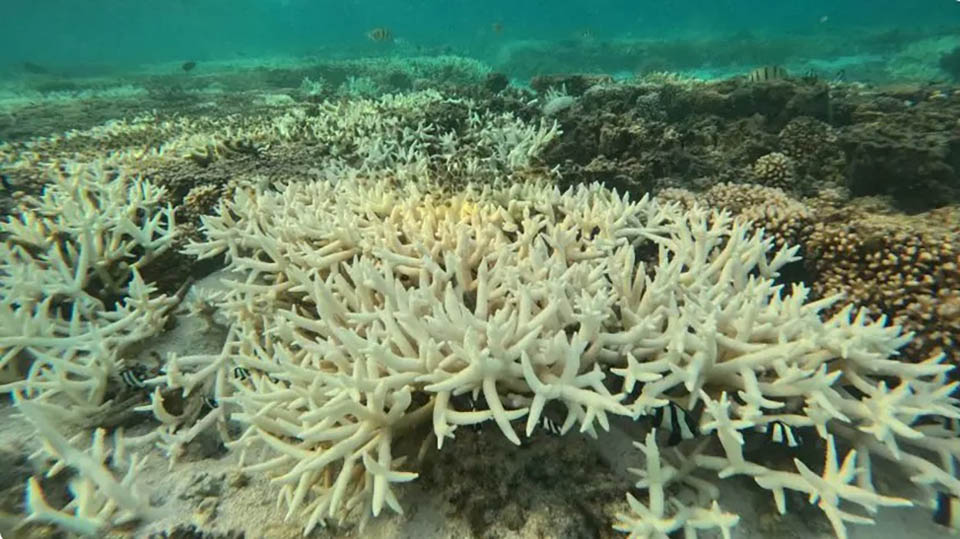
At the same time, local stressors are chipping away at their resilience. Runoff and pollution from land lower water quality and increase sediment, which can smother corals or give algae an advantage. Fishing gear, anchors, and boat traffic can break fragile structures. Even divers and snorkellers, if they are careless, can do damage simply by standing on coral, grabbing it for photos, or kicking it with their fins.
Each individual moment of damage seems small. But multiply that by thousands of dives, hundreds of boats, and years of pressure, and the result is visible: dead patches, broken branches, fewer fish, and less colour.
This is exactly the kind of background that made us ask a hard question at DiveRACE: Are we just running trips on top of a problem, or are we willing to help fix it?
The DiveRACE Coral Restoration Project in the Andaman Sea
We chose to get involved in a very specific, practical way: by committing to a long-term coral restoration project near Southern Phuket .
Instead of just donating to someone else’s project and putting a logo on a brochure, we wanted something we could actually visit, maintain, and improve over time with our own divers and crew.
At our restoration site, we install specially designed steel structures (called Super Stars) on the seabed. Think of them as “reef frames” — stable, open frameworks that create instant three-dimensional habitat in areas that have been damaged or reduced to rubble. Onto these structures, we attach small coral fragments taken from naturally broken pieces that would otherwise have little chance to reattach.
Over time, these fragments grow, spread over the frames, and begin to merge. Fish move in. Invertebrates colonise the new surfaces. What was once a flat, lifeless area slowly transforms into a growing coral garden.
The work doesn’t stop after the installation. Our team and volunteers return regularly to:
- Check coral survival and growth
- Remove algae or coral-eating snails where necessary
- Document changes with photos and video
- Adjust or reinforce structures if storms or currents have shifted them

We work in line with Thai Department of Marine and Coastal Resources (DMCR) guidance and pay close attention to what is actually working in local conditions, rather than just copying a project from somewhere else. This is about building a real reef, not just dropping metal in the water and calling it conservation.
Where Divers Fit In: More Than Just Watching
Here’s the crucial part: we don’t want this to be a closed project where a few people do all the work while everyone else just hears about it on social media.
If you’re already diving in Thailand, or planning to join a DiveRACE liveaboard, you can help in two important ways.
First, by reducing your own impact. Second, by directly supporting and joining the restoration work.
Let’s be blunt: divers are not innocent bystanders. We love the reef, but we also contribute to its problems if we’re not careful. A single fin kick in the wrong place can snap a decade-old coral branch. A diver who stands up on coral to take a photo is doing the same kind of damage we complain about when it comes from careless tourists or irresponsible operators.
So the first level of contribution is simple but powerful: become the kind of diver the reef needs more of.
That means being serious about buoyancy. If it’s been a while since your last dive, tell the guide. Ask for a check dive or a little extra time on the line to get your trim sorted. Keep your fins away from the seabed. Avoid using your hands for balance. Treat the reef like something fragile that you’re visiting, not a playground you’re entitled to lean on.
Read: Improve your Buoyancy: A Comprehensive Guide – Part 1
It also means resisting the urge to touch, poke, or collect. No souvenir shells, no “just one touch” on a coral table, no grabbing something “just for a better photo”. You might leave feeling like nothing happened, but the coral doesn’t get a second chance.
The second level is for those who want to go beyond “do no harm” and into active restoration.
Joining a DiveRACE Coral Restoration Trip
On selected trips and dates, DiveRACE runs itineraries that include a coral restoration component alongside regular fun diving. The goal is to let you experience the best of scuba diving in Thailand while also giving you a chance to directly support coral restoration in the Andaman Sea.
A restoration-focused trip typically includes dedicated briefings where we explain how the project works, why we chose this site, and what has happened there over the months and years. You’ll see “before and after” comparisons and get a clearer sense of how much difference these structures and coral fragments can make over time.
During the dives themselves, you might visit the restoration area and see the frames on the seabed, already turning into living reef. Watching fish weave through structures that were bare metal not too long ago is one of the most satisfying sights you can get as a diver. This isn’t just entertainment – it’s proof that damaged areas can recover with the right help.

Depending on your experience level, the specific schedule, and current conditions, you may also be able to assist with certain tasks under our team’s supervision. That can include simple but important jobs like checking for algae overgrowth on frames, helping with photo documentation, or supporting topside preparation and equipment handling. We keep the underwater work conservative and controlled; the idea is not to turn guests into untrained “reef surgeons”, but to involve them in realistic, useful tasks that support the project.
Even if your role is mainly as an observer, simply choosing a trip that includes a coral restoration day means part of your dive holiday directly funds the ongoing costs of materials, logistics, and monitoring. You’re not just burning fuel and air; you’re helping keep a specific reef site moving in the right direction.
Why This Matters for the Future of Diving in Thailand
It’s easy to talk about “saving the ocean” in vague terms. It’s harder to point to a map and say, “This exact patch of seabed is healthier now than it was two years ago, and we can prove it.” That’s what we’re aiming for.
The future of coral reefs in Thailand isn’t going to be decided by one huge global decision. It will be shaped site by site, reef by reef, by the combined effect of what governments, businesses, local communities, and individual divers choose to do.
We can’t magically stop climate change from a dive boat. But we can:
- Keep specific reefs from sliding further into rubble
- Give damaged areas a chance to become living habitat again
- Show that marine tourism can be part of the solution, not just part of the pressure
For us at DiveRACE, coral restoration isn’t a marketing buzzword. It’s part of accepting responsibility for operating in these waters. If we benefit from the reefs, we should also invest in their recovery.
How to Get Involved
If you love the idea of coral restoration in Thailand and want to be part of it, the next step is straightforward.
When you contact us to book your next trip, tell us you’re interested in the DiveRACE coral restoration project. Ask about sailings that include the restoration site, or about adding a conservation-focused day to your itinerary. Let us know your certification level and experience, and we’ll recommend the most suitable options.
Then show up with the right mindset: curious, careful, and ready to be more than just another diver passing through.
Because the reality is simple: the reefs under your fins today are not guaranteed to be there tomorrow. Whether they recover or decline further depends partly on what we all choose to do now.
If you want future divers to experience thriving coral reefs in Thailand – not just stories of “how it used to be” – then don’t just read about restoration.
Come and help build it, one dive at a time.
Related Articles
-
Climate Change & Corals: How Extreme Weather and Warming Seas Shape Our Reefs
In recent years, Southeast Asia has experienced increasingly unpredictable and severe weather…
-

Corals in Thailand: How You Can Help with DiveRACE
When people talk about scuba diving in Thailand, they almost always mention…