
Coral reefs are usually incredibly resilient. Over thousands of years, they have recovered from storms, predators and other natural disturbances. So why do some reefs bounce back, while others continue to decline?
At DiveRACE, we spend most of our time diving in the Similan Islands. Year after year, we’ve seen just how resilient healthy reefs can be when they’re given the chance to recover. It has also highlighted the growing challenges reefs face as bleaching events become more frequent.
Our Coral Restoration Project in Phuket has given us a different perspective. Returning to the site regularly, we’ve watched the surrounding reefs struggle after bleaching while many of the corals within our restoration area have shown greater resilience. Although no reef is immune to climate change, seeing that contrast firsthand has reinforced why active restoration can play an important role alongside conservation.
That experience inspired us to look more closely at a simple question: Why do some reefs recover naturally, while others never seem to bounce back?
Coral Reefs Can Recover… But Only If Conditions Are Right
The good news is that coral reefs can recover naturally. In fact, that’s exactly what healthy reefs have been doing for thousands of years.
When a reef experiences a disturbance, such as a storm or a mild bleaching event, surviving corals can continue growing and reproduce, releasing large numbers of larvae into the water. If those larvae find stable surfaces, good water quality and a healthy ecosystem, new coral colonies begin to establish themselves. Given enough time, the reef can slowly rebuild.
We’ve seen this resilience firsthand while diving the Similan Islands over many seasons. Even after natural disturbances, healthy reefs often show signs of recovery because the conditions are still there for corals to grow. The problem is that many reefs no longer have those conditions. Instead of having years to recover, they face one challenge after another before the ecosystem has a chance to rebuild.
That’s where the difference begins.
Why Some Reefs Never Bounce Back
One thing we’ve learned through our restoration project is that reef recovery isn’t simply about surviving a bleaching event. It’s about what happens afterwards. Natural recovery only works if a reef has time to recover and the right conditions remain in place. Unfortunately, that’s becoming increasingly rare.

Many reefs today face repeated stress before they have a chance to rebuild. Marine heatwaves are becoming more frequent, bleaching events are occurring closer together, and storms can cause further damage to already weakened corals. Instead of recovering from one event, many reefs are hit again before they have fully recovered from the last.
As living coral disappears, so does the reef’s ability to repair itself. Fewer healthy corals means fewer larvae are produced, reducing the number of young corals available to settle and grow.
The reef itself also begins to change. Dead corals gradually break apart into loose rubble that is constantly moved by waves and currents. Young corals struggle to attach to these unstable surfaces, and many are dislodged before they have a chance to establish themselves. At the same time, algae can quickly spread across the available space. Without healthy grazing fish to keep it under control, algae can outcompete young corals for both space and light, making natural recovery even more difficult.
These problems don’t happen in isolation. They build on one another, creating a cycle where each disturbance leaves the reef less able to recover from the next.
This is exactly why some reefs bounce back after bleaching, while others continue to decline year after year.
What We Have Seen in Phuket
Every time we return to our Coral Restoration Project in Phuket, we’re reminded why we started it.
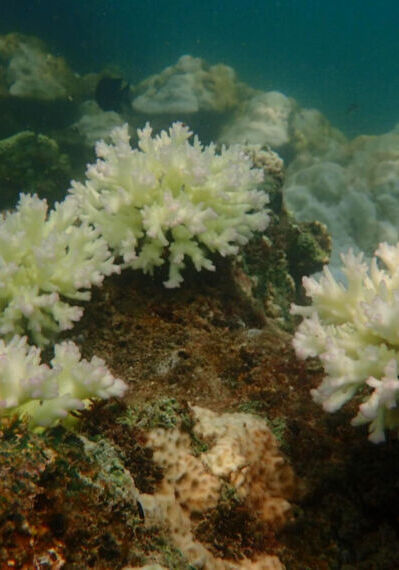
We monitor the restoration site regularly, but we also see the surrounding reef. Comparing the two has been one of the most valuable lessons we’ve learned. During our monitoring after the recent bleaching event, we estimated that approximately 15–20% of the colonies within our restoration area showed visible signs of bleaching. Many nearby bommies suffered much more severe impacts, with some areas struggling to recover.
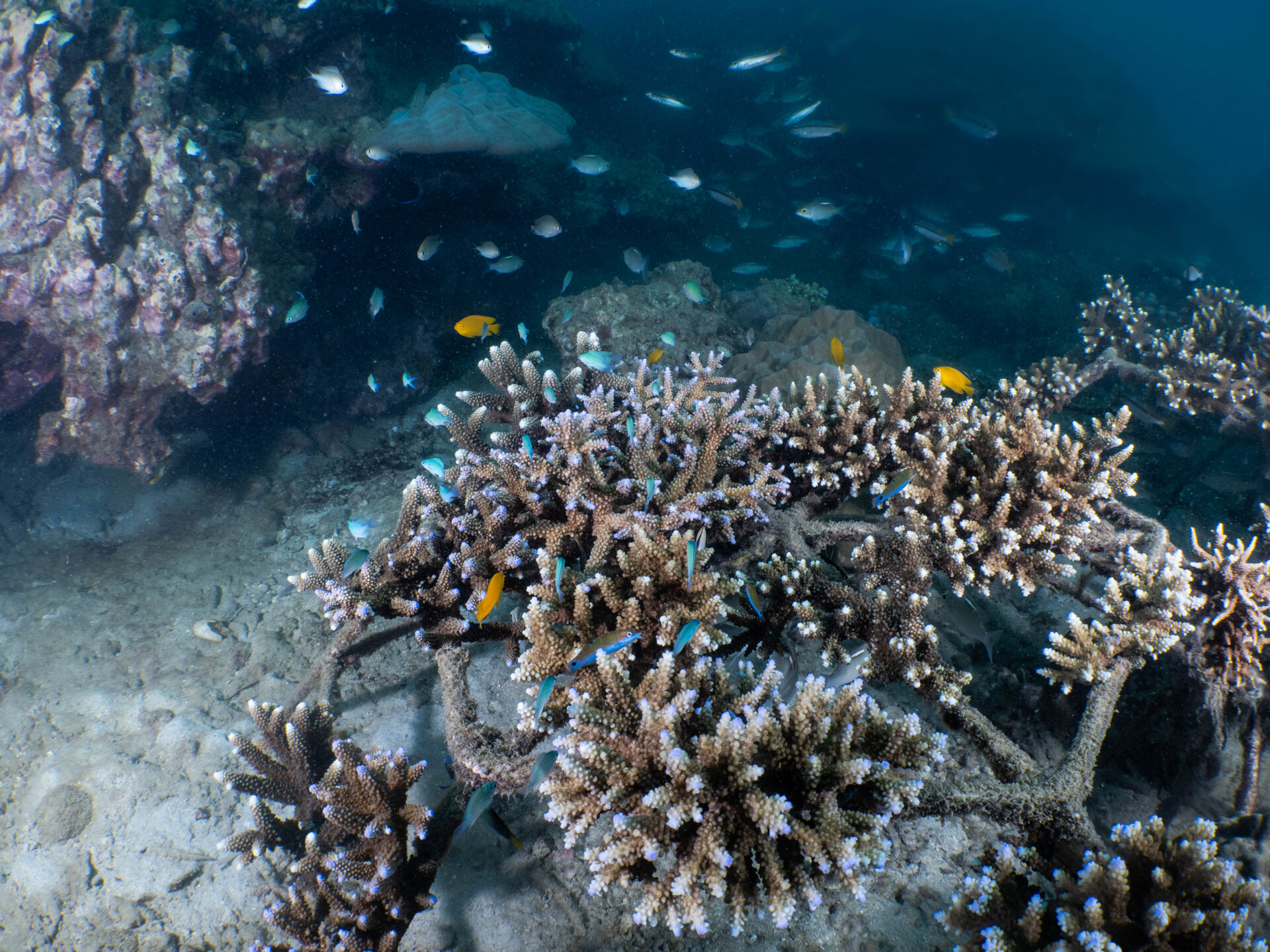
That doesn’t mean our restoration site escaped bleaching, or that restored reefs are somehow protected from climate change. They’re not. From what we’ve observed at our site, healthy, well-established coral colonies have sometimes appeared more resilient than heavily degraded areas with very little living coral remaining. Seeing that difference underwater has strengthened our belief that restoration can help give struggling reefs a better chance.
How Coral Restoration Helps
We often hear people ask whether coral restoration can save coral reefs. The honest answer is no. On its own, it can’t.
If we don’t tackle climate change, pollution and other human pressures, no amount of coral planting will be enough. That’s why we see restoration as one piece of a much bigger picture.
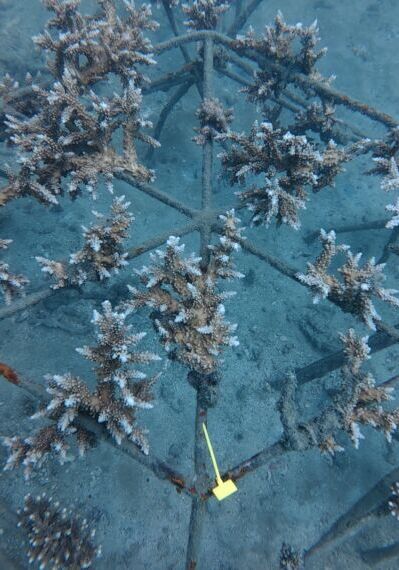
At the DiveRACE Coral Restoration Project, we carefully select and fragment healthy coral before transplanting them onto specially designed reef stars. These stable structures give young corals a solid foundation to grow. As those colonies become larger, they create shelter for fish, crabs, shrimp and countless other reef inhabitants. Over time, they also begin producing larvae that can naturally disperse and help nearby reefs recover.
Every healthy colony becomes another small step towards rebuilding a functioning ecosystem.
Recovery Takes Time
One thing working on a restoration project teaches you very quickly is patience. Corals don’t grow overnight. Some branching species grow a few centimetres each year, while massive corals may take decades to reach their full size.
Some fragments thrive almost immediately. Others don’t survive. Nature is never predictable, and that’s part of the process.
Our role isn’t to control the reef. It’s simply to give it the best possible chance to recover. That means regular monitoring, cleaning, maintenance and learning from every visit.
We’ve had the opportunity to return to the same dive sites in the Similans year after year. One of the things that continues to surprise me is how different a reef can look when you give it time to recover and grow. A great example is Koh Tachai South Reef, where the shallow reef has seen its share of ups and downs over the years. Yet the surviving corals are still growing well, and we hope they continue to show that resilience in the years ahead.
Giving Reefs a Better Chance
So, why do some reefs recover naturally while others don’t?
In many cases, it comes down to whether the reef still has the conditions it needs to rebuild. Healthy coral colonies, stable reef structure, good water quality and enough time between disturbances all play a vital role.
When those conditions disappear, natural recovery becomes much more difficult. That’s where carefully managed restoration projects can help. They don’t replace conservation, but they can give damaged reefs a better chance while wider efforts tackle the root causes of reef decline.
That’s exactly what we’re working towards with the DiveRACE Coral Restoration Project in Phuket. Every visit to the site reminds us that recovery is possible, even if it takes time. Seeing coral colonies grow, marine life return and the reef slowly develop reinforces why we continue investing in the project.
Protecting coral reefs will always require global action on climate change alongside local conservation efforts. But restoration allows us to make a tangible difference today, one coral fragment at a time.
If you’d like to learn more about the DiveRACE Coral Restoration Project, follow its progress or find out how you can support our work, visit our Coral Restoration page here. Together, we can help give Phuket’s reefs a better chance for the future.
Related Articles
-

Climate Change & Corals: How Extreme Weather and Warming Seas Shape Our Reefs
In recent years, Southeast Asia has experienced increasingly unpredictable and severe weather…
-
Corals in Thailand: How You Can Help with DiveRACE
When people talk about scuba diving in Thailand, they almost always mention…
-
Acropora Corals in Thailand: The Science Behind Our Restoration Work
Why We Use Acropora Corals in Our Thailand Restoration Project If you’ve…