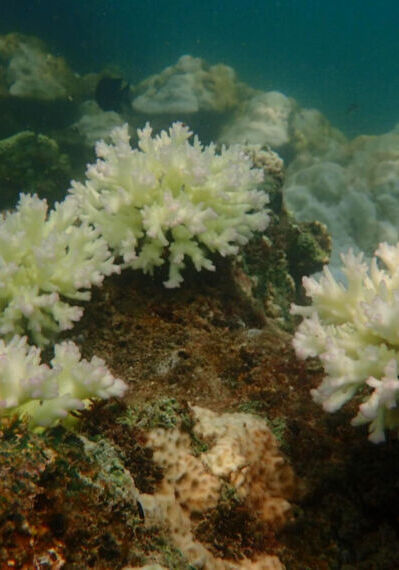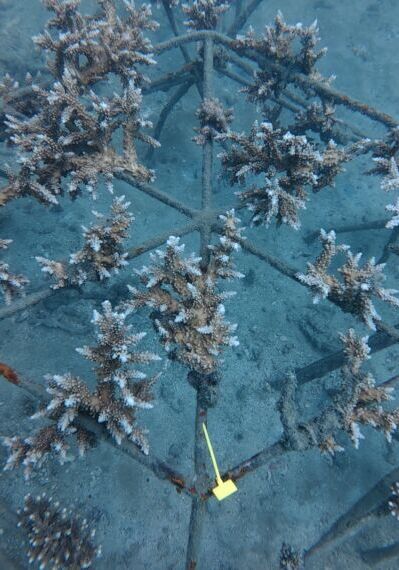

Coral reefs have survived for millions of years, adapting to changing oceans and environmental conditions. But today, things are changing incredibly fast. Ocean temperatures are rising, bleaching events are becoming more frequent, and reefs have less time to recover.
I’ve spent countless hours diving around Thailand, particularly in the Similan Islands. I’ve seen beautiful, thriving reefs full of life, but I’ve also witnessed the damage caused by rising ocean temperatures. It’s difficult seeing once-healthy corals turn pale, especially knowing how long they’ve taken to grow.
Since becoming involved in DiveRACE’s coral restoration project in Phuket, I’ve started looking at these changes differently. We’re helping damaged reefs recover, but it raises a bigger question. If our oceans keep getting warmer, can corals actually adapt fast enough to survive?
The good news is that corals are surprisingly adaptable. The challenge is whether they have enough time.
Why Is Climate Change Such a Challenge for Thailand’s Coral Reefs?
Corals are living animals that rely on microscopic algae inside their tissues for much of their energy. When water temperatures become too high, this relationship can break down, causing corals to lose their algae and turn white. This is what we know as coral bleaching.
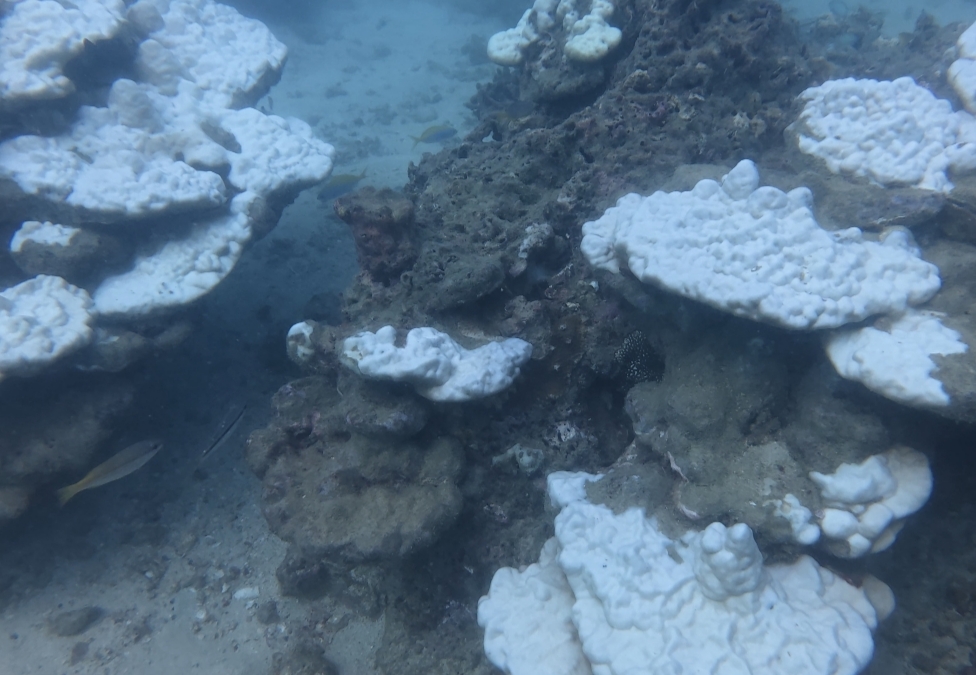
But here’s something important. Bleached coral isn’t necessarily dead coral.
If temperatures return to normal quickly enough, corals can recover. However, prolonged heat stress can leave them weakened, starving, and more vulnerable to disease.
We’ve seen this through our restoration project in Phuket. During the 2026 bleaching period, around 15–20% of corals at our site showed signs of bleaching. Some surrounding natural coral formations were much more severely affected. We removed fragments that had died but left the bleached corals that were still alive. They still had a chance to recover, and removing them would have taken that chance away.
Of course, warmer water isn’t the only problem. Pollution, sedimentation, ocean acidification, and physical damage all put additional pressure on Thailand’s reefs, making recovery even harder.
Can Corals Naturally Adapt to Warmer Oceans?
Actually, yes. And I think this is one of the most interesting parts of the discussion.
Not all corals respond to heat in the same way. Some species naturally tolerate warmer temperatures, while others survive conditions that cause nearby colonies to bleach.
Scientists have identified several ways corals can adapt, some within their lifetime and others across generations.
Acclimatisation: Adjusting to Their Environment
Acclimatisation happens when a coral adjusts to the conditions around it. For example, corals regularly exposed to changing temperatures may become better at handling heat stress. Their cells can activate protective processes that help them cope when temperatures rise.
It doesn’t make them immune to bleaching, but it can improve their chances of survival.
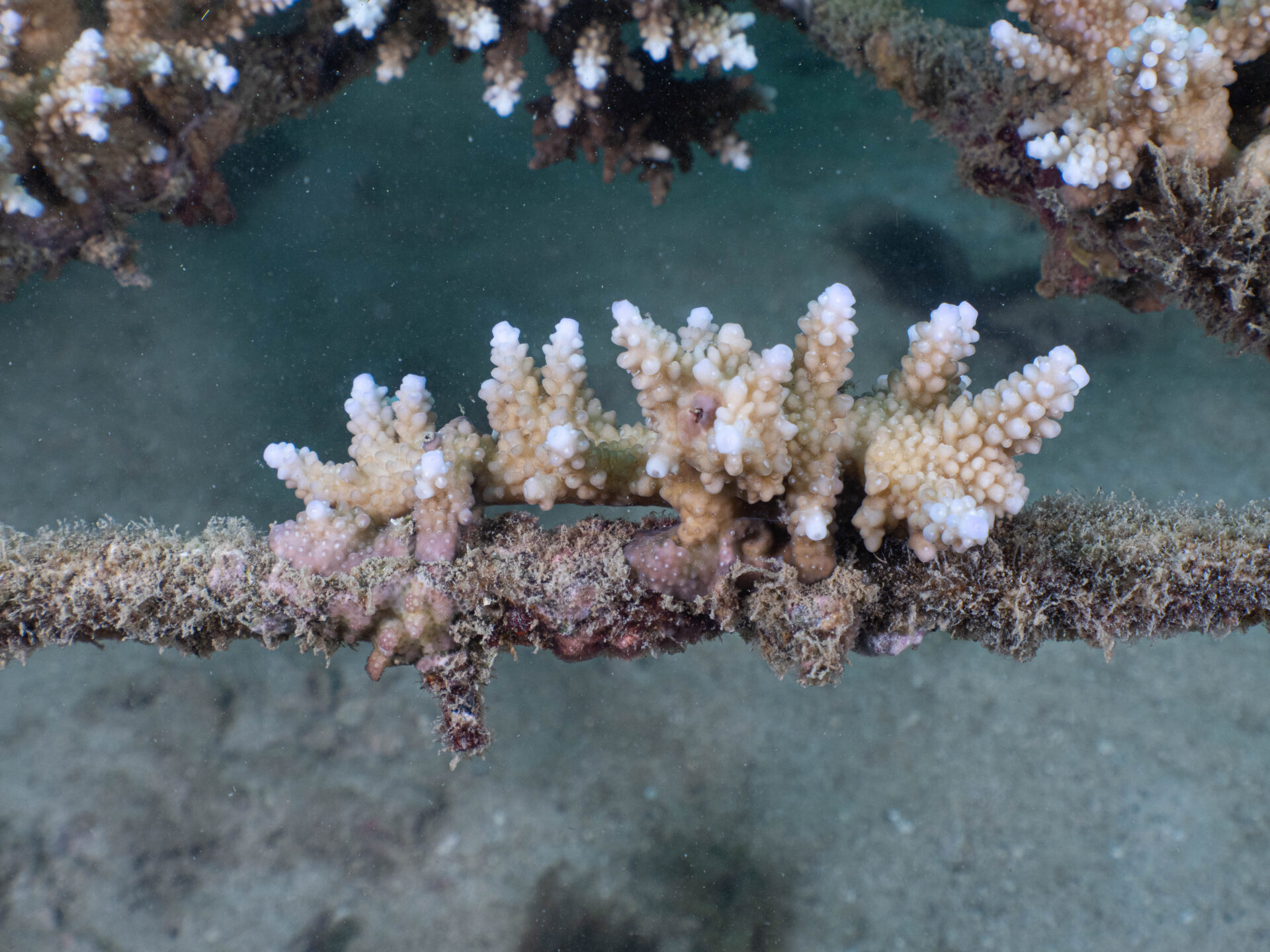
At our restoration site in Phuket, we’ve seen corals respond differently during the same bleaching period. That doesn’t necessarily mean some have acclimatised better, as species, depth, and water movement can also make a difference.
But it does show how complicated coral resilience can be, even within a small area.
Genetic Adaptation: Survival Across Generations
Genetic adaptation happens over generations rather than within a single coral’s lifetime. Some corals naturally have traits that make them more heat-tolerant. If they survive bleaching events and reproduce, their offspring may inherit those advantages.
Over time, this could help coral populations cope with warmer oceans. But there’s a catch. Many corals take years to reach reproductive maturity, while ocean temperatures are rising rapidly.
For reefs around the Similan Islands, the question is whether these naturally resilient corals can reproduce and establish themselves quickly enough to make a difference.
Changing Their Symbiotic Algae
Remember those tiny algae living inside coral tissues? Not all of them tolerate heat equally. Some corals can change the balance of their existing algae or form relationships with more heat-tolerant types. This can improve their chances of surviving unusually warm conditions.
However, there can be trade-offs. Some heat-tolerant algae may provide less energy, potentially slowing coral growth, and not every coral species can make these changes.
So while it’s an impressive survival mechanism, it isn’t a guaranteed solution.
Scientific reference: NOAA Coral Reef Conservation Program
Why Some Corals in Thailand May Be More Resilient Than Others
If you’ve spent time diving in the Similan Islands, you’ll know how much conditions can change between dive sites.
Some reefs like Richelieu Rock and Koh Tachai experience strong currents, while others in the Similan Islands are more sheltered. Water temperatures can also change with depth, sometimes noticeably when swimming through a thermocline.
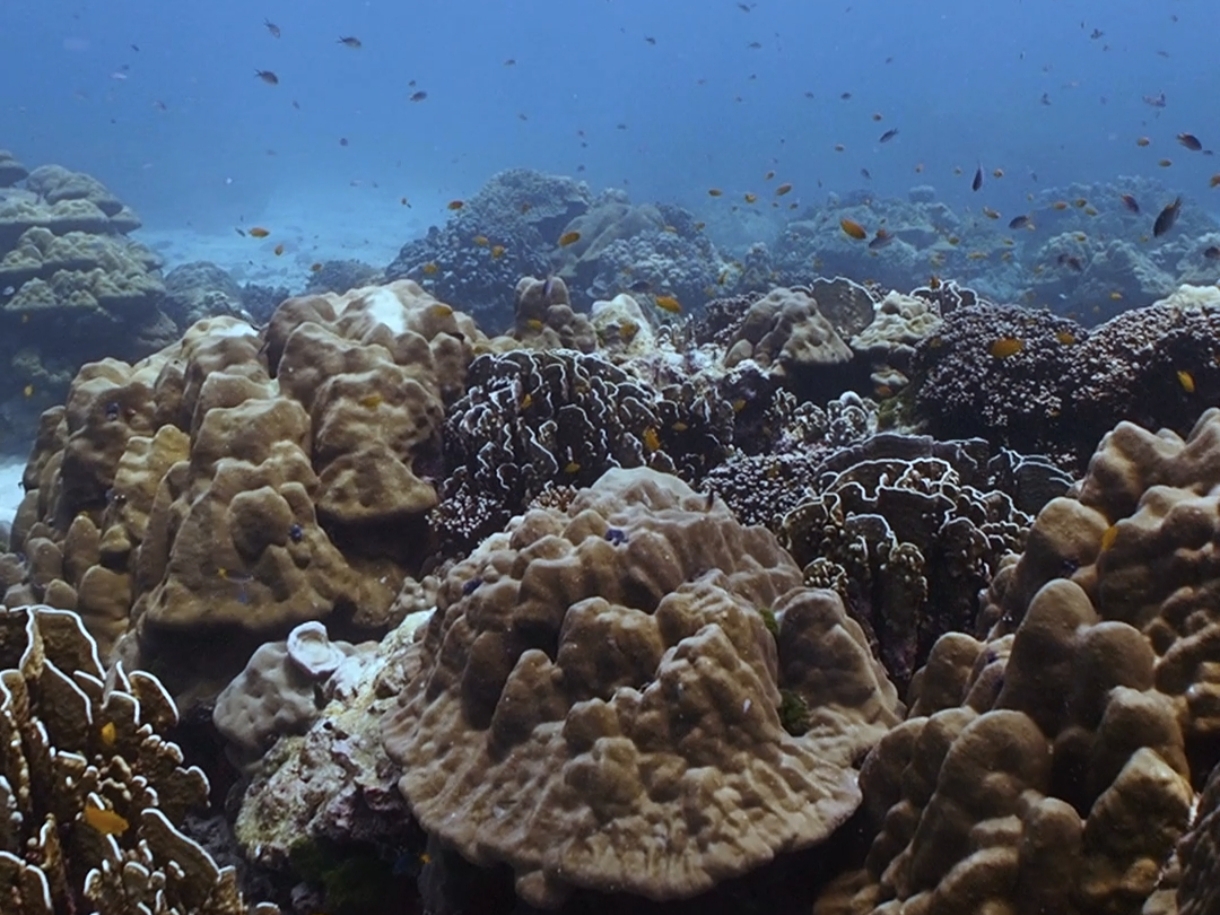
These differences create different environments for corals, which may influence how they respond to heat stress.
We’ve noticed similar contrasts at our restoration site in Phuket. Some fragments appeared relatively unaffected during bleaching periods, while others showed clear signs of stress. It’s tempting to assume the healthy ones have adapted better, but without scientific testing, we can’t know exactly why.
And there’s another important point. Just because a coral survives a marine heatwave doesn’t mean it’s thriving.
Heat stress can reduce growth and reproduction, even without visible bleaching. If sensitive species disappear, reefs may lose important habitats and biodiversity.
As divers, I think we sometimes forget that a healthy reef is about much more than how much coral we can see.
Scientific reference: Palumbi et al. (2014) – Mechanisms of Reef Coral Resistance to Future Climate Change
What We’re Learning Through DiveRACE’s Coral Restoration Project in Phuket
Our coral restoration project started in September 2024, working alongside Thailand’s Department of Marine and Coastal Resources (DMCR). Since then, we’ve expanded our restoration area to around 155 square metres and planted 960 coral fragments on specially designed structures we call Super Stars.
One thing this project has reinforced for me is how much patience restoration takes. It’s not simply about attaching fragments to a structure and coming back to find a thriving reef. There’s ongoing maintenance, monitoring, and plenty of challenges along the way. And no matter how carefully we plan, we’re still working in an environment we can’t control.
The bleaching we’ve experienced has been a reminder of that. Some transplanted corals showed signs of stress, while others appeared to cope better.
We left living but bleached fragments in place, giving them a chance to recover, and removed those that had died. We can provide stable structures and help damaged habitats recover, but we can’t stop the ocean around them from getting warmer.
That’s why I see coral restoration as part of a much bigger effort. It can make a real difference locally, but it can’t solve climate change on its own.
Can Coral Restoration Help Thailand’s Reefs Adapt?
Coral restoration traditionally focuses on growing healthy fragments and transplanting them into damaged areas. But scientists are now exploring whether restoration could also help reefs become more resilient to warming oceans.
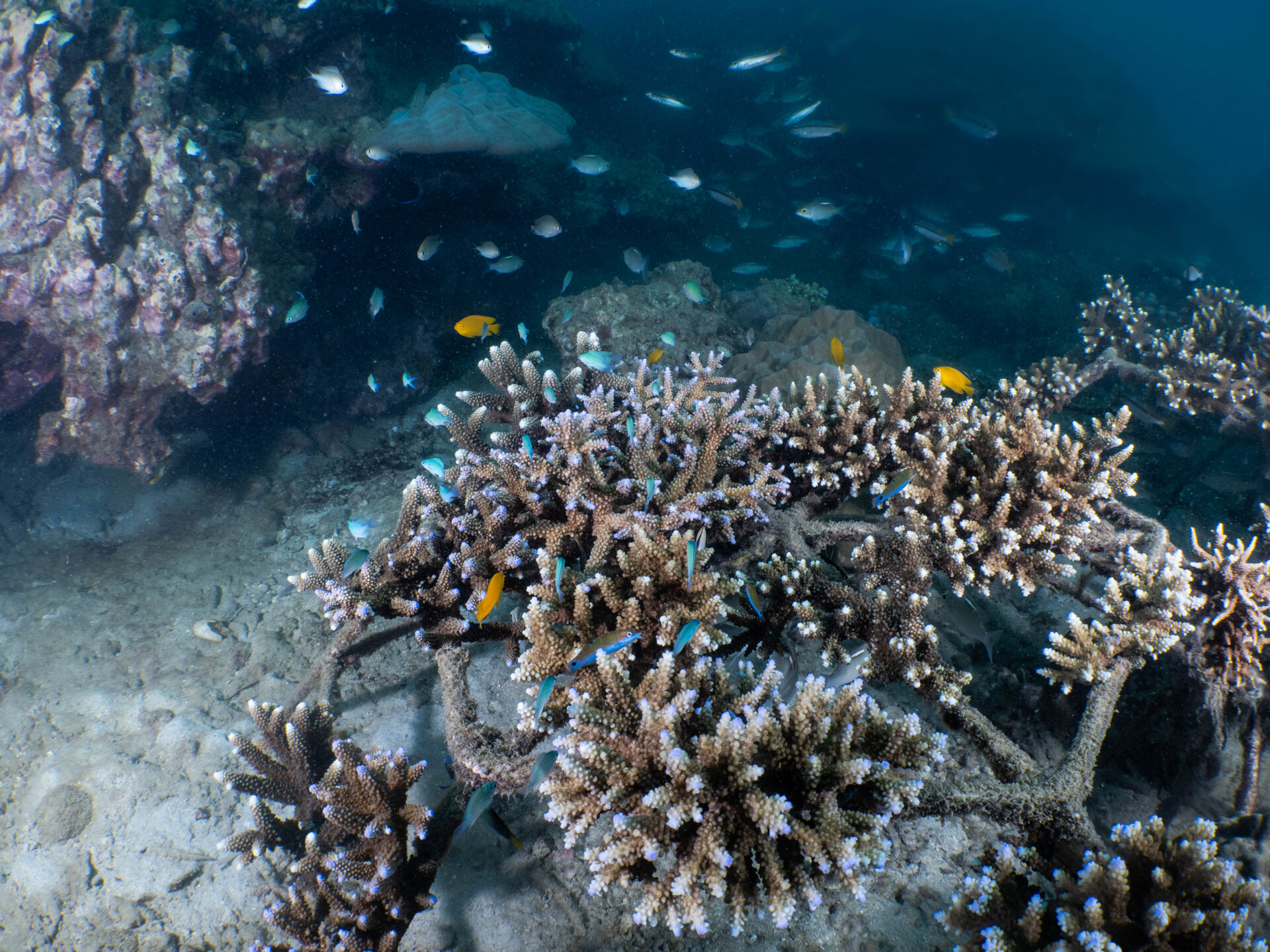
One approach involves studying corals that have survived previous bleaching events to understand what makes them different.
Researchers are also exploring selective breeding, heat-tolerant algae, and other techniques that could improve survival. Some of this research falls under assisted evolution, which involves helping natural adaptation processes along.
I find this fascinating, especially when thinking about what it could mean for our restoration project in Thailand. Imagine being able to identify coral fragments that aren’t just healthy today, but also better prepared for future marine heatwaves. Of course, these techniques are still being researched, and there are questions about their long-term effectiveness and ecological impacts.
At DiveRACE, we’re not carrying out assisted evolution experiments. Our focus is on helping damaged reef habitats recover, but this research could help shape how restoration develops in the future.
The Biggest Challenge Is the Speed of Climate Change
If corals have all these ways of adapting, why are scientists still so concerned? Because ocean temperatures are rising faster than many reefs can keep up with.
According to the Intergovernmental Panel on Climate Change (IPCC), coral reefs face serious declines even if global warming is limited to 1.5°C. Its 2018 report projected a further decline of 70–90% in coral reefs at 1.5°C of warming, increasing to more than 99% at 2°C.
Thailand has already experienced widespread bleaching during unusually warm periods, including the severe marine heat stress of 2024.
For reefs around the Similan Islands, repeated bleaching events could leave too little time for recovery. And when I think about our restoration project in Phuket, this is what concerns me most. We can spend years helping coral fragments establish themselves, only for another marine heatwave to threaten that progress.
It doesn’t mean restoration isn’t worthwhile. It simply shows why local conservation and climate action need to happen together.
Scientific references: IPCC Global Warming of 1.5°C | NOAA Coral Reef Watch
Why Protecting Thailand’s Existing Reefs Still Matters
With everything we know about coral bleaching and climate change, it’s easy to feel discouraged. But I think it makes protecting our existing reefs even more important.
Reducing pollution, protecting marine life, and preventing physical damage can all improve a reef’s chances of recovery.
And for those of us diving in the Similan Islands, there are simple ways we can help. Good buoyancy control, keeping our distance from corals, and respecting marine park regulations might seem obvious. But with so many divers visiting these reefs, those small actions add up.
One of the things I love most about diving is getting to experience these ecosystems firsthand. And I think the more time we spend underwater, the more we realise how much there is to protect.
Through DiveRACE, we want people to enjoy Thailand’s incredible marine life while understanding the challenges these environments face. Our restoration project in Phuket is one part of that effort. We’re helping damaged habitats recover and doing what we can to give corals a better chance.
Want to see what we’re doing beneath the surface? Join us on board MV DiveRACE Class X for our Coral Restoration Workshop trips from June 2027. Everyone can join, whether you’re an experienced diver or a seasoned snorkeler! Explore our DiveRACE Coral Restoration Project in Phuket and find out how you can get involved.
Related Articles
-

Climate Change & Corals: How Extreme Weather and Warming Seas Shape Our Reefs
In recent years, Southeast Asia has experienced increasingly unpredictable and severe weather…
-
Corals in Thailand: How You Can Help with DiveRACE
When people talk about scuba diving in Thailand, they almost always mention…
-
Acropora Corals in Thailand: The Science Behind Our Restoration Work
Why We Use Acropora Corals in Our Thailand Restoration Project If you’ve…