
From reef snapshots to professional wildlife photography, here is how to choose the right underwater camera for your next liveaboard trip.
The Similan Islands are famous for dramatic granite formations, healthy reefs, and encounters with marine life ranging from tiny nudibranchs to whale sharks.
Naturally, many divers want to bring a camera. Yet one of the biggest misconceptions in underwater photography is that better photos require more expensive equipment. In reality, the best camera depends on what you enjoy photographing, how often you dive, and how much time you are willing to spend learning photography techniques.
A diver searching for pygmy seahorses has very different needs from someone hoping to photograph manta rays.
Before looking at camera models, it helps to understand the different types of underwater photography and the equipment commonly used for each.
What Do You Want to Photograph?
This is the first question every underwater photographer should ask.
Most underwater images fall into two broad categories:
Macro photography
Wide-angle photography
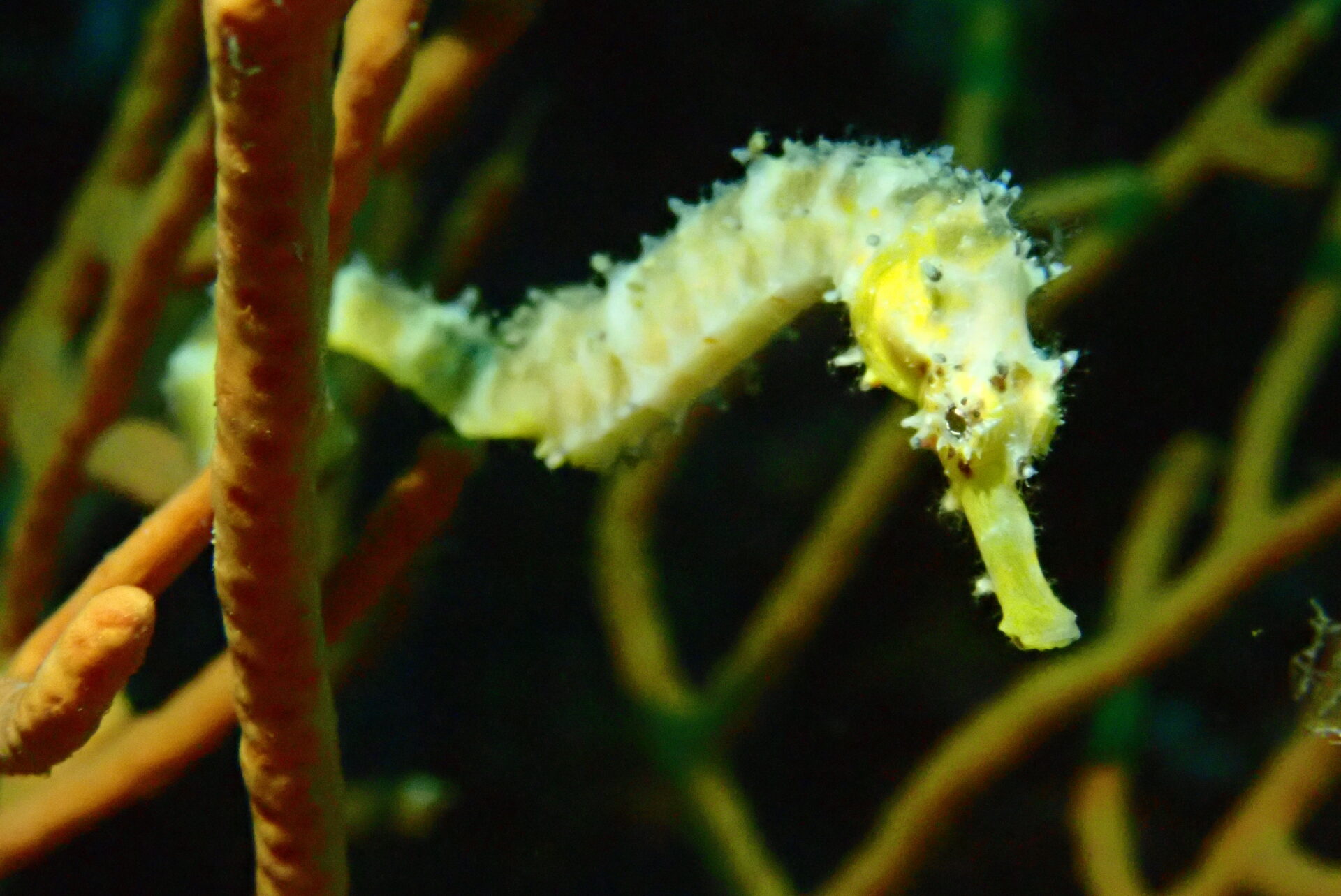
Macro photography focuses on small subjects such as nudibranchs, shrimp, blennies, and other reef critters. However, it is not just limited to miniature marine life. Example, There are creative photos of the intricate patterns on larger fish scales, or the expanded details of a fish eye beautiful macro photos of larger
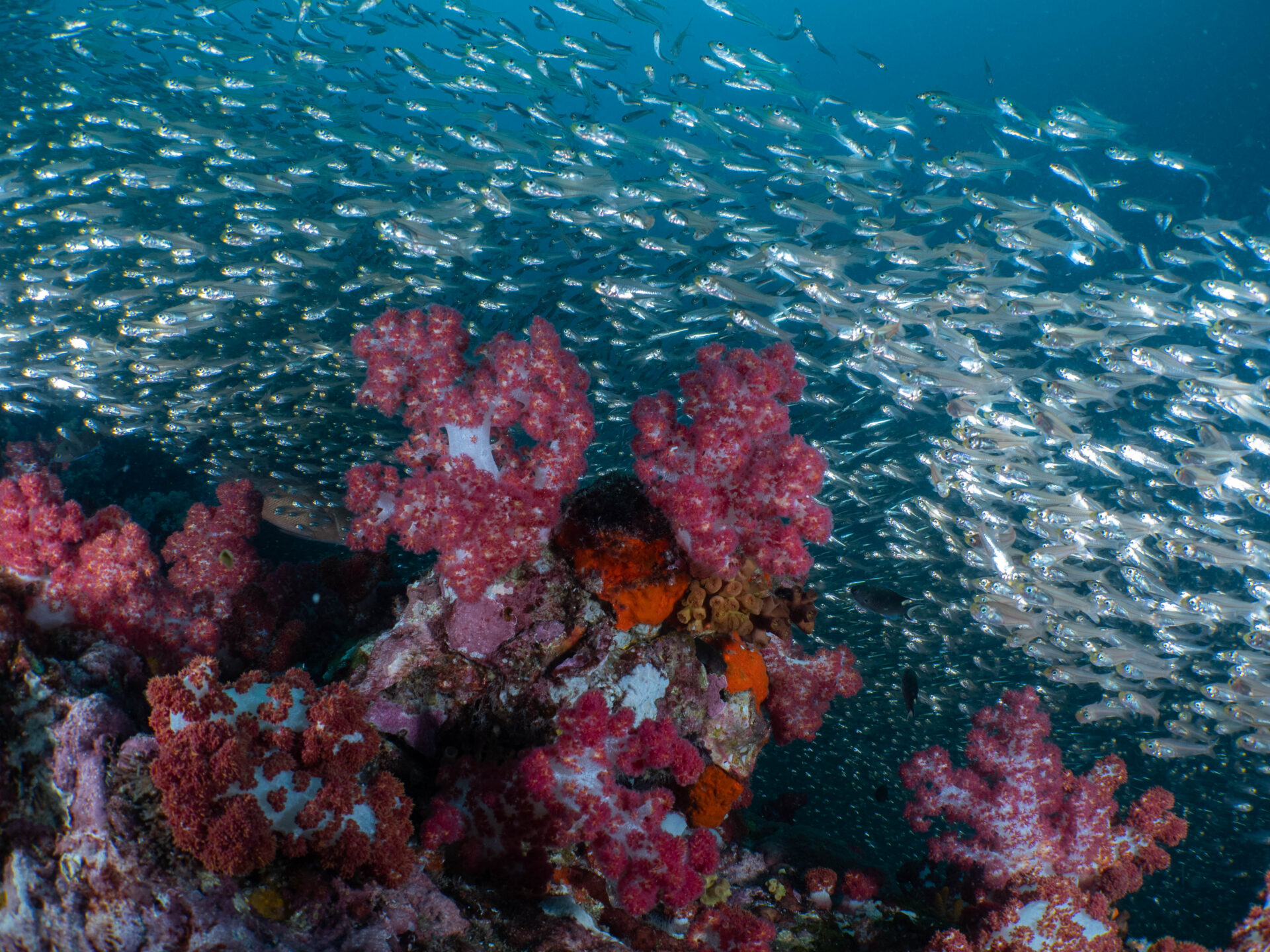
Wide-angle photography captures reefs, wrecks, divers, turtles, and large underwater landscapes. Photos that have a fish eyed effect are also considered under wide angle.
The camera you choose should support the type of photography you are most interested in. I recommend starting with wide angle photography as it is more fun before proceeding to macro photography as users get more and more comfortable with their camera set up.
The Best Camera for New Underwater Photographers
Many divers assume they need a professional mirrorless system to take good photographs. Usually, they don’t. For most beginners, a compact camera is the smartest starting point.
Olympus Tough TG Series – Approximate price: US$450–700 plus housing
If there is one camera range that consistently appears in underwater photography recommendations, it is the Olympus TG series. The TG-6 and TG-7 have become favourites among divers because they are affordable, durable, and remarkably capable underwater.
They are particularly strong for macro photography. Even without extensive photography knowledge, divers can produce detailed images of small marine life. With the addition of a wet macro lens, image quality improves even further.
Add a wet wide-angle lens and the same camera becomes capable of photographing reef scenes, turtles, and schooling fish. For many divers, a TG system remains useful for years before an upgrade is even considered.
Are Action Cameras Good for Underwater Photography?
This is one of the most common questions divers ask. We say skip the action cameras if you want to focus on photography!
Modern action cameras such as the DJI Osmo Action 5 Pro, GoPro Hero series, and Insta360 cameras can certainly take photos but they are designed primarily for videography. If photography is your main goal, a compact camera will usually produce better results.
Action cameras remain excellent tools for divers who prioritise video and only occasionally take photographs. The only reason I would use an action camera to take an underwater photo is… I honestly cannot think of any.
When Does It Make Sense to Upgrade Your Underwater Photography Setup?
Eventually, some photographers reach the limits of compact systems. Perhaps you want more control over exposure. Maybe you want dedicated macro lenses or higher-quality wide-angle images. Or perhaps photography has become a major part of your diving.
This is where mirrorless systems become attractive.
Mirrorless Cameras: The Choice for Serious Photographers
Mirrorless cameras currently dominate the underwater photography market. They offer larger sensors, faster autofocus, interchangeable lenses, and significantly more creative control.
Popular systems include:
- OM System (Olympus) OM-1 and E-M1 series
- Sony A7 series
- Nikon Z series
Prices typically range from US$900 to more than US$5,000 before housing costs. Each system has strengths.
OM System cameras remain popular because they combine excellent image quality with relatively compact housings. Sony systems are widely respected for autofocus and low-light performance. Nikon continues to be a favourite among photographers who prioritise image quality and detail.
Rather than asking which brand is best, a better question is which system matches the type of photography you enjoy most.
What is important to note is the use of these Mirrorless Camera bodies with the various lenses – Wide Angle or Macro. Thus, divers need to plan their camera set up according to the dives and the subjects that they are interested in taking. Underwater visibility also does play a part in how the camera should be used too.
At Richelieu Rock, a dive site at the Surin Islands National Park, it offers both macro subjects (eg, ghost pipe fishes, harlequin shrimps) or wide angle opportunities (eg. Mantas, Whalesharks). It is truly a difficult choice to make.
The Hidden Costs of Underwater Photography
Many new photographers focus entirely on the camera body. In reality, the camera is often only the beginning.
A complete underwater photography setup may include:
- Housing
- Dome port
- Macro port
- Strobes
- Arms and clamps
- Focus light
- Wet lenses
- Spare batteries and chargers
It is not unusual for accessories to cost more than the camera itself. Professional systems can easily exceed US$10,000 once everything is included.
This is another reason why many divers begin with compact systems before investing in larger rigs.
Why Photography Skills Matter More Than Camera Specs
The best underwater photographers rarely succeed because they own the most expensive equipment. They succeed because they understand light, composition, marine life behaviour, and buoyancy control.
A photographer who approaches a subject calmly and positions themself correctly will almost always capture stronger images than someone relying solely on expensive equipment.
This is particularly true in places like the Similan Islands, where patience often creates the best opportunities.
Why the Similan Islands Are a Photographer’s Playground
Few dive destinations offer such a variety of photographic subjects in a single trip.
One dive might focus on tiny reef critters hiding among hard corals. The next could feature vast granite formations covered in colourful reef fish. Turtles, schooling fish, reef sharks, and occasional pelagic visitors, including oceanic manta rays and whale sharks, create opportunities for both macro and wide-angle photographers.
Liveaboard diving makes this even more rewarding. Multiple dives each day allow photographers to adapt to conditions, experiment with techniques, and spend more time searching for subjects.
With MV DiveRACE Class X currently under development, practical camera storage and preparation spaces are being incorporated into the vessel design to better support underwater photographers.
Choosing the Right Camera for Your Next Dive Trip
The best underwater photography setup is the one that matches your goals, not someone else’s.
If you are new to underwater photography, a TG-7 may be all you need. If photography has become a serious passion, a mirrorless system could be the logical next step.
Whatever camera you choose, remember that the most important part of the system is the diver behind it. I personally recommend buying a strobe (or 2!) with your underwater camera to enhance the lighting underwater. It does make a lot of difference between no strobe and a strobe.
Ready to photograph the Similan Islands? Book your DiveRACE liveaboard adventure today and discover why these islands remain one of Thailand’s most rewarding destinations for underwater photographers.
Related Articles
-

Improve your Buoyancy: A Comprehensive Guide – Part 1
A thorough understanding and practical application of buoyancy is crucial for safe…
-
Improve your Buoyancy: Part 2 – Weights
A thorough understanding and practical application of neutral buoyancy is the most…
-
Improve your Buoyancy: Part 3 – BCD Use
A thorough understanding and practical application of neutral buoyancy is the most…