
Every year, as we approach the start of another diving season, one topic inevitably surfaces on social media:
“There are jellyfish everywhere in Thailand!”
News headlines often make the situation sound alarming. Photos of beaches covered in jellyfish, reports of swimmers being stung, and warnings issued by local authorities can easily create the impression that Thailand’s waters have suddenly become dangerous.
In recent months, several beaches along Thailand’s Andaman coast—including Phuket, Krabi and parts of Phang Nga—have again reported seasonal jellyfish sightings. Some beaches temporarily raised warning flags after stronger winds pushed jellyfish closer to shore, while local marine authorities reminded visitors to exercise caution.
As a liveaboard operator that spends hundreds of days at sea every year, I think it’s important to separate facts from fear.
The reality is that jellyfish have always been part of Thailand’s marine ecosystem. Understanding when they appear, why they appear, and how to deal with them allows us to continue enjoying the ocean safely.
Jellyfish Are Not New to Thailand
Many people assume that jellyfish outbreaks are something that has only happened in recent years.
That isn’t true.
Thailand has always been home to dozens of jellyfish species. Most spend their lives offshore where very few people ever encounter them. It is only when weather conditions change that they drift towards beaches where swimmers notice them.
The majority of jellyfish found around Thailand are harmless or cause only mild irritation, much like brushing against stinging nettles.
Only a very small number of species are considered medically dangerous.
Common Jellyfish Found in Thailand

Moon Jellyfish (Aurelia aurita)
Probably the most recognisable jellyfish.
With its transparent bell and four horseshoe-shaped reproductive organs visible inside, the Moon Jellyfish has an almost beautiful appearance.
Fortunately, it is also one of the least harmful species.
Divers often encounter them drifting peacefully in open water, especially during calm conditions.
A sting, if any, usually causes only slight irritation.
Blue Blubber Jellyfish (Catostylus spp.)
These large blue or brown jellyfish are frequently seen around Thailand.
They often appear in groups and are commonly photographed floating near the surface.
Although they possess stinging cells, most encounters result in only mild discomfort.
Cannonball Jellyfish
These rounded jellyfish resemble floating mushrooms.
They are harmless to most people and occasionally arrive in large numbers depending on currents.
Box Jellyfish
This is the species that receives the most media attention—and for good reason.
Thailand has recorded box jellyfish incidents, particularly in parts of the Gulf of Thailand and occasionally along the Andaman coast.
Fortunately, sightings remain relatively uncommon.
The dangerous species found in Thailand are nowhere near as widespread as those found in northern Australia, but they should still be treated with great respect.
Box jellyfish possess long, almost transparent tentacles that can be difficult to see underwater.
Their venom can cause severe pain and, in rare cases, life-threatening reactions.
This is why warning signs at certain beaches should always be taken seriously.
When Do Jellyfish Usually Appear?
Unlike fish, jellyfish don’t actively swim against currents.
They simply drift. This means that weather plays a huge role in determining where they end up.
In Thailand, jellyfish are generally more common during:
- The transition between monsoon seasons
- Periods of calm seas after storms
- Strong onshore winds
- Warmer months with increased plankton blooms
On the Andaman Coast, reports often increase between May and November, although sightings can occur at any time of year depending on local conditions.
One important point is that jellyfish numbers can change dramatically within a matter of days.
A beach covered in jellyfish today may be completely clear tomorrow once the wind changes.
A Pattern I’ve Noticed Over the Years
One interesting observation I’ve made after many seasons diving the Similan Islands is that when we start seeing larger numbers of jellyfish, there also seems to be a better chance of encountering whale sharks or manta rays.
Is it because the whale sharks and mantas are coming to eat the jellyfish?
Most likely, no.
A more likely explanation is that all three are responding to the same environmental conditions. Jellyfish populations often increase when there is a healthy bloom of plankton, and that same abundance of plankton attracts whale sharks and manta rays, which are both filter feeders.
Of course, this isn’t a guaranteed rule. I’ve had trips with plenty of jellyfish and no whale sharks, and I’ve also seen whale sharks when there were hardly any jellyfish around. Nature rarely follows a fixed formula.
But if you ask many experienced dive guides who spend hundreds of days each year in the Similan Islands, you’ll probably hear similar stories. When the water becomes rich with life, everything from tiny plankton to the largest fish in the ocean seems to benefit.
So, while most divers groan when they spot a few jellyfish floating past, I sometimes find myself quietly wondering if we might be in for something special on the next dive.
After all, if the ocean is producing enough food to support jellyfish, perhaps somewhere nearby a whale shark or manta ray has noticed it too.
Why Do They Suddenly Appear on Beaches?
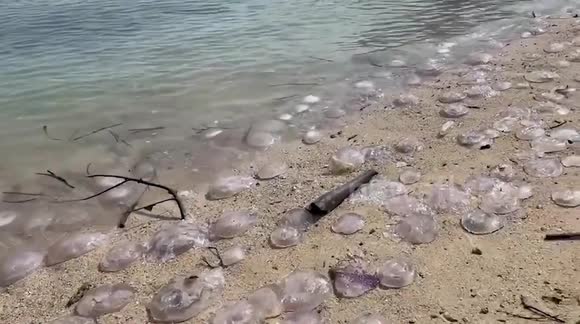
Many viral videos show hundreds or even thousands of jellyfish washed ashore.
This doesn’t necessarily mean the jellyfish population has exploded.
More often than not, changing currents and strong winds simply push offshore jellyfish towards land.
Some species also naturally bloom in large numbers when food becomes abundant.
Plankton is the primary food source for many jellyfish, and plankton populations fluctuate throughout the year depending on nutrients, rainfall and ocean conditions.
How Do Jellyfish Affect Divers?
Surprisingly, divers are generally less affected than swimmers.
Here’s why.
Divers wear:
- Wetsuits
- Rash guards
- Gloves (where permitted)
- Boots
- Masks
Most of the body is already protected.
Divers also spend most of their time underwater where they can actually see jellyfish and avoid them.
Swimmers, on the other hand, often have much larger areas of exposed skin.
At DiveRACE, jellyfish encounters during our liveaboard trips are relatively uncommon. When they are spotted, our dive team simply adjusts entry points or provides guidance on how to avoid them.
Most dives continue safely.
What About Snorkellers?
Snorkellers face slightly higher exposure because they spend prolonged periods at the surface where many jellyfish drift.
Wearing a long-sleeved rash guard or lightweight exposure suit greatly reduces the risk of stings.
This is one reason why many experienced snorkellers choose full-body protection even in warm tropical water.
My Own Experience with a Jellyfish
Despite spending countless hours underwater, I’ve had one memorable encounter with a jellyfish.
It wasn’t because the jellyfish suddenly appeared out of nowhere—it was entirely my own fault.
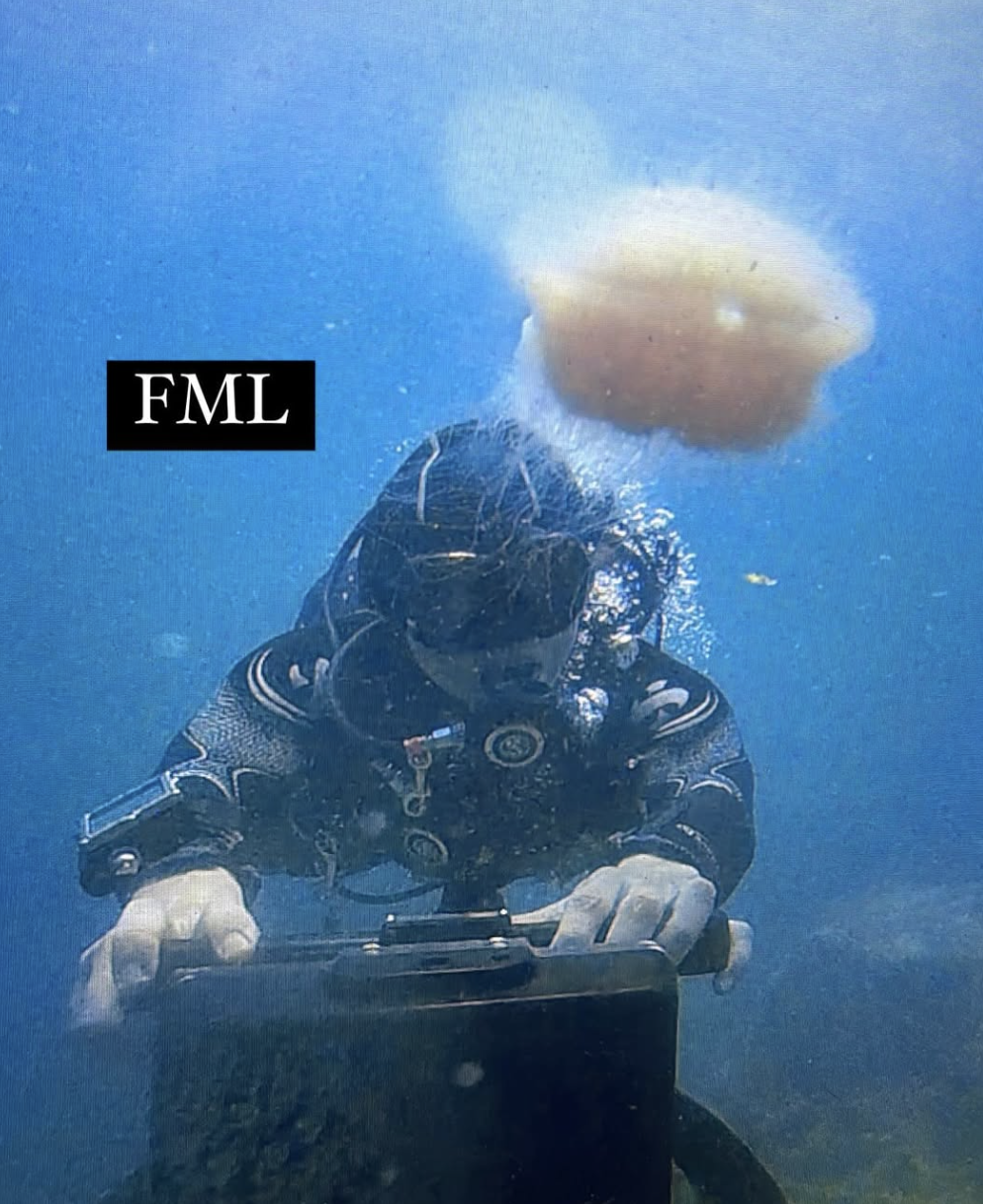
I was so focused on the reef and the marine life around me that I wasn’t paying attention to what was directly in front of me. Before I realised it, I had swum face-first straight into the tentacles of a jellyfish.
Thankfully, I was wearing a dive hood, which protected most of my face and neck from the stinging tentacles. The only exposed area was my upper lip, and that was exactly where I got stung.
Within a short time, my upper lip began to swell. It was uncomfortable and looked rather amusing to everyone on the boat, but fortunately that was the extent of it. The swelling subsided over the next day without any lasting effects.
Looking back, it was a good reminder that even experienced divers can become distracted underwater. We often spend so much time looking for tiny nudibranchs, colourful reef fish or that perfect underwater photograph that we forget to look ahead.
Since then, I’ve made it a habit to scan the water column in front of me as much as I watch the reef below. It’s a simple habit that can prevent an unpleasant surprise.
The experience also reinforced another lesson: our exposure protection isn’t just for keeping warm. A hood, wetsuit and other protective gear can significantly reduce the severity of a jellyfish sting. Had I been snorkelling with my face fully exposed, the outcome would almost certainly have been much more painful.
What Should You Do If You Get Stung?
The correct treatment depends on the type of jellyfish, but there are several important first-aid steps.
1. Stay Calm
Most jellyfish stings are painful but not life-threatening. Panic can make the situation worse, especially if the person is still in the water.
2. Exit the Water Safely
Leave the water carefully to avoid drowning if pain or muscle cramps develop.
3. Rinse with Vinegar (If Available)
For suspected box jellyfish stings, vinegar is recommended to help inactivate unfired stinging cells on the skin. It should be poured over the affected area rather than rubbed in.
Do NOT use fresh water, as it can trigger additional stinging cells to discharge.
If vinegar is not immediately available, seek assistance from lifeguards or emergency responders as quickly as possible.
4. Remove Tentacles Careful
If visible tentacles remain attached, they should be removed carefully using tweezers or while wearing gloves if possible.
Avoid rubbing the area with bare hands.
5. Seek Medical Attention
Anyone who develops:
- Difficulty breathing
- Chest pain
- Collapse
- Severe swelling
- Persistent intense pain
- Signs of an allergic reaction
should receive urgent medical care immediately.
Is Climate Change Causing More Jellyfish?
This is probably the biggest question today.
The honest answer is:
Scientists are still studying it.
There is evidence that warming oceans, changing currents, coastal development, overfishing, and nutrient runoff can all influence jellyfish populations in some regions. Jellyfish often thrive in conditions where there are abundant plankton and fewer predators or competitors.
However, researchers have not reached a global consensus that climate change alone is causing more jellyfish everywhere. In many cases, what people perceive as an “increase” may also reflect improved reporting, more coastal tourism, or natural year-to-year population cycles.
In other words, climate change is likely one contributing factor, but it is not the sole explanation.
Should Divers Cancel Their Dives?
Absolutely not.
If jellyfish were a constant danger, Thailand wouldn’t welcome millions of beachgoers and divers every year. Professional dive operators monitor local conditions daily.
If jellyfish become unusually abundant in a particular location, dive sites can often be adjusted or activities modified. The chances of having an entire liveaboard holiday ruined by jellyfish are extremely small.
In fact, many divers complete hundreds of dives in Thailand without ever experiencing a significant jellyfish sting.
Knowledge and preparation are far more valuable than fear.
On a side note, if you’re planning a few days on land, we’ve put together travel guides to help you make the most of your stay:
Whether you’re relaxing on the beach, exploring local markets or heading out on another adventure, both destinations are well worth adding to your itinerary.
Final Thoughts
Jellyfish are a natural part of Thailand’s marine environment. While recent news reports may highlight seasonal blooms or isolated sting incidents, they do not mean that Thailand’s waters have suddenly become unsafe.
Most jellyfish encountered by divers are harmless or cause only mild irritation. The few dangerous species deserve respect, but they are relatively uncommon, and local authorities issue warnings when conditions warrant extra caution.
The ocean is full of surprises, and that’s part of what makes diving so special. In all my years diving in Thailand, my only jellyfish sting happened because I simply wasn’t looking where I was going. It was an uncomfortable lesson, but also a reminder that most encounters can be avoided with awareness and proper exposure protection.
At DiveRACE, we brief our guests on current sea conditions before every dive, because understanding the environment is one of the best ways to enjoy it safely. After all, the goal isn’t to fear the ocean—it’s to learn how to dive with it. Join us for our dive trips!
Related Articles
-

The Vanishing Wrecks of the South China Sea
Wrecks have a special pull on divers. They’re time capsules, artificial reefs,…
-
Mergui Archipelago with DiveRACE
The Mergui Archipelago, located in southern Myanmar, is one of Southeast Asia’s…
-
Eat. Sleep. Dive. INFLATABLE FUN!
Diving isn’t the only way to enjoy the waters around Thailand. On…